More range from a more efficient motor
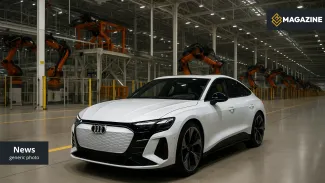
The headline figure for European buyers is the extended driving range. Audi has fitted a new electric motor that is roughly 10 percent more efficient than the outgoing unit, allowing the rear-wheel-drive Q4 E-Tron with the larger 82 kWh battery to travel up to 578 km on the WLTP cycle — an increase of 30 km. The slipperier Sportback body style stretches that figure to 592 km, addressing one of the most common concerns among EV shoppers on European motorways.
All-wheel-drive Quattro variants also benefit, with gains of 15 to 32 km depending on the exact powertrain configuration. The new motor produces 201 hp in base form or 282 hp in Performance trim, while dual-motor setups now deliver 295 hp and 335 hp respectively. For drivers covering long distances across Germany's autobahns or France's autoroutes, the extra efficiency should translate to fewer charging stops and lower energy bills.
Faster charging and bidirectional power
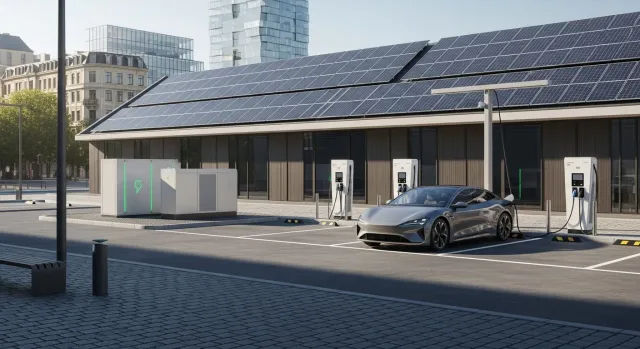
Charging performance receives a meaningful boost. The top Performance variants now peak at 185 kW during DC fast charging — 10 kW higher than previously — while lesser trims retain 160 kW and 165 kW peaks. Audi claims a 10 to 80 percent recharge takes 27 minutes, and a brief 10-minute top-up adds roughly 180 km of range. That places the Q4 E-Tron firmly in the competitive middle ground of European EVs, though it still trails the 800-volt architectures found in the Hyundai Ioniq 5 or Porsche Macan Electric.
Perhaps more significant for European households is the addition of bidirectional charging. The updated Q4 E-Tron supports both vehicle-to-load (V2L) and vehicle-to-home (V2H) functions, supplying up to 2.3 kW through a standard household socket in the luggage compartment. With energy prices remaining volatile across the continent, the ability to power home appliances or feed electricity back into the grid could make the compact Audi an unexpectedly practical asset for cost-conscious families.
Interior tech and safety upgrades
Inside the cabin, Audi has replaced the previous squared-off steering wheel with a conventional circular design and installed a new One Connected infotainment system built on Android Automotive OS. The dashboard now features dual curved displays measuring 11.9 and 12.8 inches, with the option of a third 12-inch screen positioned in front of the passenger. An augmented-reality head-up display projects navigation and driver-assistance data onto the windscreen as a 70-inch virtual image, while an AI-powered voice assistant integrates ChatGPT for more natural conversational queries.
Safety equipment has also been expanded. All variants now receive parking sensors with distance display, adaptive cruise control, lane departure warning, traffic sign recognition, fatigue monitoring, and active front assist with evasion and turn assist. For European buyers navigating dense urban centres such as Paris or Milan, the improved sensor suite should reduce the stress of tight manoeuvres and sudden traffic changes.
Design tweaks and pricing
Visually, the facelift is subtle but deliberate. New LED headlights offer customisable daytime running light signatures, while the grille and bumpers have been reshaped to give a cleaner, more aerodynamic appearance. At the rear, second-generation digital OLED tail-lights provide four selectable light patterns that mirror the front design — a feature that will likely appeal to style-conscious buyers in markets such as the Netherlands and Switzerland.
In Germany, the entry-level Q4 E-Tron with the smaller 63 kWh battery starts at €47,500, with the Sportback commanding a €1,950 premium. Upgrading to the larger 82 kWh pack adds another €6,000. Those prices position the Q4 E-Tron squarely against the BMW iX1, Mercedes EQA and Volvo EX30, though the Audi's newly extended range and bidirectional charging give it a tangible advantage over several direct rivals.
What it means for the European EV landscape
The Q4 E-Tron has been Audi's best-selling electric model since its 2021 debut, and this mid-cycle refresh arrives at a critical moment. European EV sales growth has slowed in early 2026 as governments phase out purchase incentives and consumers grapple with lingering charging anxiety. By boosting range beyond 580 km and adding features such as bidirectional power, Audi is clearly aiming to keep its volume seller relevant against both premium competitors and increasingly capable mass-market alternatives from Hyundai, Kia and Tesla.
Whether the updates are enough to justify the premium over a similarly equipped Volkswagen ID.4 or Skoda Enyaq — both of which share the same MEB platform — will depend on how much value buyers place on the four-ring badge and the Q4's upgraded interior technology. For now, the refreshed model represents a credible step forward, even if it stops short of redefining the segment.
Does the updated Q4 E-Tron use the same platform as the Volkswagen ID.4?
Yes. The refreshed Q4 E-Tron continues to ride on Volkswagen Group's MEB architecture, sharing its fundamental battery and motor hardware with the VW ID.4, Skoda Enyaq and Cupra Born. The differences lie in Audi's more powerful motor options, distinct body styling and premium interior finishes.
Can the bidirectional charging power an entire house during a blackout?
The Q4 E-Tron's V2H capability is designed primarily for managed home energy support rather than whole-house backup during outages. The 2.3 kW output is sufficient for individual appliances and can help offset peak electricity demand, but dedicated home battery systems remain better suited for complete blackout protection.
When will the facelifted Q4 E-Tron reach European showrooms?
Audi has opened orders in Germany with deliveries expected to begin in late summer 2026. Other European markets should follow shortly afterwards, with right-hand-drive versions for the United Kingdom arriving by early autumn.