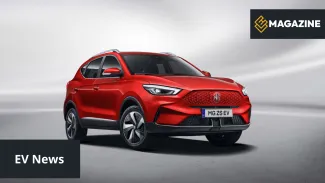
From import champion to local producer
MG has become the face of China's automotive push into Europe. Since expanding from the United Kingdom to mainland Europe in 2020, the brand has posted consistent growth — European sales hit 307,282 vehicles in 2025, a 26 percent jump over the previous year, according to Dataforce figures cited by Automotive News Europe.
That volume makes MG not only the best-selling Chinese brand on the continent, but also a target of the EU's trade defences. Like other Chinese-built EVs, MG faces additional EU tariffs on top of the standard 10 percent import duty — a burden that has turned local production from a distant ambition into an urgent commercial necessity.
In an interview with Automotive News Europe, MG Europe president William Wang said the brand is actively working to localise manufacturing. "At our current scale of around 300,000 European sales annually, localisation makes sense," he noted. Production could begin in 2027, depending on how quickly negotiations and approvals move.
Spain tipped as factory location
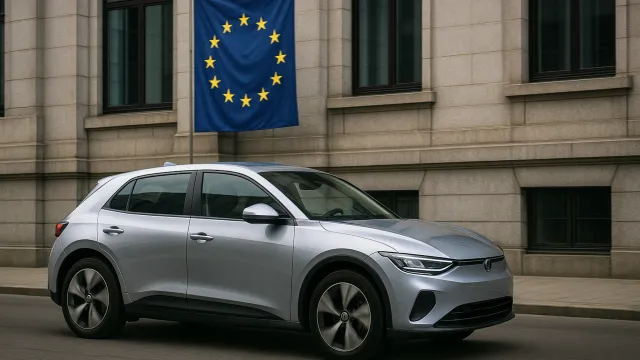
While Wang did not name a specific country, Bloomberg reported on April 24 that MG has singled out Spain as its preferred location, choosing it over Hungary. The decision, if confirmed, would follow a well-trodden path: Spain has aggressively positioned itself as an EV production hub, offering incentives, an established automotive supplier base, and deep-sea ports for export.
Spain already hosts factories for Volkswagen, SEAT, Renault, Ford and Stellantis, and has attracted major battery investments from suppliers such as PowerCo and CATL. For MG, setting up inside the EU would allow its locally built EVs to sidestep the tariff wall entirely, significantly improving their competitiveness against European rivals such as the Renault Megane E-Tech, Škoda Enyaq and Volkswagen ID.3.
Wang acknowledged that building in Europe will not be cheap. Labour, parts and logistics costs are all higher than in China, and the brand has ruled out using an existing idle plant because political resistance makes such partnerships difficult. Instead, MG appears set to build its own facility — a slower but more controllable route.
Semi-solid-state batteries coming this year
MG is not betting solely on geography. The brand also wants to win on technology — or at least on the perception of it.
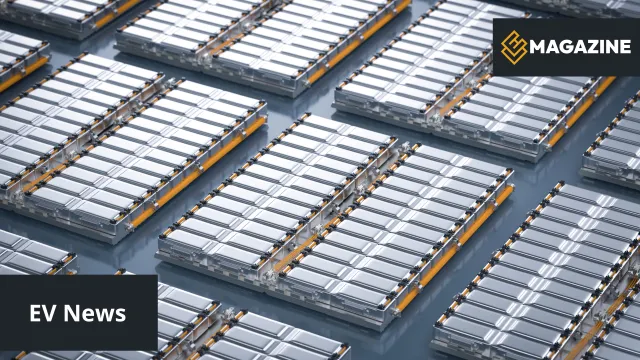
Later this year, the compact MG4 EV Urban will become the first European MG to offer semi-solid-state battery technology. The cells use 95 percent solid electrolyte and 5 percent liquid, a design that MG says improves safety and, crucially, cold-weather performance. At temperatures of minus 10 or minus 20 degrees Celsius, the brand claims the pack will suffer less range loss than the increasingly common LFP (lithium iron phosphate) batteries used by budget rivals.
If the claims hold up in real European winters, it would be a meaningful differentiator. Range anxiety in cold weather remains one of the most common concerns among EV buyers in the Nordics, Germany and the Alpine region.
Further down the road, MG is developing continuously controlled dampers, brake-by-wire and drive-by-wire systems, and is laying groundwork for artificial intelligence integration. Wang speculated that half of all cars on the road could be driving autonomously within a decade — an optimistic timeline, but one that signals MG's intent to be seen as a technology player, not merely a price disruptor.
18 models and the race against Europe's giants
MG's current European range stands at roughly 11 models. Within two years, Wang wants 17 or 18. The expansion will cover small city cars, large SUVs, petrol engines, hybrids, plug-in hybrids, full EVs and niche products such as the MG Cyberster electric roadster.
The breadth of that ambition is striking. It suggests MG is not merely filling segments — it is attempting to match the sheer volume of choice offered by established European mass-market brands. The UK, where MG's modern revival began, still accounts for roughly a quarter of the brand's European volume. But Germany is the next battleground, and Wang does not hide his competitive instinct. Speaking of Volkswagen, he said: "The student wants to surpass the teacher."
Yet MG's urgency is also defensive. Rivals such as BYD, Geely and Leapmotor are pouring into Europe with their own aggressive pricing and expanding dealer networks. Wang's warning to his own organisation — "You can't sleep" — applies equally to the broader competitive landscape.
The profit paradox
For all the growth, MG's European business is walking a tightrope. Wang has been unusually candid about the financial strain. The brand's strategy is to prioritise volume and market share over per-unit profit, a classic land-grab approach used by disruptors.
The problem is that some electric models are already loss-making at current prices. Wang offered a stark illustration: scaling to 500,000 European sales — a figure that would place MG firmly in the mainstream — could generate a loss of roughly 1 billion RMB (approximately €125 million). Add tariffs to that equation, and the pressure on margins becomes acute.
MG's answer is to move upmarket slightly, adding value rather than cutting prices further. But the brand is also realistic about its ceiling. Wang admitted MG is not strong enough to command premium prices. The result is a delicate balancing act: build brand credibility, absorb short-term losses, and hope that scale and local production eventually deliver sustainable profitability.
For now, the showroom strategy remains conservative. Unlike some newer entrants experimenting with agency or direct-to-consumer models, MG still believes in physical dealerships where customers can see, touch and test-drive the cars. "Customers still appreciate personal advice," Wang said.
Why is MG choosing Spain over Hungary for its EU factory?
Spain offers an established automotive ecosystem, government incentives for EV investment, major port infrastructure and a deep supplier base that already supports Volkswagen, SEAT, Renault and Stellantis. While Hungary has attracted Chinese battery makers such as CATL, Spain's broader manufacturing ecosystem appears to have won MG's favour for vehicle assembly.
What are semi-solid-state batteries and why do they matter for the MG4?
Semi-solid-state batteries replace most of the liquid electrolyte in conventional lithium-ion cells with a solid or gel-like material. MG claims its design — 95 percent solid, 5 percent liquid — improves safety and reduces range loss in cold weather compared with LFP batteries. For European buyers in colder climates, this could translate to more predictable winter range.
Will MG stop selling combustion engines in Europe?
No. MG says it will keep petrol engines, hybrids and plug-in hybrids in its European lineup as long as customer demand exists. Hybrids are classified as low-CO2 combustion vehicles within the brand's strategy. However, electric vehicles will be prioritised for local EU production because they face the steepest import tariffs.
Source: https://ecomento.de/2026/04/28/mg-plant-mit-eu-produktion-und-ausbau-der-modellpalette/