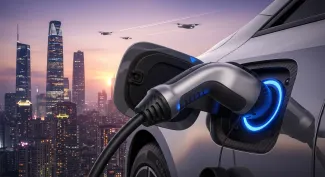
As we move through the second quarter of 2026, the numbers are becoming impossible to ignore. In 2025, the combined impact of electric and electrified vehicles resulted in the displacement of approximately 2.3 million barrels of oil per day, according to research from BloombergNEF. This figure represents a significant dent in the traditional petroleum-based transport model, even as global energy demands continue to evolve.
The Unexpected Driver: Two-Wheelers and Three-Wheelers
While much of the media attention in Europe and North America focuses on the rollout of high-end electric SUVs and sedans, the most significant impact on oil displacement is currently coming from a much smaller segment. In a surprising twist for many market analysts, electric two- and three-wheelers are currently doing more to cut oil use than passenger cars.
In 2025, these smaller electric vehicles displaced roughly 1.1 million barrels of oil per day. For comparison, passenger vehicles accounted for approximately 741,000 barrels of daily displacement. This trend is driven largely by rapid electrification in developing economies across Asia, where electric scooters and rickshaws have become highly affordable and efficient alternatives to internal combustion engine (ICE) models. This micro-mobility shift is a crucial component of the broader energy transition, proving that electrification does not always require a four-wheeled vehicle to be effective.
Global Market Dynamics: China and Europe vs. The USA
The geographic distribution of EV adoption remains highly uneven, creating a complex picture for global oil markets. While the United States has seen a noticeable slowdown in the pace of EV sales growth, the rest of the world is moving forward with significant momentum.
According to Benchmark Mineral Intelligence, the global market for plug-in vehicles reached 20.7 million units in 2025, marking a 20% year-over-year growth. This growth is anchored by massive volumes in China and steady, albeit more regulated, progress in Europe.
For European readers, this means the transition is deeply embedded in the continent's industrial strategy. As the EU continues to tighten CO2 standards and push for infrastructure expansion, the displacement of oil is not just an environmental goal but a matter of energy security. By reducing reliance on imported petroleum, Europe is effectively insulating itself from the volatility of global oil prices.
The Scale of the Impact
To understand the sheer scale of this shift, one must look at the math. A single barrel of crude oil contains approximately 42 gallons. When you multiply 2.3 million barrels by 42, the volume of fuel being "saved" or redirected is staggering.
Energy think tank Ember provides a slightly more conservative estimate, stating that plug-in vehicles avoided 1.7 million barrels of oil per day in 2025. While lower than the BNEF figure, the scale remains immense—equivalent to roughly 70% of Iran's total oil exports passing through the Strait of Hormuz in the previous year. This highlights how much influence the EV transition has on the geopolitical levers of energy supply.
Looking Toward 2030: A Multi-Million Barrel Future
The trajectory for the next few years suggests that the displacement of oil will only accelerate. BloombergNEF projects that by the end of this decade, the total daily displacement could more than double, reaching up to 5.3 million barrels of oil per day.
This acceleration will be driven by several factors:
- Increased Battery Density: As battery technology improves, providing higher kWh capacities at lower costs, the range anxiety that once hindered mass adoption is diminishing.
- Infrastructure Maturity: The expansion of high-speed DC charging networks (often exceeding 150 kW to 350 kW) is making long-distance electric travel a reality for the mass market.
- Economies of Scale: As manufacturers like BYD, Tesla, and the Volkswagen Group scale their production, the price parity between EVs and ICE vehicles is becoming a reality in many segments.
Beyond the economic and geopolitical implications, there is a tangible public health benefit. Displacing oil consumption in urban areas directly reduces local air pollutants, contributing to cleaner air in densely populated cities across the globe. Even when accounting for the lifecycle emissions of battery manufacturing and electricity generation, the data consistently shows that EVs maintain a significantly lower carbon footprint than their fossil-fuel counterparts.
Do plug-in hybrids (PHEVs) contribute to oil displacement?
Yes. Both fully electric vehicles (BEVs) and plug-in hybrids (PHEVs) are included in the displacement figures provided by BNEF and Ember, as both technologies reduce the amount of gasoline or diesel required for daily transport.
Why are two-wheelers more effective at displacing oil than cars right now?
This is primarily due to the sheer volume of electric two- and three-wheelers being adopted in rapidly developing markets in Asia. These vehicles are often cheaper and more accessible than passenger cars, leading to a massive scale of replacement for traditional small-engine motorcycles.
Does the source of electricity affect how much oil is actually "saved"?
While the displacement of oil is a direct physical fact (less fuel is burned), the environmental benefit depends on the grid. However, even on grids with significant fossil fuel components, the efficiency of electric motors compared to internal combustion engines results in a net reduction in energy consumption and emissions.