
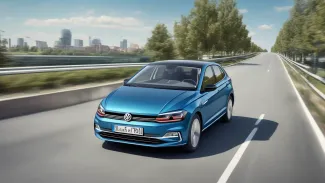
In a moment of rhetorical elegance that is rare from a German boardroom, Sanders recently posed a question that cuts to the heart of Europe's most divisive automotive debate: "Do you know when horses were banned? When was it forbidden to buy horses?" The answer, of course, is never. And that, he argues, is all you need to understand about the future of the combustion engine.
A Natural Succession, Not a Forced Exit
Sanders' position is striking precisely because it sidesteps the culture war that has consumed much of the EV debate in Europe. Rather than argue about government overreach or consumer freedom, he plants his flag on the most fundamental ground: EVs are simply better, and once people understand that, the transition will happen organically — just as it did a century ago.
The horse-to-car analogy is not merely provocative. It is historically precise. The internal combustion engine did not triumph because governments outlawed stables. It triumphed because it offered something horses could not match — speed, range, reliability, and eventually, price. Sanders is betting that battery-electric vehicles will do the same to petrol and diesel.
His prescription for accelerating that transition is revealing in what it does not include: bans, punitive taxes, or artificial deadlines. Instead, he calls for removing barriers, building out charging infrastructure, and simply allowing consumers to experience the genuine advantages of electric driving for themselves. "Take all the barriers away," he said, and let the product do the talking.
The EU Mandate Debate: A Convenient Backdrop
Sanders' comments land at a moment of significant uncertainty in European EV policy. The European Union's landmark 2035 combustion engine ban — once the cornerstone of the continent's climate strategy — has been substantially softened. Automakers are now required to reduce fleet CO2 emissions by 90% versus 2021 levels, a formulation that leaves room for limited sales of combustion-powered vehicles beyond the mid-2030s, particularly under the controversial e-fuels carve-out championed by Germany.
The political wobble has given oxygen to those who argue the EV transition is being pushed too fast, too hard. Against that backdrop, VW's sales chief is making a quietly radical argument: trust the product, not the policy. If EVs are genuinely better — and Volkswagen clearly believes they are — then the mandate debate is ultimately a distraction.
Volkswagen's Own House: Still Diverse, Increasingly Electric
None of this means Volkswagen is abandoning its combustion lineup overnight. The company's near-term strategy is deliberately pluralistic, spanning traditional combustion engines, mild hybrids, full hybrids, plug-in hybrids, and fully electric models. That breadth reflects both the realities of global markets and the lingering gaps in charging infrastructure across parts of Europe.
But the direction of travel is unmistakable. The recent world premiere of the ID. Polo — Volkswagen's most affordable electric car to date — signals the brand's intent to democratise EV ownership. Starting at €24,995 in Germany, the ID. Polo is built on the MEB+ platform and offers up to 454 km of range in its top specification, with Vehicle-to-Load capability included as standard — allowing drivers to power external devices directly from the car's battery. A GTI variant with 166 kW is due in 2027.
The ID.4 is also due for significant updates, and Sanders confirmed that range-extended EV technology — currently fashionable in China and gaining ground in North America — has no place in VW's European plans. Current battery ranges are, in his view, already sufficient for European driving patterns.
The Profit Question: Not There Yet, But Getting Closer
Sanders' confidence in the product is not yet fully reflected in the balance sheet. VW's latest EVs, built on the modified MEB Plus platform, currently achieve around 70–80% of the profit margins generated by comparable petrol cars — a gap the company attributes to battery costs and manufacturing complexity. Full margin parity is not expected until the rollout of the next-generation SSP (Scalable Systems Platform), which promises to cut production costs by approximately 20% versus MEB. That platform is not due until the latter part of this decade.
In the meantime, Volkswagen Group is working with constrained numbers: a 2.8% operating margin in 2025, rising to a target of 4–5.5% in 2026, and an ambition of 8–10% by 2030. The company knows the path. The question is whether the market will be patient enough — and whether charging infrastructure will expand fast enough — to let Sanders' horse-free future arrive on schedule.
What Europe's Drivers Are Actually Experiencing
The horse analogy only works if drivers actually find EVs superior in daily use. The evidence, increasingly, is that many do. Total cost of ownership studies consistently favour electric vehicles in countries with strong public charging networks and favourable electricity tariffs. Residual values, long a weakness for EVs, are stabilising. And as brands like Volkswagen push entry prices below €25,000, the affordability argument — long the biggest barrier — is beginning to erode.
There will always be a niche for the horse — at riding schools, on country estates, in competitions. Similarly, there may always be a niche for the combustion engine, whether in the form of e-fuel luxury cars, heritage vehicles, or markets where the grid simply cannot support mass electrification. But Sanders is not talking about niches. He is talking about the mainstream.
And on that front, his historical read may well be correct. Nobody banned the horse. Nobody needed to.
What did Volkswagen's sales chief say about EVs replacing combustion cars?
Martin Sanders, VW's board member for sales, marketing and after-sales, argued that EVs will naturally replace combustion cars the way cars replaced horses — not through government bans, but because they are plainly better. He made the point by asking: "Do you know when horses were banned?" — the answer being never. His prescription is to remove barriers and expand charging infrastructure, letting drivers experience EV advantages first-hand.
Has the EU's 2035 combustion engine ban changed?
Yes. The original 2035 ban on new petrol and diesel car sales in the EU was softened under pressure from Germany and other member states. Automakers must now reduce fleet CO2 by 90% versus 2021 levels, which allows limited combustion vehicle sales beyond 2035 under certain conditions, including an e-fuels exemption.
How affordable is Volkswagen's cheapest electric car in 2026?
The Volkswagen ID. Polo starts at €24,995 in Germany, making it the brand's most accessible EV. It offers up to 454 km of range in its top specification and comes with Vehicle-to-Load (V2L) capability as standard, allowing users to power external devices from the car's battery.
Source: https://insideevs.com/news/797883/vw-gas-cars-horses-evs-better/