
Listen to this article:
The Invisible Giant: The Growing Appetite of Data Centers
While the world focuses on the software capabilities of new AI models, a physical crisis is brewing in the power sector. Data centers—the massive warehouses filled with servers that power everything from ChatGPT to global financial markets—are among the most energy-intensive facilities on the planet. Unlike residential areas, where energy demand fluctuates throughout the day, data centers require a constant, high-load, 24/7 supply of electricity.
Industry reports suggest that a single large-scale data center can consume hundreds of megawatts (MW) of power, equivalent to the needs of a small city. As these facilities expand, they compete directly with residential sectors and the growing fleet of electric vehicles (EVs) for limited grid capacity. This competition is creating a "tug-of-war" for electricity, leading to concerns about grid stability and rising energy costs for the average consumer.
A Global Challenge: From the USA to Europe
The impact of this energy demand is being felt globally, but the context varies by region. In the United States, the rapid deployment of AI infrastructure is already testing aging grid systems in states like Virginia, a major hub for data center operations. The sheer scale of demand is forcing utilities to reconsider how they manage peak loads.
In Europe, the situation is even more complex. The European continent is simultaneously managing a transition toward renewable energy, the integration of millions of electric vehicles, and the widespread adoption of heat pumps. The growing energy footprint of data centers adds a third layer of pressure to a grid that is already undergoing a massive structural transformation. For European regulators, the challenge is to ensure that the digital economy does not come at the expense of residential energy security or the climate goals set by the European Green Deal.
The Residential Response: Energy Independence via Solar and Storage
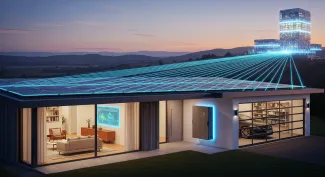
As the reliability of the centralized grid becomes a concern, homeowners are increasingly looking to "decentralize" their energy supply. We are seeing a significant shift toward integrated residential energy ecosystems. This typically includes:
- Rooftop Solar PV: Generating clean electricity on-site to reduce reliance on the grid.
- Battery Energy Storage Systems (BESS): Storing excess solar energy (often measured in 5 kWh to 20 kWh capacities) to use during the night or during grid outages.
- Smart Energy Management: Using AI to optimize when to draw from the grid, when to use the battery, and when to charge an EV.
For many, this is no longer just about being "green." It is a strategic move to hedge against rising electricity prices and potential grid instability caused by the massive industrial loads of the digital age.
Turning Homes into Mini-Power Plants: The Rise of Aggregators
One of the most interesting developments in this landscape is the emergence of solar power aggregator programs. As noted by industry experts at Sol-Ark, homeowners are no longer just passive consumers; they are becoming active participants in the energy market.
Through these programs, owners of solar and battery systems can allow utility companies to "borrow" small amounts of stored energy during periods of extreme demand. This is often facilitated through Vehicle-to-Grid (V2G) or Vehicle-to-Home (V2H) technology, where the massive batteries in modern EVs act as a distributed buffer for the grid. In exchange for this service, homeowners receive financial compensation, effectively turning their home energy setup into a revenue-generating asset.
This decentralized approach helps mitigate the strain caused by data centers. By using thousands of small, residential batteries to balance the grid, utilities can avoid the need to fire up expensive and polluting "peaker" plants during high-demand periods.
The Future of the Grid: A Symbiotic Relationship?
The tension between the digital infrastructure required for AI and the electrical needs of a modern, electrified society is undeniable. However, the solution may lie in the very technology that is driving the demand. As residential solar, smart batteries, and EV integration become more sophisticated, the grid is evolving from a one-way street into a dynamic, two-way network.
The goal for the next decade will be to create a symbiotic relationship where data centers, electric vehicles, and residential energy systems all work together to maintain a stable, sustainable, and affordable power supply.
How exactly do data centers affect my home electricity bill?
While data centers don't directly change your rate, their massive demand can force utilities to invest in new infrastructure or use more expensive "peaker" power plants during high demand, which can drive up the overall cost of electricity for everyone.
Can a home battery really help stabilize the national grid?
Yes, through "aggregator programs." When thousands of homes allow utilities to tap into their stored battery power during peak times, it creates a massive, distributed battery that can prevent blackouts and reduce the need for fossil-fuel power plants.
Is V2G technology ready for widespread use?
The technology is maturing rapidly. While many newer EVs are being built with bidirectional charging capabilities, widespread adoption depends on both vehicle manufacturer support and updated utility regulations to allow for seamless energy exchange.