The €18,000 quote that wasn't
When the dashboard of a 2015 Renault Zoe flashed a critical charging error, its owner faced a familiar nightmare. The official dealer quote for a complete 41 kWh battery pack replacement came to €18,000 excluding tax — a figure that comfortably exceeded the car's residual value.
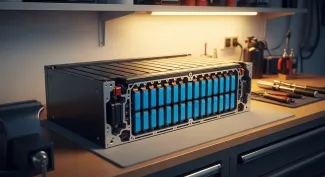
Instead of scrapping the vehicle, the owner turned to EV Clinic, a specialist workshop with centres in Zagreb and Berlin. Technicians disassembled the pack, ran a granular diagnostic, and found the culprit: one cell had dropped to 2.6 volts while the rest held a healthy 3.9 volts. Rather than discarding the entire pack, they replaced the single defective cell, rebalanced the module, and returned the car to the road.
Total bill: €900. Twenty times less than the dealer's proposal.
The case, documented by French outlet Rouleur Électrique in March 2025, is not unique. It illustrates a growing disconnect between manufacturer repair policies and technical reality.
Module repair: the alternative dealers rarely mention
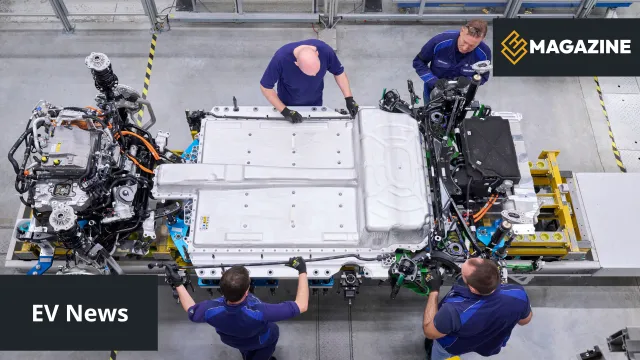
Modern EV batteries are not monolithic blocks. They are modular assemblies of cells grouped into packs, often with dozens or hundreds of individual units. When one cell develops a fault — whether through manufacturing variance, thermal stress, or age — the entire pack can throw errors or lose capacity. Many manufacturer protocols default to replacing the whole assembly, even when the failure is localised.
Across Europe, a new generation of independent specialists is challenging that approach. In France, the Revolte network — including its Nantes centre — advertises module-level diagnostics and cell replacement for EV batteries and hybrid systems. According to the company's own technical documentation, technicians first inspect the pack to confirm feasibility, then replace only the failed modules rather than the entire unit. Independent journalism site InExpeditions reported a case where Revolte repaired a battery for between €3,000 and €4,000 after the manufacturer had quoted over €15,000.
These interventions are not backyard hacks. They require clean-room conditions, high-voltage safety certification, and precision welding equipment. But they are increasingly viable for common first-generation EVs — the Renault Zoe, Nissan Leaf, and Tesla Model S — which are now old enough to reveal long-term failure patterns but young enough to justify repair over scrappage.
You're probably already covered
For newer vehicles, the financial risk is lower than many buyers realise. Industry data compiled by EV-erything.com shows that most brands selling in Europe now offer eight-year / 160,000 km battery warranties with a minimum 70 percent capacity retention guarantee.
Tesla covers its Model 3 and Model Y for eight years or up to 192,000 km depending on variant; the Model S and X extend to 240,000 km. Volkswagen, BMW, Polestar, and Volvo match the eight-year / 160,000 km standard. BYD and Zeekr go further, offering up to eight years / 200,000 km. Mercedes-Benz provides up to 10 years / 250,000 km on some BEVs. Hyundai and Kia offer between eight and 10 years depending on the market.
Crucially, these warranties are typically transferable to subsequent owners — a significant factor for the European used-EV market, where second- and third-hand buyers often express the strongest anxiety about battery degradation.
The EU's New Battery Regulation, which entered force in August 2023 and is rolling out phased requirements through 2027, adds further pressure on manufacturers to design for longevity and repairability. While the regulation's primary focus is on carbon footprint, recycling, and supply-chain transparency, its broader direction favours a shift away from sealed, disposable battery packs.
Why the myth persists
If module-level repair is technically possible and warranties are comprehensive, why does the €20,000 replacement figure still circulate? Part of the answer lies in dealership economics. Manufacturer-authorised workshops are often incentivised to sell new parts rather than invest in complex diagnostics and cell-level surgery. A full pack replacement is faster, carries lower liability risk, and generates higher parts revenue.
There is also a sampling bias in media coverage. A €900 repair is not newsworthy; a €20,000 quote is. The result is a distorted public perception of EV running costs that has persisted since the early 2010s, when battery technology was less mature and warranties shorter.
Comparisons to internal combustion vehicles are rarely made. A clutch replacement on a mid-size European car typically runs €1,000–€2,500; an automatic gearbox rebuild can exceed €3,000–€5,000. These costs are accepted as normal mechanical wear. An EV battery module repair, landing in the same range, is instead framed as a catastrophic failure — despite affecting a far smaller percentage of vehicles.
Beyond lithium: a 16-year iron battery enters the lab
While today's EV owners worry about decade-old batteries, researchers are already designing the next generation of storage. A team at the Institute of Metal Research, Chinese Academy of Sciences has developed an all-iron flow battery that solves two long-standing problems in iron-based chemistry: material degradation and electrolyte leakage across the membrane.
Published in the journal Advanced Energy Materials and reported by Interesting Engineering, the prototype uses a redesigned iron complex with a rigid molecular structure that physically shields the active material from chemical attack. The molecule's strong negative charge also repels leaking particles, preventing crossover.
The results are striking: 6,000 charge-discharge cycles with zero capacity loss, equivalent to more than 16 years of daily grid use. The system achieved 99.4 percent leak-proof efficiency and retained 78.5 percent energy efficiency even under high output. Because iron costs roughly 80 times less than lithium, the chemistry could dramatically undercut lithium-ion for stationary applications.
This is not a passenger-car battery. Flow batteries are bulky and designed for grid-scale renewable storage — the kind of massive installations needed to buffer solar and wind generation across the European network. Companies such as ESS Tech Inc in Oregon are already deploying iron flow systems for commercial clients including Google. The Chinese breakthrough suggests the technology could become commercially viable faster than previously expected.
For European drivers, the immediate takeaway is indirect but important: lithium is not the only path forward. As iron, sodium, and solid-state chemistries mature, the long-term cost and scarcity risks attached to battery ownership will continue to fall.
What should buyers actually do?
If you are considering a used EV in Europe, the battery should not be the deterrent it once was. Check the remaining warranty period and capacity guarantee. For vehicles outside warranty, investigate whether independent specialists in your country offer module-level diagnostics. In Germany, France, Croatia, and an expanding list of markets, these services are already available at a fraction of dealer prices.
For new buyers, the standard eight-year coverage offered by virtually every major brand provides ample protection against premature failure. The data suggests that catastrophic battery failure is rare; gradual degradation is the norm, and even that is partially covered.
The €20,000 battery replacement was always more myth than reality. In 2026, the evidence to bury it is overwhelming.
Can any EV battery be repaired at module level?
Not all. Repairability depends on the pack architecture, the type of failure, and the availability of replacement cells. First-generation models like the Renault Zoe, Nissan Leaf, and Tesla Model S are the most common candidates because their designs are well understood by independent specialists. Newer sealed packs with structural battery integration can be harder to access.
Does replacing a single cell affect the rest of the battery pack?
When done correctly, no. Specialist workshops balance the state of charge across all cells after replacement, ensuring the new cell works in harmony with existing modules. However, if multiple cells or the battery management system are failing, a full pack replacement may still be necessary.
When will iron flow batteries be available in electric cars?
Iron flow batteries are designed for stationary grid storage, not passenger vehicles, because of their size and weight. They are unlikely to appear in cars soon. Their importance lies in reducing overall battery costs and raw-material dependency, which indirectly benefits the EV market by easing lithium supply constraints.
Source: https://interestingengineering.com/energy/new-all-iron-battery-sustains-6000-cycles