What is the Triple 10 Challenge?
Launched in January 2026 with a detailed white paper, the Triple 10 Challenge is Shell's attempt to redefine what consumers should expect from an affordable battery electric vehicle. Rather than chasing ever-larger battery capacities — a strategy that drives up cost, weight, and raw-material demand — Shell is proposing a fundamentally different thermal architecture.
The three "10s" are designed to tackle the most common barriers to EV adoption:
Charge Faster: A 10–80 % charge in under 10 minutes.
Go Further: Energy economy of 10 km per kWh.
Drive Cleaner: A full lifecycle CO₂ footprint of just 10 tonnes.
To put that efficiency figure in context, 10 km/kWh equates to roughly 100 Wh/km — a figure that only the most aerodynamic compact EVs, such as the Hyundai Ioniq 6 or the Tesla Model 3 Rear-Wheel Drive, approach under ideal WLTP conditions. Shell is aiming to make it the norm, not the exception.
The technology: immersion cooling with EV-Plus Thermal Fluid
At the heart of the project is Shell EV-Plus Thermal Fluid, a proprietary dielectric liquid developed using the company's Gas-to-Liquid (GTL) technology. Unlike conventional battery cooling — which circulates water-glycol through cold plates beneath the cells — Shell's fluid fills every gap inside the pack, bathing each cell in direct contact.
This matters because heat is the enemy of fast charging. When a battery accepts high current, internal temperatures spike. Exceed safe limits and the car throttles charging power, extending wait times and accelerating cell degradation. By removing heat directly from the cell surfaces, immersion cooling keeps temperatures uniform and allows higher sustained currents without thermal stress.
In independent validation with HORIBA MIRA, Shell demonstrated that the fluid could reject all collected heat using a standard, off-the-shelf radiator — a critical proof point for real-world manufacturability. The fluid is electrically non-conductive, so it can safely touch high-voltage components, and it serves the entire powertrain: battery, motor, and inverter.
Why a smaller battery is the real breakthrough
Here is where Shell's approach diverges from the industry mainstream. Most current EVs capable of sub-10-minute charging rely on enormous battery packs — often 100 kWh or more — paired with ultra-rapid chargers exceeding 350 kW. That hardware is expensive, heavy, and still scarce on European motorways.
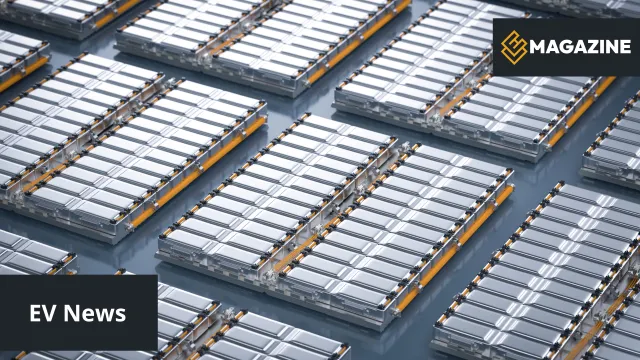
Shell, working with UK-based RML Group, built a concept using a 34 kWh battery pack that charges from 10 % to 80 % in under 10 minutes. The catch? It does so on a standard 145 kW DC charger — the kind already rolling out across the Ionity, Fastned, and Allego networks from the Ardennes to the Alps.
The battery pack weighs approximately 210 kg. That is less than one-third of the 680 kg packs common in today's mid-size BEVs. Less weight means less energy needed to move the car, which in turn means a smaller battery can deliver acceptable range. It is a virtuous circle: lighter car, smaller battery, lower cost, fewer critical minerals.
For European drivers, this could translate to more affordable EVs that do not require access to the fastest, most expensive chargers to be practical on long journeys. A 34 kWh pack at 10 km/kWh would yield roughly 340 km of WLTP range — enough for most continental drives with a single brief stop.
Partners and the path to production
Shell is not trying to build cars itself. The Triple 10 Challenge is a co-engineering framework, and the company has assembled a consortium of specialists:
HORIBA MIRA provides engineering and testing expertise, validating the fluid across powertrain components. RML Group contributes advanced battery-system knowledge and helped develop the compact pack. Empel supplies high-performance electric motor and power-electronics technology. Chasestead handles specialist metal prototyping and fabrication to bring concepts to life quickly.
Beyond the Triple 10 concept, Shell has already deployed related immersion-cooling technology in the Starship Hybrid 3.0, a heavy-duty truck concept developed with China's FAW Jiefang. The company has also expanded its thermal-fluid portfolio through acquisitions of Panolin and MIDEL/MIVOLT, and its immersion-cooling fluids received Intel Data Center Certification in 2025 — a signal that the chemistry is mature enough for demanding commercial applications.
The bigger picture — and the caveats
It is tempting to view this as an oil major's attempt to stay relevant in an electrifying world, and there is truth to that. Shell remains one of the world's largest fossil-fuel producers, and initiatives like the Triple 10 Challenge sit awkwardly alongside its core business. But the engineering is being validated independently, and the partners involved are serious automotive suppliers, not marketing agencies.
That said, the Triple 10 Challenge is still a concept and a technical framework, not a production vehicle. No OEM has yet announced a factory model built around Shell's immersion-cooling architecture. The 10 km/kWh efficiency target will be difficult to achieve in larger, heavier vehicles — especially SUVs, which dominate European sales charts. And while 210 kg battery packs sound appealing, they also mean smaller total energy reserves, which could stretch driver patience in winter conditions or at Autobahn speeds.
Still, the direction is noteworthy. The European EV market is entering a phase where raw-material costs, charging-infrastructure constraints, and consumer price sensitivity matter more than headline range figures. A lighter, cheaper, faster-charging EV that works with existing infrastructure is exactly what many European buyers — and regulators — have been asking for.
Can immersion cooling be retrofitted to existing EVs?
No. Immersion cooling requires a fundamentally different battery pack design, with sealed enclosures and fluids compatible with every internal component. It is a design choice for next-generation platforms, not an aftermarket upgrade.
How does 10 km/kWh compare to current European EVs?
It is roughly equivalent to 100 Wh/km — significantly more efficient than most mid-size EVs on sale today, which typically consume 150–180 Wh/km under WLTP conditions. Only a handful of highly optimised models, such as the Hyundai Ioniq 6, approach this figure.
When will cars using this technology reach showrooms?
Shell has not announced a production timeline, and no car manufacturer has confirmed plans to adopt the Triple 10 architecture. The project remains in the concept and co-engineering phase, with real-world testing ongoing through partners like HORIBA MIRA and RML Group.