
Three million lost buyers — and a market that never recovered
The European new-car market is the only major region that has not bounced back from the pandemic. While the US, China, and South America have all recovered, Europe is still selling roughly 3 million fewer cars per year than before Covid-19. Chardon pins 60 % of that gap on a single issue: the simple fact that cars costing less than €15,000 have all but disappeared from showrooms.
The numbers tell a stark story. The average age of cars on European roads has jumped by more than two years in the past five years and now sits above 12 years. People are not upgrading because the entry-level rungs of the price ladder have been pulled away. The old Citroën C1, Peugeot 108, Ford Ka, and countless other budget models were discontinued between 2019 and 2022 as manufacturers abandoned razor-thin margins in favour of higher-margin SUVs and crossovers.
This is not simply a matter of inflation. A 2019 Volkswagen Up could be bought for around €10,500. Today, the cheapest full-size electric car — the Dacia Spring — starts at roughly €17,000. The Citroën ë-C3, currently one of the more affordable EVs on the market, costs from around €23,300. The gap between what buyers were paying a few years ago and what they are being asked to pay now is enormous.
Not a retro remake — but the 2CV spirit is alive
Chardon is clear that the new car will not be a visual tribute to the iconic 2CV. "Nostalgia for nostalgia is not a silver bullet," he told Autocar. What matters is the mission: giving buying power back to people who have lost it.
The concept is expected to be previewed in October at the Paris Motor Show, and the production version would be an A-segment vehicle — a true city car, smaller than the current C3. It effectively replaces the C1, which Citroën pulled from sale in 2020. In the 2CV era, the brief was to carry four farmers and 50 kg of potatoes. Today, Chardon says, the target customer is better described as a nurse or a young urban professional — someone who needs affordable personal mobility and cannot afford anything currently on the market.
The car is being developed in alignment with the EU's proposed "E-car" legislation, a new regulatory framework designed to make small, affordable EVs commercially viable by relaxing some of the safety and emissions requirements that have driven up manufacturing costs. Without this legislation, producing a profitable €15,000 EV in Europe is borderline impossible.
Why cheap electric cars are so difficult to build
The core problem is simple arithmetic. A battery pack for even a small EV — say, 30–40 kWh, enough for roughly 200–250 km of WLTP range — currently costs a European manufacturer between €4,000 and €6,000 at the cell level, before packaging, cooling, and electronics. That is roughly 30–40 % of the entire target retail price, leaving little room for the body, chassis, interior, safety systems, and everything else that makes a car a car.
Safety regulations compound the problem. Every car sold in the EU must meet the same crash-test standards and carry the same mandatory driver-assistance systems — automatic emergency braking, lane-keeping assist, intelligent speed assistance, and a growing list of other requirements — regardless of price. The cost of homologating a new vehicle platform alone can run into hundreds of millions of euros, making it viable only if sales volumes are high enough to amortise the investment.
Then there is comfort. A cheap car does not have to feel cheap, but achieving that balance is difficult. Noise insulation, suspension tuning, seat quality, and infotainment all cost money. The Dacia Spring, currently Europe's cheapest EV, makes no secret of its compromises — hard plastics, basic soundproofing, and a 33 kW motor that makes motorway driving a chore. Cutting the price further without making the car feel like a penalty box is the holy grail that Citroën is chasing.
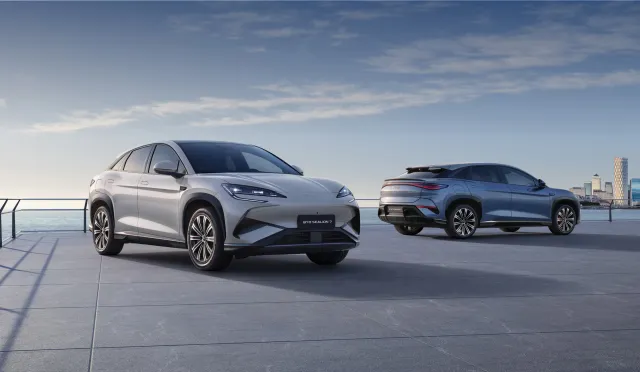
Chinese manufacturers have an advantage here. The BYD Seagull sells for the equivalent of roughly €10,000 in China, but bringing it to Europe would add shipping, import duties, EU homologation, and a dealer margin — pushing the price well above €15,000. This is why most Chinese imports in Europe still land in the €25,000–40,000 range.
The playing field is about to get crowded
Citroën is not alone. Renault has already launched the Twingo E-Tech, positioned in France at roughly €17,000. Volkswagen is preparing an ID Polo — an electric equivalent of its bestselling small car — for the same price bracket. Hyundai is pushing its Inster (priced from around €23,000), and Stellantis is simultaneously selling the Chinese-built Leapmotor T03 in Europe for around €19,000. The race to the bottom is real, but so far nobody has cracked the sub-€15,000 barrier with a car that Europeans would actually want to own.
Chardon's bet is that Citroën — with its history of value-focused design, the Stellantis group's shared platforms, and the forthcoming E-car regulatory relief — can get there first. The Paris concept in October will show whether the brand has found a formula that works.
The bigger question is whether enough Europeans will be willing to trade down in size to a city car, even at that price. After two decades of SUVs becoming the default family choice, shrinking to an A-segment vehicle is a cultural shift that no amount of marketing can force. But for the nurse who cannot get to her hospital shift, or the student who cannot afford to commute — that might not matter.
When will the Citroën sub-€15,000 EV actually go on sale?
Citroën has not confirmed a launch date, but a concept preview is expected at the Paris Motor Show in October 2026. Production would realistically follow in 2028 or 2029, depending on how quickly the EU's E-car legislation is finalised and whether Stellantis can make the business case work.
Can I buy a decent electric car for under €20,000 right now?
The current cheapest options are the Dacia Spring (from ~€17,000) and the Leapmotor T03 (from ~€19,000). Both are small city cars with limited range (around 230–265 km WLTP) and basic equipment. The Renault Twingo E-Tech is also available at a similar price point in some markets. If you need more space, the Citroën ë-C3 starts at roughly €23,300.
Why can China sell EVs for €10,000 but Europe cannot?
Chinese manufacturers benefit from lower labour costs, massive production scale, domestically controlled battery supply chains, and less stringent safety regulations for domestic models. Exporting a Chinese EV to Europe adds shipping costs, a 10 % import duty, EU homologation requirements, dealer margins, and warranty obligations — typically adding €5,000–8,000 to the final price. Producing locally in Europe, as BYD and others are starting to do with factories in Hungary and elsewhere, may narrow the gap over time.