
Listen to this article:
A Name That Means Light
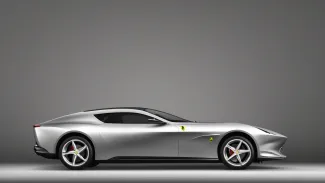
The name Luce — Italian for "light" — carries more than poetic weight. It signals a deliberate, confident turn toward the future for a company that has spent over seven decades defined by roaring combustion engines. Ferrari did not call this car something safe or abstract. They called it light. And with a car this technically radical, that choice feels earned.
The Luce was unveiled live at a global event in Rome, streamed to audiences worldwide. It marks Ferrari's entry not just into electric vehicles, but into an entirely new segment for the brand: the five-seat luxury sedan. For a company whose identity has been built around two-seat sports cars and mid-engine supercars, this is a seismic shift — one the brand has prepared for carefully, and executed with remarkable ambition.
The Numbers: A Supercar in a Sedan's Body
The Luce's performance figures demand attention. Four electric motors — one at each wheel — deliver a combined output of 1,050 horsepower (830 kW). The rear motors alone produce 620 kW, spinning at up to 25,500 rpm; the front pair contribute 210 kW at 30,000 rpm. The result: 0–100 km/h in 2.5 seconds and a top speed of 310 km/h. These are hypercar numbers in a car with a rear bench seat for three passengers.
The 122 kWh battery pack — comprising 210 cells — operates on an 800V architecture and supports 350 kW DC fast charging. European WLTP range is rated at approximately 530 km, making the Luce genuinely usable for long-distance travel across the continent. The car weighs 2,260 kg, a figure that Ferrari's engineers have compensated for with advanced four-wheel steering and an adaptive suspension system that adjusts continuously to road conditions.
Designed by the Man Behind the iPhone
Perhaps the most surprising aspect of the Luce is its design pedigree. Ferrari commissioned LoveFrom — the creative studio founded by Jony Ive and Marc Newson — to shape the car's interior and identity. This is LoveFrom's first automotive project, and Ive's first major design commission after leaving Apple, where he was responsible for the iMac G3, the MacBook Air, and the iPhone.
The result is an interior of almost austere precision. Components are machined from single pieces of metal. The steering wheel is crafted from 100% recycled aluminum. Rather than relying on sprawling touchscreens, Ferrari and LoveFrom opted for a tactile, control-first interface — a deliberate counterpoint to the touch-everything philosophy that has become standard across the industry. Samsung-exclusive OLED displays are present, but they sit alongside physical controls, not in place of them.
The Sound of Silence — Solved Differently
One of the most delicate challenges for any electric supercar is sound. Ferrari's answer for the Luce is characteristically inventive. Rather than synthesizing an artificial engine note, engineers mounted a precision accelerometer at the center of the rear axle. It captures the actual vibration of the rotating electric components — amplified and shaped into a listening experience that is real, not simulated. Ferrari describes it as "the voice of the motors themselves."
Whether it will satisfy those who mourn the V12 is a question for another day. But the approach — rooted in physical reality, not theatrical fakery — is consistent with everything Ferrari claims the Luce represents.
A Ferrari for Five — Including Three Across the Back
The Luce seats five passengers, with a three-across rear bench, another Ferrari first. The cabin offers 21 cubic feet of cargo capacity — more than a Porsche Taycan — making it a genuine family machine by Ferrari standards. Four-wheel steering and the independently controlled motors allow torque vectoring precise enough to give each corner of the car a different amount of power within milliseconds.
Standard equipment includes adaptive suspension, and the paddle controls have been repurposed: rather than shifting gears, they adjust regenerative braking intensity and torque distribution between axles. The driving experience, Ferrari promises, will feel unmistakably Ferrari, even without a combustion engine.
Price and Ownership
Official pricing has not been confirmed, but estimates from automotive analysts place the Luce's starting price at approximately $645,000 (roughly €595,000 at current exchange rates), putting it firmly in the territory of Rolls-Royce Spectre, Bentley Flying Spur, and Porsche Taycan Turbo GT — though it outperforms all of them on paper.
Ferrari is backing the Luce with an 8-year/100,000-mile battery warranty and 7 years of complimentary maintenance — a package that signals confidence in the powertrain's longevity and Ferrari's seriousness about EV ownership. The car is expected to enter production as a 2027 model.
Why This Matters for Europe
Ferrari's decision to enter the EV market with a luxury sedan rather than a pure sports car is a studied one. The European ultra-luxury segment is already being contested by the Rolls-Royce Spectre, the fully electric Bentley EXP 100 GT concept direction, and Mercedes-Benz's AMG EV ambitions. Ferrari — a brand with arguably the most powerful emotional resonance in automotive history — arrives not as a follower, but with a product that is technically more aggressive than anything the segment has seen.
For European buyers, the Luce also arrives as EU emissions targets tighten further into the late 2020s, making even ultra-luxury brands accelerate their electric transitions. Ferrari is no longer an outlier holding on to combustion while others rush forward. With the Luce, they are setting a new standard — and doing it in public, in Rome, with the whole world watching.
How far can the Ferrari Luce travel on a single charge?
The Ferrari Luce is rated at approximately 530 km under the European WLTP standard. Its 122 kWh battery supports 350 kW DC fast charging, allowing for rapid top-ups on long journeys.
Who designed the Ferrari Luce's interior?
The Luce's interior was designed by LoveFrom, the creative studio co-founded by Jony Ive (formerly Apple's Chief Design Officer) and Marc Newson. It is LoveFrom's first automotive project, and features machined metal components, recycled aluminum details, and Samsung OLED displays alongside physical controls.
When will the Ferrari Luce be available to buy, and what will it cost?
The Luce is expected to enter production as a 2027 model. Official pricing has not been announced, but industry estimates suggest a starting price of around $645,000 (approximately €595,000). Ferrari is offering an 8-year/100,000-mile battery warranty and 7 years of complimentary maintenance.
Source: https://www.motor1.com/news/796820/ferrari-luce-livestream-debut/