Listen to this article:
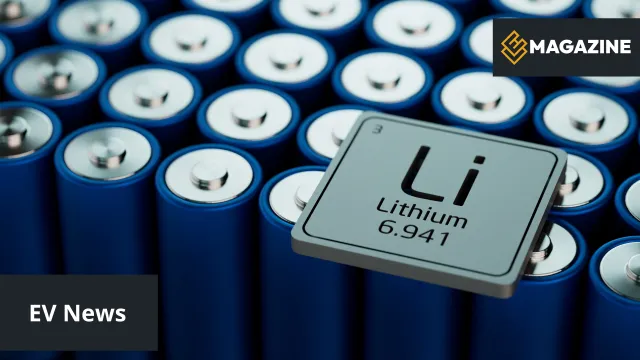
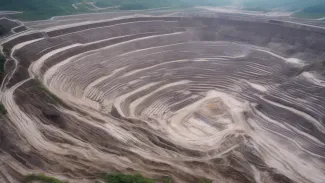
The Jianxiawo deposit is not a small quarry. With an annual production capacity of approximately 100,000 tonnes of battery-grade lithium carbonate, it accounted for an estimated 8–10% of China's total lithium carbonate output before it went dark. Losing it for almost twelve months was not a trivial event — and getting it back online is equally significant.
Why Was the Mine Shut Down?
The closure was administrative in origin but market-driven in motivation. When the mining licence for the Jianxiawo site expired in August 2025, Chinese regulators chose not to renew it immediately. The decision was deliberate: by that point, the global lithium market was suffering from a prolonged oversupply. Prices for lithium carbonate had collapsed from record highs above 500,000 yuan per tonne in late 2022 to well below 100,000 yuan by mid-2025, hammered by slower-than-expected EV adoption in some markets, high inventory buffers across the supply chain, and an aggressive ramp-up of mining capacity that had overshot demand.
Chinese authorities have shown a willingness to use regulatory levers to stabilise commodity markets. Refusing to renew the licence effectively kept a major source of supply offline during a period of structural oversupply — a form of managed production discipline that is rarely seen in Western mining industries but has precedent in China's rare-earth sector.
Lepidolite: The Mine's Distinctive Feedstock
The Jianxiawo deposit is a lepidolite source, which sets it apart from the spodumene and brine operations that dominate global lithium production. Lepidolite is a lithium-bearing mica found in granitic pegmatites; Jiangxi Province holds some of the world's largest reserves. Processing it into battery-grade lithium carbonate is more energy-intensive than working with spodumene, but CATL's vertically integrated facility handles the full chain on-site: open-pit extraction of lepidolite ore, followed by roasting, leaching, and chemical purification steps that yield the high-purity material needed for cathode manufacturing.
The end product feeds directly into CATL's own production lines for both lithium iron phosphate (LFP) and nickel-manganese-cobalt (NMC) battery chemistries — the two dominant cell types in today's electric vehicles. By controlling the mine, CATL reduces its exposure to spot-market lithium price volatility, a strategic hedge that rivals without upstream assets cannot easily replicate.
What the Restart Means for Supply Chains
The timing of the restart is telling. By mid-2026, EV demand globally is running at record levels — European battery-electric car registrations were up 38% year-on-year in April 2026, according to ACEA data. Chinese NEV penetration exceeded 63% of monthly new car sales in June. This resurgent demand is working its way through the supply chain, tightening lithium inventories and nudging prices back toward levels that make mining financially viable again.
For European EV manufacturers and their Tier 1 battery suppliers, CATL's mine restart matters in several ways. CATL supplies battery cells or complete battery systems to Volkswagen, BMW, Mercedes-Benz, Stellantis, and other European automakers. Any sustained tightness in CATL's upstream lithium supply would eventually pressure cell output, delivery schedules, or battery pricing. The Jianxiawo restart reduces that risk — at least from this particular node in the chain.
It also signals that Beijing is comfortable allowing production to resume, suggesting the regulatory view of the lithium market has shifted: the period of enforced supply discipline is, for now, over.
Vertical Integration as a Competitive Weapon
CATL's ownership of a mine that covers nearly a tenth of China's lithium carbonate output underscores a broader strategy the company has pursued relentlessly. Beyond Jiangxi, CATL has invested in lithium projects in Bolivia, the Democratic Republic of Congo (for cobalt), and Australia. It has signed long-term offtake agreements with miners on multiple continents and operates its own cathode material businesses.
This approach contrasts sharply with European battery cell manufacturers — Northvolt being the most prominent example — which have generally relied on purchasing materials on open markets and have faced acute difficulties when those markets moved against them. CATL's vertical integration provides a buffer that pure-play cell makers simply do not have.
For European policymakers who have watched critically as the continent's battery value chain remains dependent on Chinese companies for key inputs, the episode reinforces a familiar concern: a single regulatory decision in Beijing can ripple through the supply chains underpinning Europe's green transition.
What Comes Next
With the licence renewed and production restarting, the focus now shifts to ramp-up speed. A large open-pit lepidolite operation does not return to full capacity overnight — equipment must be recommissioned, workforce mobilised, and processing circuits brought back on line in sequence. Industry analysts will be watching monthly lithium carbonate output data from Jiangxi for signs of how quickly Jianxiawo returns to its design throughput of roughly 100,000 tonnes per year.
In the meantime, lithium market participants — including European battery and EV companies tracking raw material costs — will be weighing whether the restart signals a sustained loosening of supply or merely a temporary easing after an unusual period of state-managed restraint. Either way, one of the world's most important lithium operations is back, and the global EV industry is paying close attention.
Why did CATL's Jiangxi lithium mine shut down in 2025?
The mining licence for the Jianxiawo deposit in Jiangxi Province expired in August 2025, and Chinese authorities chose not to renew it immediately. The decision reflected a government effort to stabilise the lithium market, which was experiencing severe oversupply and price collapses at the time. This is consistent with China's history of using regulatory tools to manage strategic commodity markets.
How significant is CATL's Jiangxi mine for global lithium supply?
The Jianxiawo facility has an annual production capacity of approximately 100,000 tonnes of battery-grade lithium carbonate — equivalent to roughly 8–10% of China's total lithium carbonate output. China is the world's dominant processor of lithium materials, so this single mine represents a meaningful share of global refined lithium supply feeding into EV battery production.
Does CATL's mine restart affect European electric car buyers?
Indirectly, yes. CATL supplies battery cells to many European automakers including Volkswagen, BMW, and Mercedes-Benz. If CATL's upstream lithium supply were constrained for an extended period, it could eventually affect battery pricing or availability for European EV models. The mine's restart reduces that upstream risk and supports CATL's ability to maintain competitive cell supply to its global customers.
Source: https://www.electrive.com/2026/07/01/catl-resumes-operations-at-its-lithium-mine-in-jiangxi/