
Listen to this article:
From Concept to Cancelled: The Rise and Fall of the LF-ZC
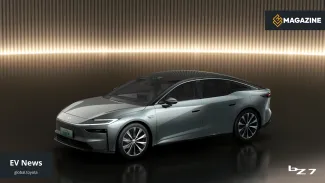
When Toyota unveiled the Lexus LF-ZC concept at the Japan Mobility Show in October 2023, the ambition was unmistakable. The sleek electric sedan was presented as a near-production preview: an elegant, low-slung saloon with claims of over 1,000 km of range, sub-2-second acceleration to 100 km/h, and a technological showcase for Toyota's next-generation manufacturing processes. Here, finally, was a Lexus EV that looked and sounded like a genuine rival to the Tesla Model S, the BMW i5, or the Mercedes EQE.
Production was first targeted for late 2026, then quietly pushed to mid-2027. Now, Nikkei Asia reports that Toyota has decided not to produce the LF-ZC at all. The factory in Aichi Prefecture, Japan, where the car was planned to be built, will not see it roll off the line.
Manufacturing Innovation Without the Model
Perhaps the most revealing detail in the cancellation is what Toyota says it will continue. The automaker intends to press ahead with research into gigacasting — the process of casting large structural aluminium sections in a single piece, dramatically reducing part count and assembly complexity. Toyota was also developing a self-propelled assembly line, where autonomous carrier systems move vehicle bodies through the factory without fixed conveyor belts, allowing for far greater production flexibility.
These are the same technologies that Tesla has deployed at its gigafactories and that Volkswagen is exploring for its next platform. Toyota recognised their potential — it simply no longer plans to debut them on the LF-ZC. Whether a different model will be the first beneficiary of this manufacturing philosophy is not yet clear.
The decision also does not spell the end of Toyota's solid-state battery research, which the company has long positioned as its ace card in the electrification race. Toyota has maintained that its solid-state cells, which promise greater energy density and faster charging than current lithium-ion technology, will arrive by the late 2020s. That roadmap, at least for now, appears intact.
The SUV Pivot and a Broader Market Reality
The cancellation fits a pattern that is emerging across the global automotive industry: electric sedans are a difficult sell. Even in markets where EV adoption is accelerating, the majority of demand is concentrated in SUVs and crossovers. Tesla's Model 3, despite its strong brand, is consistently outsold by the Model Y in Europe. BMW's i5 sedan occupies a niche. Mercedes' EQE has struggled to replicate the commercial success of the larger EQS SUV.
Reports suggest that future Lexus and Toyota electric models will emphasise SUV body styles, aligning production decisions with where buyers actually spend their money. For European consumers, this means the Lexus EV lineup is likely to follow the broadly successful model established by the Lexus RZ 450e, an SUV-format EV, rather than expanding into sedan territory.
Toyota's broader EV situation in Europe adds further context. The brand has been a hybrid pioneer for three decades — the Prius and its successors changed the industry — but the transition to pure battery-electric vehicles has been slower and more hesitant than initially promised. The bZ4X, Toyota's first mass-market global BEV, faced an early recall and slow sales before finding its footing. Lexus has been even more cautious, with the RZ 450e receiving a warm but not spectacular European reception.
What It Means for European Lexus Buyers
For European motorists who had been eyeing the LF-ZC as a potential alternative to German luxury EV sedans, the cancellation is a genuine disappointment. The concept pointed toward something genuinely distinctive: a Japanese interpretation of the premium electric sedan that prioritised craftsmanship, a low centre of gravity, and a driving character different from the software-heavy, screen-saturated approach of competitors.
That vision, for now, will remain a concept. Lexus Europe's electric offerings will continue to be anchored by the RZ family. Whether a new sedan concept emerges in the coming years — potentially with solid-state batteries onboard — will depend heavily on whether Toyota's ambitious battery timeline holds and whether consumer demand for premium electric sedans recovers.
The LF-ZC story is also a reminder that concept cars are promises, not contracts. Automakers routinely use show cars to test public reaction, attract talent, and signal intent. When market conditions shift — as they have with slowing EV demand growth in some premium segments — those promises can be quietly withdrawn. Toyota has done what many automakers are doing behind closed doors: recalibrating expectations to match reality.
Toyota's Path Forward
Despite the setback, Toyota is far from retreating from electrification. The bZ4X Touring, launched in 2026, represents a more refined take on its mainstream EV ambitions. The company continues to invest heavily in next-generation battery technology and is expanding EV production capacity in Japan, the United States, and Europe. The question is whether those investments will coalesce into compelling, timely products — or whether Toyota's instinct for caution will continue to keep it a step behind the pace-setters in the EV segment.
For Lexus specifically, the challenge is acute. The brand built its reputation on near-silent refinement and meticulous build quality — values that translate naturally into the electric era. The LF-ZC demonstrated that Lexus has the design and engineering imagination to compete at the highest level. The decision to shelve it suggests that translating imagination into production-ready hardware, at the right price, in the right timeline, remains a work in progress.
What was the Lexus LF-ZC and when was it supposed to launch?
The Lexus LF-ZC was an electric sedan concept unveiled at the Japan Mobility Show in October 2023. It was presented as a near-production car targeting a 2026 launch, with claims of over 1,000 km range and sub-2-second acceleration. Toyota has now confirmed it will not be built.
Will Toyota still develop gigacasting and solid-state battery technology?
Yes. Despite cancelling the LF-ZC, Toyota says it will continue research into gigacasting manufacturing processes and solid-state batteries. Both technologies are expected to appear in future Toyota and Lexus vehicles, though no specific models or timelines have been confirmed.
What electric Lexus models are available in Europe now?
The main Lexus EV currently available in Europe is the Lexus RZ 450e, an electric SUV. Lexus has signalled that future electric models are more likely to be SUVs or crossovers, aligning with where demand is strongest in the European premium segment.
Source: https://www.electrive.com/2026/05/29/toyota-reportedly-pauses-plans-for-electric-lexus-saloon/