For much of its existence, Rivian has been viewed as a premium brand, catering to enthusiasts who demand high-performance, rugged electric adventures. The R1T pickup and R1S SUV have set high standards for capability, but their high price tags have limited their reach. However, the upcoming Rivian R2 represents a fundamental shift in the company's strategy. During a recent quarterly earnings call, Rivian outlined how it has managed to slice input costs in half, a feat that is essential for the company's long-term profitability and global scaling.
The Economics of the R2: Aiming for the $45,000 Sweet Spot
The primary goal for the R2 is accessibility. While the R1 series serves as a halo product, the R2 is designed to be the volume driver. Rivian has indicated that the base model of the R2 is expected to start at approximately $45,000 (roughly €42,000 depending on exchange rates). For those seeking more power, the R2 Performance variant is projected to launch at around $58,000.
To achieve these price points without sacrificing the brand's signature quality, Rivian had to rethink its entire approach to manufacturing. Reducing the cost to build a vehicle by 50% is not merely about using cheaper materials; it is about fundamental engineering efficiency. This cost reduction is the key to Rivian's ability to compete with established giants like Tesla and rapidly growing Chinese manufacturers.
Engineering Simplicity: Fewer Parts, More Value
How does a manufacturer cut costs so drastically? Rivian's strategy relies heavily on the principle of "less is more." According to recent reports, the company has found ways to reduce the number of parts in certain manufacturing areas by as much as 90%.
This reduction is achieved through several clever engineering methods:
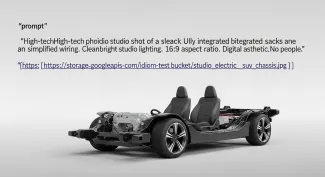
- Simplified Wiring: One of the most significant cost drivers in traditional vehicle manufacturing is the wiring harness. Rivian has worked to shorten wires and consolidate electrical paths, reducing both the weight of the vehicle and the complexity of assembly.
- Integrated Components: By combining multiple functions into single, integrated modules, Rivian reduces the total number of individual components that need to be sourced, tested, and installed.
- Optimized Architecture: The R2 is built on a platform specifically designed for mass production, avoiding the "over-engineering" that often occurs when a company tries to adapt a luxury platform for a budget vehicle.
In technical terms, this is known as Design for Manufacturing (DfM). By designing the car with the assembly line in mind, Rivian minimizes the time and labor required to build each unit, which directly translates to lower costs per vehicle.
The Global Context: Can Rivian Compete in Europe?
While Rivian is currently a US-centric brand, the R2 is a vehicle with global ambitions. For European consumers, the R2's arrival could be a game-changer. Currently, the European compact and mid-size SUV segments are dominated by the Tesla Model Y, the Volvo EX30, and various models from the Volkswagen Group.
The Volvo EX30, in particular, has set a benchmark for high-quality, smaller electric SUVs at a competitive price. If Rivian successfully brings the R2 to Europe, it will face a highly competitive landscape. A $45,000 price point is attractive, but European buyers will also be looking at range, charging infrastructure compatibility, and local service networks. Given the R2's design, it is expected to offer a range and efficiency profile that rivals the current leaders in the segment, potentially offering more "adventure-ready" features than its more urban-focused competitors.
Furthermore, Rivian's focus on efficiency means the R2 is likely to benefit from optimized battery management systems, which is crucial for maintaining range in the varied climates found across Europe, from the Mediterranean to the Nordics.
Conclusion: A Pivotal Moment for Rivian
The success of the R2 will likely determine the future of Rivian. The ability to produce a high-quality vehicle at half the cost of its predecessors proves that the company is maturing from a startup into a sophisticated manufacturer. If Rivian can maintain these margins while scaling production, it will transition from a niche luxury brand to a mainstream powerhouse in the global electric vehicle market.
When will the Rivian R2 be available for purchase?
While specific delivery dates vary by trim, Rivian expects customer deliveries to begin in the coming years, with the R2 Performance variant leading the initial rollout.
Will the R2 be available in the European market?
Rivian has not officially confirmed a European launch date for the R2, but the vehicle's design and price point are clearly aimed at a global audience, making a European expansion highly plausible.
How does the R2 compare to the R1 in terms of size?
The R2 is designed as a more compact crossover compared to the larger R1S SUV, making it more suitable for urban environments and a broader range of driving needs.