For many electric vehicle (EV) drivers, particularly those in Northern and Central Europe, the "winter range anxiety" is a very real phenomenon. As temperatures drop, the efficiency of lithium-ion batteries decreases, and the energy required to heat the cabin and maintain battery temperature can slash a vehicle's total range by as much as 20% to 30%. Tesla, a company that has long led the industry in software-driven efficiency, appears to be looking for a hardware-based solution to this persistent problem.
The Science of Thermal Management
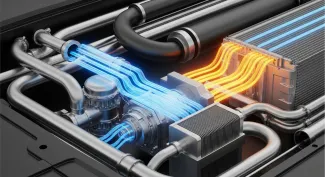
To understand why Tesla's new patent is significant, we must first look at how modern EVs manage heat. Unlike internal combustion engine (ICE) vehicles, which use waste heat from the engine to warm the cabin, EVs must actively manage temperature. This is done through a heat pump system. A heat pump works like a refrigerator in reverse, moving heat from one place to another rather than generating it through resistance.
While Tesla has already implemented highly efficient heat pumps in its newer models, such as the Model Y and Model 3, there is always room for optimization. According to technical insights into Tesla's thermal systems, the goal is to maximize the Coefficient of Performance (COP)—essentially, how much heat you get for every unit of electricity consumed.
The new patent suggests a departure from standard air-flow methods. Instead of relying solely on traditional fans and compressors, Tesla is investigating the use of vacuum-assisted or pressure-controlled air management. By manipulating air pressure, Tesla could potentially move heat more efficiently between the battery, the motor, and the cabin, reducing the energy "tax" paid to keep the vehicle operational in harsh climates.
Addressing the Range Gap
The implications for range are substantial. In a typical European winter, a long-range EV with a 75 kWh battery might see its effective range drop from 450 km to just 320 km due to heating demands. If Tesla can use this new thermal management technology to reduce the energy consumption of the HVAC (Heating, Ventilation, and Air Conditioning) system by even 10%, that translates to dozens of extra kilometers of driving without increasing the battery size or weight.
This is a critical competitive advantage. As European manufacturers like Volkswagen (with their ID series) and BMW (with the i4 and iX) continue to refine their thermal management, Tesla's ability to squeeze more kilometers out of the same battery pack remains a key differentiator in the premium EV market.
Competitive Landscape: Tesla vs. The World
Tesla is not the only player focused on this. The Korean manufacturers, Hyundai and Kia, have set a high bar with their E-GMP platform, which utilizes highly efficient heat pumps and pre-conditioning features to prepare the battery for fast charging. However, Tesla's approach often leans more heavily on integrated software control, allowing the car to predict thermal needs based on navigation data and ambient temperature.
If Tesla's vacuum-based patent moves from the drawing board to production, it could offer a more robust solution for extreme cold. While many current systems struggle when temperatures dip below -10°C, a more advanced pressure-controlled system could maintain optimal battery temperatures with much lower electrical overhead. This would be particularly beneficial for the growing market of electric fleets and long-distance commuters in regions like Scandinavia and the Alpine regions of Europe.
The Impact on Battery Longevity
Beyond just range, thermal management is the key to battery health. Lithium-ion batteries are sensitive to temperature extremes. Operating too cold can lead to lithium plating, while operating too hot accelerates chemical degradation. By providing a more precise and efficient way to regulate temperature, Tesla's proposed system could potentially extend the overall lifespan of the battery pack, increasing the residual value of the vehicle in the second-hand market.
While we do not yet know when this technology will appear in a production vehicle, the patent filing indicates that Tesla is prioritizing the refinement of the "invisible" components of the EV—the systems that ensure the car performs as promised, regardless of whether the driver is in the heat of Spain or the frost of Sweden.
How much does cold weather actually affect EV range?
Depending on the vehicle and the severity of the cold, range loss can typically range between 20% and 30%. This is due to the energy required to heat the battery and the passenger cabin, as well as the decreased chemical efficiency of the cells.
Will this new technology be available in current Tesla models?
Patents do not always result in immediate production changes. It is likely that this technology will be introduced in future vehicle platforms or major hardware refreshes rather than being retrofitted into existing models.
What is a heat pump in an electric car?
A heat pump is an efficient thermal management component that moves heat from the outside air or from internal components (like the motor) into the cabin or battery, using much less energy than a traditional electric heater.