
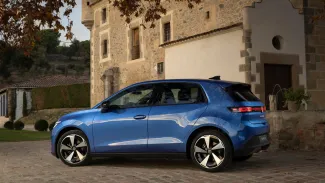
Why the ID. Polo matters
After years of relying on combustion engines in the supermini class, Volkswagen is finally bringing electricity to its volume seller. The ID. Polo is not a niche experiment. It is built on the MEB+ platform, the latest evolution of the Group’s modular electric architecture, and it is developed jointly within the Brand Group Core alongside SEAT, CUPRA, and Škoda. That shared engineering is supposed to keep costs down while spreading technology across millions of vehicles.
For European buyers, the timing is hard to ignore. The EU’s 2035 ban on new CO₂-emitting cars is inching closer, and affordable EVs are still thin on the ground. The ID. Polo enters a segment where the Renault 5 E-Tech, Peugeot E-208, and BYD Dolphin are already fighting for attention. Volkswagen is betting that its dealership network, build-quality reputation, and the Polo's familiar silhouette will count for more than simply arriving first.
Batteries, power, and range
At launch, the ID. Polo will come with three power outputs and two battery sizes. The entry-level variants use a 37 kWh (net) LFP battery paired with either an 85 kW (116 PS) or 99 kW (135 PS) motor. Volkswagen forecasts a WLTP range of up to 329 km for these versions, with a maximum DC charging speed of 90 kW.
Step up to the 52 kWh (net) NMC pack and the front-mounted motor produces 155 kW (211 PS). That is a significant jump, and the reward is a provisional WLTP range of up to 454 km. DC charging peaks at 105 kW. Every version, including the base Trend, gets DC rapid charging as standard — a welcome move when some rivals still hide faster plugs behind option lists.
Volkswagen quotes combined energy consumption of 14.6–13.3 kWh/100 km. Real-world drivers should expect roughly 15–17 kWh/100 km in mixed use, which would translate to around 300–340 km for the smaller battery and 380–420 km for the larger one in everyday European conditions.
Design and space: a grown-up supermini
Visually, the ID. Polo is the first production car to adopt Volkswagen’s new "Pure Positive" design language. Chief designer Andreas Mindt and his team have kept the Polo's proportions compact — 4,053 mm long, 1,816 mm wide, and 1,530 mm high — but the 2,600 mm wheelbase is noticeably longer than the current combustion Polo’s 2,552 mm. The result is a shorter nose and more interior volume. The luggage compartment swallows 441 litres, which is 90 litres more than the ICE Polo and larger than some compact hatchbacks from the class above.
Inside, Volkswagen is making a virtue of physical controls. There are real buttons, rotary dials, and a 10-inch Digital Cockpit paired with a 13-inch Innovision infotainment screen. A "retro display" option nods to the Golf Mk1, and the ID. Light ambient system now extends into the front doors. It is a deliberate contrast to the ultra-minimalist cabins that have frustrated many ID.3 and ID.4 owners.
Tech and driver assists
The ID. Polo introduces Connected Travel Assist with automatic traffic-light recognition to the supermini class. The system can brake to a standstill at a red light within its operational limits. One-pedal driving is also standard, allowing strong deceleration without touching the brake pedal.
Even the entry Trend trim includes LED headlights, Side Assist, Lane Assist with Emergency Assist, automatic climate control, and a leatherette multifunction steering wheel. Life adds Adaptive Cruise Control, wireless smartphone charging, and a variable boot floor. Style tops the range with IQ.LIGHT LED matrix headlights, 3D LED tail lights, sport comfort seats, and a massage function for the electrically adjustable front seats — a feature virtually unheard of at this price point.
Vehicle-to-Load (V2L) is standard across the board. With a Schuko adapter, the car can supply up to 3.6 kW to external devices, from e-bikes to camping equipment. Depending on the version, a braked towing capacity of up to 1,200 kg is also possible.
Charging and running costs
Volkswagen is bundling the ID. Polo with a new We Charge City Tariff from its Elli subsidiary, designed to make public charging in urban centres as cheap as home charging. For drivers with a home wallbox, Elli’s dynamic electricity tariff promises to shift charging to off-peak hours, with simulated savings of up to 30 percent. In practice, the actual saving will depend heavily on local utility rates and daily driving patterns.
The 90–105 kW DC charging speeds are acceptable for a car in this class, but they are not class-leading. The MG4 Electric already handles up to 135 kW, and several 800-volt architectures in larger segments are pushing far beyond that. For urban drivers topping up during a weekly shop, the difference may be academic. For anyone regularly covering long distances on the Autobahn or between European capitals, a 10–80 percent charge will take roughly 30–35 minutes — plan your coffee breaks accordingly.
Price and positioning
The headline figure is €24,995 in Germany for the ID. Polo Trend with the 37 kWh battery. That undercuts the larger MG4 and places the ID. Polo in the same ballpark as the Renault 5 E-Tech. In markets such as France, the Netherlands, and the Nordics, local incentives and taxes will shift the final number, but the starting position is aggressive for a European-built MEB+ vehicle.
Volkswagen is also keeping the combustion-engine Polo on sale for now. The electric version is slightly shorter but wider and taller, with a more cab-forward silhouette. It is a clear signal that the two powertrains will coexist for at least the remainder of this decade, giving buyers a gradual transition path rather than an abrupt switch.
What Volkswagen is not saying
For all the optimism, there are gaps in the story. Volkswagen has not published AC charging speeds, which suggests the standard onboard charger is likely 11 kW — adequate, but not exceptional. The top speed is capped at 160 km/h across all non-GTI versions, a pragmatic choice for efficiency that may frustrate drivers on unrestricted German motorways.
More importantly, the 37 kWh LFP battery’s 329 km WLTP range will shrink noticeably in winter. European drivers in Scandinavia or the Alps should realistically budget for under 250 km between charges from December to February. That makes the larger 52 kWh battery less of a luxury and more of a necessity for anyone living outside temperate urban centres.
Finally, while €24,995 is a genuinely tempting entry price, Germany’s base trim is often stripped compared with what other markets receive as standard. Expect the average transaction price across Europe to land closer to €28,000–€30,000 once buyers move up to Life or Style trims and add a colour other than white.
Will the electric ID. Polo replace the petrol Polo immediately?
No. Volkswagen has confirmed that the combustion-engine Polo will remain on sale for now, running in parallel with the new electric model. The two cars share a showroom but not a platform — the ICE Polo uses the MQB architecture, while the ID. Polo is built on MEB+.
What is the real-world range of the ID. Polo in winter?
With the 37 kWh battery, expect roughly 200–250 km in cold weather with heating on. The 52 kWh version should manage 300–350 km under similar conditions, though this depends on driving speed, terrain, and use of climate control.
When will the ID. Polo GTI arrive, and how powerful will it be?
The ID. Polo GTI is scheduled for 2027. It will use the 52 kWh NMC battery and a 166 kW (226 PS) motor, making it the most powerful version of the lineup. Final range and performance figures have not yet been released.
Source: https://www.volkswagen-newsroom.com/en/the-all-new-electric-id-polo-world-premiere-20343