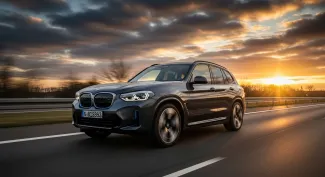
Record-breaking figures Europe has been waiting for
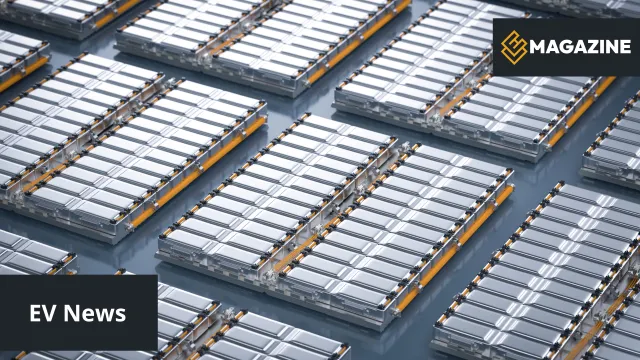
When BMW unveiled the iX3 at its home motor show in Munich in September 2025, it was the first series-production model built on the Neue Klasse platform. This is not just a marketing name — it is an entirely new EV architecture with an 800-volt electrical system, cylindrical cells, and a Cell-to-Pack design where the battery pack is a structural part of the body. Thanks to this, BMW squeezed a 108.7 kWh usable battery into a vehicle under 4.7 metres long.
The result is 805 km of WLTP range for the xDrive 50 version, a genuinely exceptional figure in the mid-size premium SUV class. The car accelerates from 0 to 100 km/h in 4.9 seconds thanks to a system output of 345 kW, with all-wheel drive combining a synchronous rear motor and an asynchronous front motor. DC charging peaks at 400 kW, which BMW claims can add roughly 300 km of range in 10 minutes and charge from 10 to 80 % in about 21 minutes.
The market responded immediately. According to CEO Oliver Zipse, BMW achieved a record number of orders in Europe in the first quarter of 2026. The iX3 itself has sold more than 50,000 units since its debut, and demand for BMW EVs rose by over 60 % year-on-year. In the Czech Republic — a market traditionally cautious about electromobility — the factory in Debrecen, Hungary, had to add a second shift and increase quotas to over 260 cars.
When reality bites
The problem arises when those paper figures meet real-world use. The first long-term owner data published on social media brings numbers that are not as impressive as one would expect from a technological flagship. A French owner who has driven 12,222 km reports an average consumption of 22.3 kWh/100 km at an average speed of just 66.3 km/h — a mix of city, country roads, and a little motorway, in varying weather conditions (X / Yoann_en_VE).
For comparison, the same driver routinely achieves 14 kWh/100 km in urban use with his Tesla Model Y and 17 kWh/100 km on a long-distance trip at an average of 100 km/h. The gap is enormous. At an average speed of 66 km/h, even a larger SUV should be significantly more efficient than figures typically seen in smaller EVs only at motorway speeds.
A Czech test by fdrive.cz delivered slightly more optimistic numbers, but with important context. In regular urban and rural driving, the iX3 returned 13.8 kWh/100 km, which is excellent. At 130 km/h on the motorway, however, consumption rose to 21.6 to 23 kWh/100 km. A combined loop of 181 km ended at an average of 20.6 kWh/100 km. That translates to a real-world range well over 500 km — still great, but far from the magical 800 km.
So where is the catch? Weight. Exact homologated kerb weight has not been officially confirmed for all markets, but with a battery of nearly 110 kWh and the dimensions of a mid-size SUV, experts agree on an estimate of around 2,350 to 2,450 kg. That is substantially more than more compact rivals, and every day that mass must be accelerated even on short commutes.
Big battery: blessing or curse?
This brings us to the heart of the matter. BMW bet on a philosophy of maximum range. With 108.7 kWh of usable capacity, the iX3 theoretically has the reserve for long trips and winter driving without range anxiety. Yet every additional kilowatt-hour adds tens of kilograms, and that translates into consumption precisely in the kind of short-cycle urban driving where the car is constantly accelerating and braking.
The alternative path, long proven by Tesla and some Chinese manufacturers, says: smaller battery, lower weight, higher drivetrain efficiency, and fast charging. Covering 1,000 km with one or two 15-minute stops is no exception on today's European charging network. BMW may offer 400 kW, but that large battery needs feeding. Higher consumption, higher costs.
For drivers who mostly cover urban and suburban kilometres, the oversized battery is partly dead weight. And for those who frequently drive on motorways, it means higher consumption precisely because of that weight. The question, then, is: would an 80 kWh battery, 600 km WLTP, and weight under two tonnes not be enough? BMW clearly thinks not. The market so far agrees, but the first real-world owner data suggest that efficiency is not the strong suit of this concept.
The market bought it. What about drivers?
The economic context is interesting. In the first quarter of 2026, BMW posted a 23 % drop in profit and 8.1 % lower revenue, yet the company stresses that strong orders — especially in Europe — point to a better second half. Weakness in China, where German brands are losing share, is so far being offset by European EV success (ecomento.de).
In the Czech Republic, the iX3 is priced from approximately €68,000 for the xDrive 50 version. That is comparable to the Mercedes GLC EV, more expensive than the Audi Q6 e-tron, but cheaper than large SUVs from Lucid or higher Tesla Model X trims. Demand is strong enough that the importer had to raise quotas. It seems Czech customers believe the paper specs — and perhaps have not yet had the chance to compare real-world consumption with rivals side by side.
Verdict still incomplete
The BMW iX3 is undeniably a technologically imposing vehicle. The Neue Klasse platform, 800-volt architecture, Cell-to-Pack battery, and Panoramic iDrive push the Bavarian brand forward after more than a decade of electrification that began with the i3. The car drives like a BMW should — sporty, composed, with precise steering. The 400 kW charging capability is future-proof, even if that future is not yet available everywhere.
Yet the first data from owners and independent testers show that efficiency is not what one might expect from sixth-generation eDrive. Consumption of 22 kWh/100 km in mixed driving at an average below 70 km/h is high for a modern premium EV. The large battery compensates with raw range, but it also partly causes the higher consumption through its weight.
The final word will only come after a detailed editorial test including a charging curve measurement at a 400 kW station and long-term consumption data in real European conditions. Until then, the iX3 is a well-executed electric vehicle that will help BMW grow. Whether it is truly as efficient as claimed, however, remains to be seen. We hope to get the car in for an independent test soon.
Why is the BMW iX3 consuming so much despite its modern technology?
The main reason is likely weight. With a battery of nearly 110 kWh and the dimensions of a mid-size SUV, experts estimate a kerb weight around 2,350–2,450 kg. Every acceleration and deceleration in urban traffic consumes energy to move that mass, resulting in higher consumption than lighter rivals.
Should buyers wait for the rear-wheel-drive iX3 version?
The rear-wheel-drive variant should offer even more range than the xDrive 50 and likely slightly lower consumption thanks to the absence of a front motor. For drivers who do not need all-wheel drive, it may be the more rational choice — especially if it is also priced more affordably.
Is 400 kW charging already available across Europe?
Not yet. While some new stations from operators like Ionity and Mega-E are beginning to offer 350 kW or more, true 400 kW charging is still rare in most EU markets. In many Central and Eastern European countries, the public network currently tops out at 150–200 kW. So for now, owners will use only a fraction of the car's claimed peak.