Listen to this article:
The Legacy of a Disrupted Segment
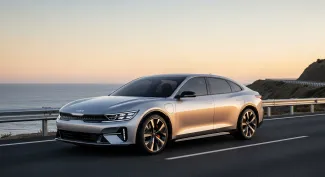
When the Kia Stinger first arrived, it was a disruptor. It offered a rear-biased driving dynamic and a sophisticated silhouette that challenged established European luxury brands. However, the internal combustion engine (ICE) era is drawing to a close. For Kia, the challenge is to translate that "soul" into an electric format without losing the character that made the original so beloved.
As we move through 2026, the market for high-performance electric grand tourers is becoming increasingly crowded. To succeed, a Stinger successor cannot merely be a fast electric sedan; it must offer a specific driving identity. This means focusing on handling precision, aesthetic elegance, and, crucially, long-distance usability.
The Technical Foundation: The eM Platform
Rumors and industry leaks suggest that any successor to the Stinger will likely be built on Kia's next-generation eM platform. Unlike the E-GMP platform used for the Kia EV6 and EV9, the eM platform is designed to support even higher performance levels and more advanced software architectures.
To compete with the best, the new model will almost certainly feature an 800V architecture. For those unfamiliar with the term, 800V refers to the high-voltage system that allows for much faster charging speeds compared to standard 400V systems. In practical terms, this means a driver could potentially charge from 10% to 80% in under 18 minutes at a high-power DC fast charger, significantly reducing "range anxiety" on long European motorway trips.
We expect the powertrain to consist of a dual-motor setup, delivering upwards of 450 kW (approximately 600 hp). To maintain the Stinger's GT credentials, the battery capacity will likely sit between 85 kWh and 100 kWh, aiming for a WLTP range (the European standard for measuring driving range) of at least 550 km. This ensures the car remains a viable option for cross-continental travel.
The Challenge of Cost and Competition
One of the most significant hurdles for Kia is the "cost of performance." Building a high-performance EV is expensive. If Kia prices the successor too high, they risk competing directly with the Porsche Taycan or the BMW i4, brands with much higher levels of prestige. If they price it too low, they may struggle to recoup the massive R&D costs associated with high-performance electric drivetrains.
In the European market, where premium electric sedans are a staple, the competition is fierce:
- BMW i4: Known for its exceptional driving dynamics and traditional luxury feel.
- Tesla Model 3 Performance: The benchmark for efficiency and software integration, though often criticized for its minimalist interior.
- Audi e-tron GT: A masterclass in design and high-speed stability, though at a significantly higher price point.
Kia's opportunity lies in the "sweet spot"—offering a car that feels more premium than a standard mass-market EV but remains more accessible than a dedicated luxury brand like Porsche. This requires a careful balance of high-quality materials and cutting-edge technology without the extreme price tag of a supercar.
Impact on the European Market
For European drivers, the arrival of a high-performance Kia EV would be a significant development. The continent has a high density of high-speed charging infrastructure, making a long-range GT highly practical. We anticipate that if this model launches, it will be positioned in the €65,000 to €85,000 price bracket, targeting professionals who want a performance vehicle that is also a daily driver.
Furthermore, the integration of advanced regenerative braking systems and sophisticated torque vectoring will be essential. These technologies allow the car to recover energy during deceleration while simultaneously helping the car rotate through corners, mimicking the mechanical feel of the original Stinger's rear-wheel-drive setup.
Will the electric Stinger successor be rear-wheel drive?
While most high-performance EVs use dual-motor All-Wheel Drive (AWD) for maximum traction, Kia is expected to use advanced torque vectoring to provide a rear-biased driving feel, maintaining the spirit of the original Stinger.
How fast can the car charge?
By utilizing an 800V architecture, the car is expected to support ultra-fast DC charging, potentially allowing for a 10% to 80% charge in roughly 18 minutes at compatible stations.
When can we expect it to be available in Europe?
Based on current development cycles for the eM platform, we anticipate a reveal and subsequent European market availability around late 2026 or early 2027.