Listen to this article:
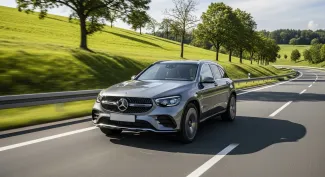
Electric GLC becomes Mercedes' hottest EV launch ever
The numbers speak for themselves. In the first quarter of 2026, the electric GLC recorded the strongest order intake of any battery-electric model Mercedes-Benz has ever launched. That matters because the combustion-powered GLC has long been the brand's global bestseller — and now its electric successor is taking the baton at a sprint pace.
What makes this particularly significant is the context. Mercedes has been launching EVs for over half a decade. The EQC arrived in 2019, followed by the EQE, EQS, and a growing lineup of electric SUVs and sedans. None of them landed with the force the electric GLC is showing right now. The message from the market is clear: premium SUV buyers, once hesitant about going electric, are now ready — provided the product is right.
Inside the Bremen ramp-up: three shifts, one production line
The Bremen plant is no stranger to electrification. Back in 2019, it became the first Mercedes factory to begin high-volume production of a fully electric model with the EQC. Since then, it has steadily expanded its electric portfolio with plug-in hybrids and additional battery-electric vehicles. The electric GLC is now the third all-electric series model manufactured at the site.
Assembly takes place in Hall 9, the plant's largest production hall. What makes the setup noteworthy is flexibility — the electric GLC shares its line with the combustion and plug-in hybrid versions of the same model, as well as the EQE. This mixed-line production has been a strategic priority for Mercedes for over a decade, allowing the company to shift volumes between powertrain types as market demand dictates. Right now, the demand is leaning heavily electric.
With more than 10 million vehicles produced since opening and roughly 10,000 employees, Bremen remains one of northern Germany's largest industrial employers. The move to three shifts represents a significant operational commitment — one that signals Mercedes-Benz is treating the electric GLC not as a niche compliance car but as a volume product in the making.
800-volt architecture and up to 715 kilometres of range
At the heart of the electric GLC is a next-generation 800-volt architecture. Combined with a lithium-ion battery offering 94 kWh of usable capacity, the top-spec GLC 400 4MATIC EQ Technology achieves a WLTP range of up to 715 kilometres. That puts it among the longest-range electric SUVs in its class.
Charging speed is where the 800-volt system truly earns its keep. Under ideal conditions, the GLC can add up to 305 kilometres of range in just 10 minutes at a compatible fast charger. For drivers who regularly cover long distances, this changes the calculus of going electric — a ten-minute stop replenishes enough energy for roughly three hours of motorway driving.
The battery cells come from the Mercedes-Benz Accumotive plant in Kamenz, Saxony. Electric drive units are manufactured in Sebeși, Romania, while key components including the electric axles are supplied from the Hamburg site. This cross-border European production network not only ensures scalability but also keeps critical technology supply within the continent — a topic of growing importance amid ongoing debates about European industrial sovereignty.
More space, more practicality, more tech
The electric GLC is not simply a combustion GLC with batteries swapped in. It rides on a wheelbase stretched by 84 millimetres, which translates into a noticeably roomier interior. Boot capacity sits at 570 litres, expanding to 1,740 litres with the rear seats folded. Up front, a 128-litre frunk provides additional storage — practical for charging cables or a small weekend bag. Towing capacity reaches 2.4 tonnes (braked trailer), making it a viable option for caravan owners making the switch.
Standard equipment includes a heat pump and V2G bidirectional charging readiness, meaning the car is technically prepared to feed power back into the grid once regulatory frameworks catch up. The vehicle runs on MB.OS, Mercedes' fourth-generation operating system — notable for being the first automotive OS to integrate artificial intelligence from both Microsoft and Google simultaneously. An optional MBUX Hyperscreen stretches 99.3 centimetres across the dashboard, and the SKY CONTROL panoramic roof can project 162 stars onto the cabin ceiling at night.
Why the European market is ready
The electric GLC enters a market that is maturing fast. According to ACEA figures cited by the manufacturer, battery-electric vehicles accounted for 19.4% of new car registrations in Europe in the first quarter of 2026. Premium SUVs have been one of the last segments where EV adoption lagged behind smaller vehicles — largely because long-distance capability and towing capacity are non-negotiable for buyers in this class.
With over 700 kilometres of range and ultra-fast charging, the electric GLC addresses both concerns directly. A family driving from Munich to the Italian coast, for example, would need a single brief charging stop — roughly the time it takes to use the restroom and grab a coffee. That is the kind of real-world usability that shifts perception from "compromise" to "upgrade."
The vehicle is being rolled out across all European markets, with first customer deliveries happening in the first half of 2026. The GLC 400 4MATIC EQ Technology serves as the range-topping launch variant. More affordable versions with smaller battery packs are expected to follow later in the year.
A factory that tells a bigger story
There is a symbolic dimension to the Bremen ramp-up that goes beyond the GLC itself. The same factory floors that once churned out predominantly diesel-powered executive saloons are now building one of Europe's most significant electric SUVs. That transition — from internal combustion to electric, running on the same flexible production lines — is the automotive industry's defining challenge of this decade.
Mercedes-Benz has described the electric GLC as the opening act of the largest product offensive in its history. If the order books from Bremen are any indication, that offensive is starting on remarkably solid ground.
What is the real-world motorway range of the electric Mercedes GLC?
While WLTP testing delivers up to 715 km, real-world motorway driving at 130 km/h typically reduces that to roughly 500–550 km, depending on temperature, wind, and road profile. In city driving with frequent regenerative braking, the range can actually exceed the WLTP figure. Independent range tests are expected as deliveries begin in the coming weeks.
Can the electric GLC charge on older 400-volt fast chargers?
Yes. The vehicle is equipped with an onboard DC/DC converter that enables charging at 400-volt stations, so it is not limited exclusively to the latest 800-volt infrastructure. This is particularly relevant in markets like Central and Eastern Europe, where 800-volt chargers are still being rolled out.
How does the electric GLC compare to the combustion version in everyday use?
The electric model offers a noticeably more spacious cabin thanks to an 84 mm longer wheelbase, plus the 128-litre frunk that the combustion version lacks entirely. Boot space is comparable at 570 litres. Towing capacity is identical at 2.4 tonnes for the braked trailer. The key difference is running costs — electricity for 100 km costs roughly a third to half of what diesel does, depending on where and when you charge.