The $573 million revenue stream
Tesla's 10-K/A amendment breaks down related-party transactions in stark detail. The vast majority of the $573.4 million in revenue came from just two Musk-controlled entities: xAI and SpaceX.
xAI, Musk's artificial intelligence venture, contributed $430.1 million in revenue during fiscal year 2025. The bulk of this came from Tesla's Megapack energy storage systems, which xAI purchased to power its voracious data centre operations. The relationship did not end with the calendar year: Tesla recognised an additional $78.1 million in xAI revenue in January and February 2026 alone. To put the scale in context, the xAI Megapack sales accounted for roughly 3.4 percent of Tesla's entire energy division revenue in 2025 — a meaningful dependency for a business line that European investors increasingly view as central to Tesla's long-term growth.
SpaceX, Musk's aerospace manufacturer, added another $143.3 million, primarily through vehicle purchases. The figure aligns with independent registration data showing that SpaceX acquired 1,279 Cybertrucks in the fourth quarter of 2025 alone — representing 18 percent of all Cybertruck registrations in the United States during that period. When consumer demand for the angular pickup was faltering, Musk's own companies became its largest customer.
Millions flowing the other way
While Tesla booked impressive top-line figures from its sister companies, it was simultaneously writing cheques to the same corporate ecosystem. Total expenses paid to Musk-controlled entities reached $24.8 million in 2025.
Tesla paid SpaceX $11.4 million under commercial, licensing and support agreements, plus $400,000 for use of a SpaceX-owned aircraft. To xAI, it paid $4 million in consulting and support fees. The social media platform X (formerly Twitter) received $3.3 million for advertising — a notable shift for a company that once prided itself on zero marketing spend, now buying promotions on its chief executive's own platform.
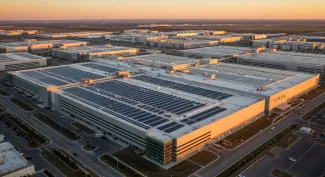
Further down the list, The Boring Company collected $900,000 under commercial agreements, likely tied to the tunnel the firm constructed beneath Gigafactory Texas to connect the Cybertruck production line to a loading lot. A Musk-owned security firm received $4.8 million for protecting the CEO, with the filing noting this covers only "a portion of the total cost" of Musk's personal security detail.
Even Redwood Materials, the battery recycling company founded by former Tesla executive JB Straubel, featured in the disclosures. Tesla paid Redwood $3.3 million while recognising $12.9 million in cost-of-revenue reductions from selling scrap materials to the recycler.
The $2 billion twist
Beyond operating transactions, the filing details a more complex financial manoeuvre. On 16 January 2026, Tesla agreed to invest $2 billion in xAI Holdings' Series E funding round. Shareholders approved the deal believing they were backing an AI company. Just weeks later, SpaceX acquired xAI Holdings in a mega-deal, and Tesla's xAI preferred stock automatically converted into SpaceX Class A common stock. The investment closed on 12 March 2026.
The result: Tesla shareholders, who voted for an AI investment, now hold a minority stake in a rocket company. Reporting suggests the position represents less than 1 percent of SpaceX, but the governance implications are significant. Tesla's CEO controls both the buyer and the seller in a transaction that redirected $2 billion of public company capital into yet another of his private ventures.
Why European investors should care
Tesla remains one of the most widely held stocks by European retail investors and pension funds. Its vehicles dominate EV sales charts from Norway to the Netherlands. Yet the amended filing highlights a governance structure that would raise eyebrows in any European boardroom.
The filing states that all transactions were conducted "at rates generally available to unaffiliated third parties under the same or similar circumstances" and were reviewed by Tesla's Audit Committee. But the cumulative effect is difficult to dismiss: Tesla's CEO controls the entities on both sides of hundreds of millions of dollars in annual transactions, approves a $2 billion investment in his own company, and sees that investment convert into equity in yet another company he controls.
Moreover, the inter-company vehicle purchases cast a shadow over Tesla's sales figures. Without SpaceX's Q4 purchases, US Cybertruck registrations would have fallen 51 percent year-over-year rather than the numbers Tesla reported. For European analysts tracking Tesla's global demand trends, distinguishing organic consumer interest from intra-group fleet sales has become an essential exercise.
The bigger picture
Tesla generated approximately $97.7 billion in total revenue during 2025, so the $573 million from Musk's companies represents a modest fraction of the overall business. Yet the trajectory matters. The related-party revenue figure is a new high, the relationships are expanding into new areas like social media advertising, and the $2 billion equity investment adds a long-term structural link between Tesla and SpaceX that did not exist a year ago.
For European EV buyers, the question is whether Tesla's focus remains on building better electric cars, or whether its resources are increasingly diverted to prop up a sprawling corporate ecosystem. With vehicle sales declining for two consecutive years and competition intensifying from European, Chinese and Korean manufacturers, Tesla's governance choices are no longer just an American regulatory curiosity — they are a material factor in the company's global competitiveness.
Are these transactions illegal?
No. Related-party transactions are legal provided they are properly disclosed and conducted at arm's length. Tesla's filing states the deals were reviewed by its Audit Committee and priced comparably to third-party arrangements. The concern among governance experts is whether independent oversight is sufficient when the same individual controls every counterparty.
Does this affect Tesla's European operations?
Indirectly, yes. Tesla's European Gigafactory in Berlin is part of the same consolidated entity, and capital allocated to inter-company transactions or SpaceX equity is capital not reinvested in vehicle production, charging infrastructure, or local manufacturing capacity. European investors and customers are ultimately exposed to the same governance risks as their American counterparts.
What happened to Tesla's $2 billion xAI investment?
Tesla invested $2 billion in xAI in January 2026, but SpaceX acquired xAI weeks later. Tesla's xAI shares converted into SpaceX Class A common stock, meaning Tesla shareholders now indirectly own a small stake in SpaceX rather than the AI company they originally backed. The position is reportedly worth less than 1 percent of SpaceX.
Source: https://electrek.co/2026/05/01/tesla-tsla-web-transactions-musk-companies-spacex-xai-10ka-2025/