Listen to this article:
On May 8, 2026, Porsche announced that its Executive and Supervisory Boards had resolved to discontinue Cellforce Group GmbH, Porsche eBike Performance GmbH, and Cetitec GmbH. The cuts are severe: around 50 employees at Cellforce in Kirchentellinsfurt, approximately 360 workers at the eBike unit in Ottobrunn and Zagreb, and roughly 90 staff at the software subsidiary Cetitec in Pforzheim and Croatia. Porsche CEO Michael Leiters framed the move as a painful but necessary return to core competencies. "Porsche must refocus on its core business. This is the indispensable foundation for a successful strategic realignment. This forces us to make painful cuts — including our subsidiaries," he stated in an official press release.
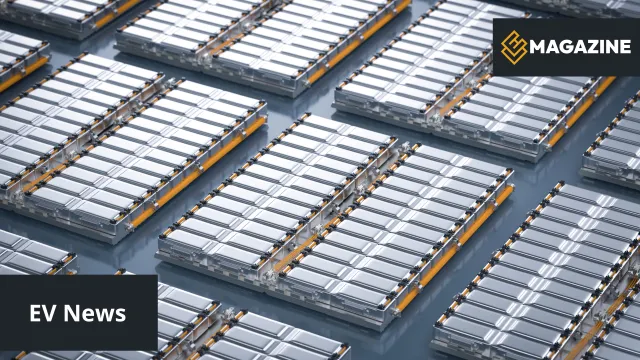
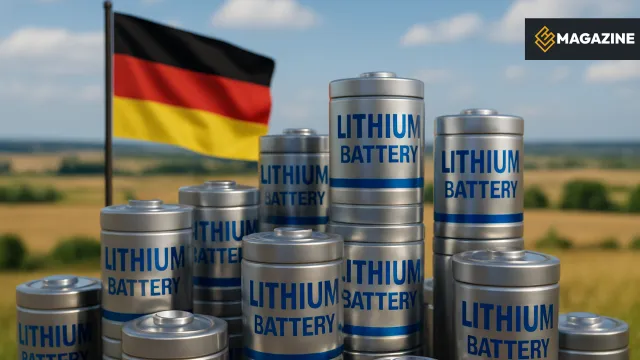
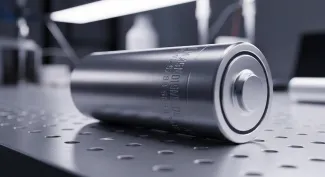
The collapse of Cellforce is particularly significant because it was once the crown jewel of Porsche's electrification strategy. Originally founded as a joint venture with German specialist Customcells, the unit was designed to develop bespoke high-performance cylindrical cells tailored to the extreme demands of Porsche's electric sports cars. In 2023, Porsche took full ownership and dramatically expanded the vision, talking about scaling production to as much as 20 GWh — enough to power hundreds of thousands of vehicles annually. But the landscape shifted rapidly. In April 2025, Porsche's board reversed course, announcing that independent volume production would no longer be pursued. By August 2025, roughly 200 of the 290 staff had already been made redundant, with the remainder offered transfers to Volkswagen's battery subsidiary PowerCo in Salzgitter. Now, even that remnant is being erased.
For European industry watchers, the timing stings. The European Union has spent years — and billions of euros — trying to nurture a domestic battery manufacturing ecosystem capable of rivalling Asia's incumbents. Yet Europe's most ambitious projects have encountered brutal headwinds. Swedish pioneer Northvolt, once the continent's great battery hope, filed for bankruptcy in 2025 after struggling with yield rates and production delays. Volkswagen's PowerCo has scaled back its own expansion timeline, and now Porsche, the Group's most profitable brand, has concluded that in-house cell manufacturing simply lacks "a sufficiently viable long-term perspective." The market reality is stark: without the massive volumes enjoyed by Chinese leaders like CATL and BYD, or the deep state backing of Korean champions such as LG Energy Solution and Samsung SDI, European players cannot achieve the economies of scale needed to compete on cost.
Porsche's retreat is not occurring in a vacuum. The company has been battered by a confluence of pressures: a severe drop in demand in China, newly imposed US tariffs that hit every Porsche model line because the brand has no American factory, and a broader cooling of the premium EV market. In April 2025, Porsche issued a profit warning, slashing its full-year revenue guidance from €39–40 billion to €37–38 billion and cutting its operating margin target from 10–12 percent to just 6.5–8.5 percent — a far cry from its long-term goal of 18–20 percent. The decision to sell its stake in Bugatti Rimac to a consortium led by Egyptian billionaire Sawiris's HOF Capital, announced only days before the Cellforce news, underscores a broader divestment of non-core assets.
The practical consequences for Porsche's product pipeline are tangible. The planned electric versions of the 718 Cayman and Boxster, originally expected around 2025, have been pushed back to 2027 at the earliest. Porsche had also terminated its contract with Finnish supplier Valmet Automotive, which had built a battery assembly facility in Kirchardt specifically to pack cells for those sports cars. With Northvolt — previously designated as the cell supplier — now in bankruptcy, Porsche faces the same question as many European OEMs: where will the batteries come from? The company insists that electromobility remains "an essential drive technology" for its future sports cars, but its "technology-open" strategy increasingly sounds like code for hedging bets across battery EVs, plug-in hybrids, and synthetic e-fuels.
For European policymakers, the lesson is sobering. Industrial policy alone cannot conjure a battery champion if the underlying economics do not work. While Chinese firms continue to announce new cathode plants in Spain and Hungary, and Korean suppliers deepen their foothold across the continent, Europe's homegrown efforts are contracting. Porsche's decision to shut Cellforce rather than seek a partner or buyer suggests that even the deepest-pocketed European brands see more risk than reward in owning the battery stack. Unless the EU finds a way to close the cost and scale gap with Asia quickly, the continent's EV revolution may be built on foreign cells — if it is built at all.
What was Cellforce supposed to do for Porsche?
Cellforce was founded as a joint venture between Porsche and Customcells to develop and produce bespoke high-performance battery cells specifically tailored to the extreme power demands of Porsche's electric sports cars. Porsche later took full ownership and planned to scale output to as much as 20 GWh annually.
Why couldn't Cellforce survive as a smaller R&D-only unit?
Porsche initially tried to downsize Cellforce to a pure research and development unit after halting production expansion in 2025. However, by May 2026, the company concluded that even this scaled-back operation no longer offered a "sufficiently viable long-term perspective" amid slower EV uptake and intense competition from established Asian suppliers.
What does this mean for Porsche's upcoming electric 718 models?
The electric Cayman and Boxster have already been delayed until 2027 at the earliest. With Northvolt in bankruptcy and Valmet Automotive's contract terminated, Porsche will likely need to source battery cells and packs from external suppliers such as LG Energy Solution or Samsung SDI, rather than relying on a European in-house supply chain.
Source: https://www.electrive.com/2026/05/08/porsche-to-shut-down-battery-subsidiary-cellforce/