A Sales Velocity That Demands Attention
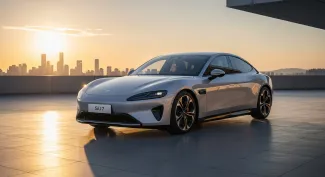
When Xiaomi ended production of its first-generation SU7 in February 2026, some wondered whether the tech giant could maintain momentum during the transition. The answer arrived swiftly. On March 19, the company unveiled the next-generation SU7, and within 34 minutes, founder Lei Jun announced more than 15,000 locked-in orders. Less than two months later, that figure has surged past 80,000.
The latest milestone, confirmed by Xiaomi EV on May 6, means the model added approximately 10,000 orders in just four days. Part of that spike was driven by buyers rushing to secure launch-period incentives worth up to 69,000 yuan (around €8,600) before they expired at midnight on May 5. Xiaomi has since introduced a new, slightly trimmed round of benefits valid through May 31, suggesting the company is carefully managing demand without letting the order book cool.
The expected delivery wait time has already stretched from 7–10 weeks to 11–14 weeks, a clear sign that Xiaomi's production lines are working flat out. In April alone, the company delivered over 30,000 vehicles, up from 21,440 in March, and it is targeting 550,000 total deliveries in 2026.
Hardware That Punches Above Its Price
The updated SU7 is not merely riding a wave of hype. On paper, its specifications stack up against far more expensive European rivals. The model is offered in three variants:
- Standard — 73 kWh battery, 720 km CLTC range, rear-wheel drive, 0–100 km/h in 5.28 seconds, priced from 219,900 yuan (approximately €27,500).
- Pro — 96.3 kWh battery, 902 km CLTC range, rear-wheel drive, 0–100 km/h in 5.7 seconds, priced at 249,900 yuan (approximately €31,200).
- Max — 101.7 kWh battery, 835 km CLTC range, dual-motor all-wheel drive, 0–100 km/h in 3.08 seconds, priced at 303,900 yuan (approximately €38,000).
All versions come standard with LiDAR, an Nvidia Thor chip delivering 700 TOPS of computing power, and 4D millimetre-wave radar. The assisted driving system is powered by Xiaomi's new XLA cognitive large language model, which the company says merges complex AI tasks from autonomous driving and robotics to improve real-world decision-making. In the safety department, an upgraded armoured cage body structure boasts maximum strength of up to 2,200 MPa.
The battery architecture relies on a silicon carbide high-voltage platform. The Max variant can replenish 670 kilometres of range in just 15 minutes, a figure that would place it among the fastest-charging EVs on any continent.
What This Means for European Buyers
For now, the SU7 remains a China-market affair, but dismissing it as a local curiosity would be a mistake. Xiaomi has made no secret of its global ambitions, and the company already sells smartphones, scooters, and home appliances across Europe. An eventual entry into the EU is widely expected, though tariffs and homologation will inevitably push prices above their Chinese equivalents.
Even with a markup, the SU7's specification-per-euro ratio raises uncomfortable questions for legacy European brands. A mid-size sedan with a 3,000 mm wheelbase, up to 902 km of range, and standard LiDAR at roughly €31,000 is virtually unheard of in European showrooms today. When adjusted to the more conservative WLTP test cycle, real-world range would likely fall in the 550–700 km bracket — still highly competitive.
Xiaomi is also expanding its portfolio aggressively. The YU7 GT, a high-performance pure-electric SUV, is scheduled to debut at the end of May. Spy shots of a large SUV codenamed "Kunlun" have already surfaced, pointing to a second-half 2026 launch. A three-pronged lineup would give Xiaomi the scale and brand presence to justify the logistical investment of entering Europe.
The Incentive Game
Xiaomi's use of time-limited purchase incentives has proven especially effective. The initial launch package offered benefits worth 44,000 yuan for the Standard and Pro variants and up to 69,000 yuan for the Max. With those perks now replaced by smaller but still meaningful discounts, the company is keeping showrooms busy while protecting margins. It is also trimming certain optional configurations to streamline production — a classic move for a young automaker still optimising its supply chain.
First-generation SU7 cumulative deliveries topped 381,000 units before production ended. If the updated model maintains its current trajectory, it could easily surpass that total within its first year. For a company that only began delivering cars in 2024, such numbers are remarkable.
A Wake-Up Call for Established Players
The SU7's success is part of a broader shift. Chinese EV makers are no longer content to compete on price alone; they are now matching or exceeding Western brands on technology, design, and charging performance. Xiaomi, with its deep expertise in consumer electronics, software, and supply-chain management, represents a particularly potent threat because it understands how to build desire around a product — and how to monetise an ecosystem long after the initial sale.
European regulators and manufacturers are already grappling with the influx of affordable, high-spec Chinese EVs. The SU7's order-book explosion is simply the latest evidence that the competitive landscape is changing faster than many anticipated. Whether it arrives in Frankfurt, Paris, or Milan next year or the year after, one thing is clear: Xiaomi is no longer just a smartphone company playing at cars. It is a car company that happens to make smartphones — and it is scaling at terrifying speed.
Will the Xiaomi SU7 be sold in Europe?
Xiaomi has not announced an official European launch date for the SU7, but the company's global smartphone and consumer electronics presence, combined with its aggressive automotive expansion, makes a future EU entry highly likely. Regulatory approval and import tariffs would affect final pricing.
How does the SU7's 902 km CLTC range compare to WLTP figures used in Europe?
CLTC testing tends to be more optimistic than WLTP by roughly 20–30 percent. The Pro variant's 902 km CLTC figure would likely translate to approximately 600–700 km under WLTP conditions, which is still among the best in its class.
What is Xiaomi's annual delivery target for 2026?
Xiaomi aims to deliver 550,000 vehicles in 2026. With the updated SU7 already securing over 80,000 locked-in orders and the YU7 GT SUV launching soon, the company is building the product depth needed to hit that target.
Source: https://cnevpost.com/2026/05/06/xiaomi-updated-su7-80000-locked-in-orders-48-days/