
Listen to this article:
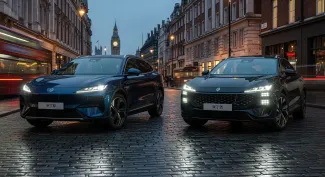
The rapid expansion of Chinese electromobility into the European market has been nothing short of meteoric. In the UK, brands that were virtually unknown a few years ago are now frequently seen on the roads. A prime example is the Jaecoo 7, which emerged as one of the UK’s bestselling new cars in March 2026. However, this surge in popularity is meeting a stubborn resistance from the insurance industry, creating a "hidden cost" that many consumers are only discovering after they have signed the purchase contract.
The Data Gap: Why Insurers are Hesitant
To understand why an insurer might charge more for a BYD Atto 3 than a Volkswagen ID.3, one must look at the fundamental principles of actuarial science. Insurance companies rely on vast amounts of historical data to predict risk. They need to know how often a specific model is involved in accidents, the average cost of repairs, and—crucially—how long a vehicle remains off the road while waiting for parts.
For established European manufacturers like Volkswagen, Renault, or Stellantis, insurers have decades of data. They know exactly how much a bumper costs and which local garages are certified to fix them. With newer entrants like XPeng or Jaecoo, that data simply does not exist. This lack of historical evidence forces insurance companies to adopt a "risk-averse" stance, often resulting in higher premiums to cover the uncertainty of potential claims.
The Logistics of Repair: The Parts Problem
One of the most significant drivers of high insurance costs is the complexity of the supply chain. When a traditional European car is damaged, parts are often available within days through a well-established network of local distributors. For many Chinese brands, the supply chain is still being optimized for the UK and European markets.
If a collision occurs involving a high-tech EV from a brand like XPeng, and a specialized component—such as a specific sensor or a unique battery housing element—must be shipped from a factory in China, the vehicle could be sidelined for weeks. For an insurance company, this means paying for a replacement rental car for an extended period. These "loss of use" costs are being baked into the initial insurance quotes, making the total cost of ownership (TCO) much higher than the sticker price suggests.
Comparing the Market: The Price of Entry
The current situation creates a strange economic paradox. On one hand, Chinese EVs are often priced very competitively. A consumer might save €5,000 to €10,000 on the initial purchase price compared to a premium European or American equivalent. On the other hand, if the annual insurance premium is £1,000 higher due to the lack of coverage options, that initial saving is eroded much faster than anticipated.
Let's look at the competitive landscape in the UK and Europe:
- Established Players: Brands like Tesla, Hyundai (IONIQ series), and Kia (EV series) have massive fleets on the road. Their repair networks are mature, and their data is robust, leading to more predictable insurance costs.
- The Chinese Challengers: Brands like BYD and Jaecoo offer cutting-edge technology and impressive range (often exceeding 400km in many models) at lower entry prices, but they are currently navigating the "growing pains" of the insurance ecosystem.
Impact on the European EV Transition
This issue is not confined to the United Kingdom. As Chinese manufacturers aggressively target the European Union, the same pattern is likely to repeat in Germany, France, and Scandinavia. If the insurance industry remains a bottleneck, it could slow the adoption of affordable electric mobility, even as battery technology and charging infrastructure continue to improve.
For the transition to be successful, the ecosystem must be holistic. It is not enough to have high-speed charging (150kW+) and long-range batteries; there must also be a reliable, affordable way to protect the investment of the consumer. We are seeing a growing call for manufacturers to collaborate more closely with insurance providers, perhaps by providing better data transparency and investing in localized parts distribution centers across Europe.
As it stands, potential buyers of Chinese EVs should perform a "pre-purchase insurance check." Comparing quotes for a specific model before committing to the purchase is no longer just a recommendation—it is a necessity for anyone looking to manage their long-term costs effectively.
Why are insurance premiums higher for Chinese EVs compared to European brands?
The primary reasons are the lack of historical actuarial data for newer brands and the potential for higher repair costs due to longer wait times for specialized parts to be shipped from overseas.
Does this insurance issue affect all electric vehicles?
Not necessarily. Established brands like Tesla, Hyundai, and Volkswagen have extensive data and repair networks, which generally results in more stable and competitive insurance rates compared to newer market entrants.
How can I avoid high insurance costs when buying a new EV?
It is highly recommended to obtain multiple insurance quotes for the specific model and trim you intend to buy before finalizing your vehicle purchase to ensure the total cost of ownership remains within your budget.