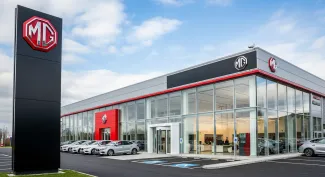
Annual service at a Czech MG dealership
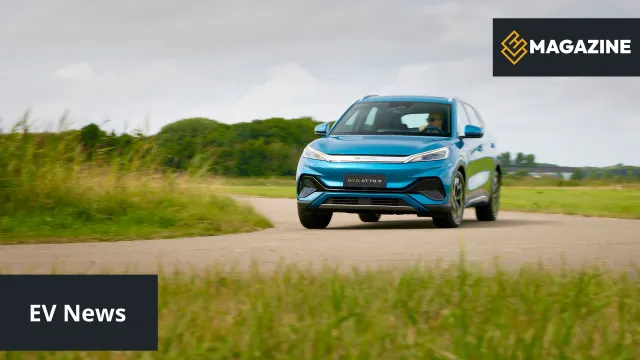
We picked up our MG ZS EV in the summer of 2024. Since then, it has served as a daily driver around the Central Bohemian region, charged almost exclusively via AC home charging from our rooftop solar array. The odometer now reads 26,757 km — a moderate figure, but enough to get a realistic picture of running costs.
The second annual inspection took place at an authorised MG dealership near Mělník, a town roughly 30 km north of Prague. Booking was straightforward, the appointment ran on time, and the car was returned with a clean diagnostic sheet. On paper, everything went exactly as it should.
What struck us, however, was the final invoice. At €284 (roughly 7,150 CZK), this year's service was significantly more expensive than the first one, which cost just under €119 (3,000 CZK) — despite the fact that nothing was actually broken.
Battery health after 26,000 kilometres
The brightest spot in the entire report was the battery. After nearly two years of mixed driving and daily AC charging, the diagnostics showed a 99 % State of Health (SOH). That is an excellent result and reinforces what many long-term EV owners already know: slow, regular charging from a home setup is one of the gentlest ways to treat a lithium-ion pack.
We rarely use DC fast chargers. When we do, it is typically on longer holiday trips. The rest of the time, the car trickles back to full overnight from our own solar installation. This approach seems to be paying off — not just in lower electricity bills, but in slower battery degradation.
The dashboard display shows an average consumption of 12.9 kWh/100 km on recent journeys. For a compact SUV weighing over 1,500 kg, that is a solid real-world figure. In mild spring weather, we are seeing around 370 km of usable range on a full charge, which is close to the WLTP rating.
What the 35-point check actually covers
The service protocol for the MG ZS EV follows the manufacturer's ZS11 MCE EU checklist — a 35-item inspection that covers everything from brake pads and tyre pressure to software updates and high-voltage battery diagnostics. Technicians also reset the service interval indicator and updated several control unit software packages.
A separate body inspection confirmed what we already suspected: no corrosion, no rust, no paint damage. For a two-year-old car, that is expected, but it is worth noting given the harsh winter road salt used across Central Europe. The underbody was clean, and all factory seals were intact.
In short, the car passed every check. The only "work" performed was preventive maintenance — replacing fluids and filters that the manufacturer mandates on a time basis, regardless of actual wear.
Where the money went
Breaking down the invoice reveals where most of the cost sits. Note that these figures reflect pricing at a Czech authorised dealership, and costs may vary in other European countries depending on local labour rates, parts distribution, and dealer margins.
| Labour (48,000 km / 2-year inspection) | €134 |
|---|---|
| Brake fluid | €19 |
| Windscreen washer fluid | €4 |
| Cabin pollen filter | €76 |
| Consumables | €2 |
| Total (excluding VAT) | €235 |
| Total with 21 % VAT | ~€284 |
The labour charge alone accounted for nearly half the bill. Then there is the cabin filter — at roughly €76, it is not an outrageous price for a genuine part, but it is hardly a bargain either. Aftermarket alternatives exist for a fraction of the cost, although quality varies significantly.
Interestingly, the body inspection and one year of MG Assistance roadside cover were both included at no charge this time around, thanks to a 100 % discount applied by the dealer. Without that gesture, the total would have been even higher.
Do EVs really need yearly dealer visits?
Here is where our view gets more critical. An electric vehicle has no engine oil, no spark plugs, no timing belt, no exhaust system, and no multi-speed gearbox. The list of parts that actually wear out is dramatically shorter than in a petrol or diesel car. So why are owners still being asked to visit a service bay every 12 months and pay labour rates designed for far more complex machines?
We are not claiming Tesla's minimal-service approach is perfect. Occasional checks — especially of brake callipers and pads, which can seize from lack of use due to regenerative braking — are genuinely useful. So is monitoring coolant levels and keeping software up to date. But paying nearly €284 for what amounts to a glorified health check feels like a hangover from the combustion era.
The whole point of switching to an EV, after all, is lower running costs. That advantage matters even more when you consider that purchase prices for electric cars remain, in most segments, higher than their petrol equivalents. Every euro saved on maintenance helps close that gap.
Our takeaway? The first two annual inspections are probably worth doing at an authorised dealer to keep the warranty intact. After that, many experienced EV owners may choose to handle simpler checks themselves or visit independent garages with EV training — assuming local regulations and warranty terms allow it. In the Czech Republic, as in several other EU markets, you are not legally bound to use a franchised dealer for routine maintenance to preserve your statutory rights. Just be sure to keep proper documentation.
How does this compare across Europe?
While our experience comes from a Czech dealership, the broader issue resonates across the continent. Labour rates at authorised EV service centres vary widely: a basic inspection might cost €80–120 in Spain or Portugal, €150–200 in Germany or France, and well over €250 in Scandinavia or Switzerland. Parts pricing for filters and fluids is more uniform, but dealer margins and local taxes push the final figure up or down.
What remains consistent is the tension between manufacturer-recommended service schedules and the mechanical reality of electric drivetrains. Most EVs simply do not have enough wearing parts to justify annual inspections at combustion-era prices. Until the industry adjusts its service model — or until more independent workshops gain EV certification — owners will continue to foot bills that feel disproportionate to the work actually performed.