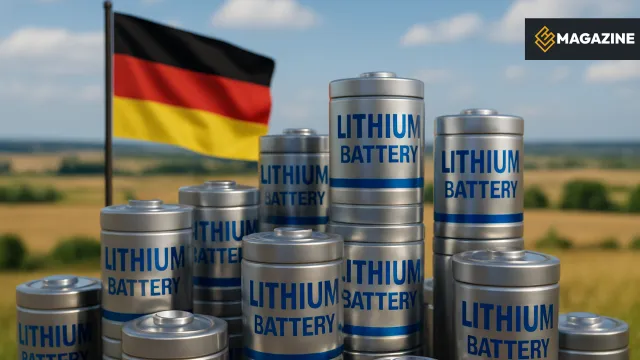

What happens to a Leaf pack that no longer drives a Leaf
According to electrive, Samsar's process is not simply "pull the pack, bolt it to a wall". The Texas team dismantles each pack, breaks it down to modules, then runs cell-level quality control before rebuilding units for stationary storage, marine power and worksite applications. The company claims the method captures around 90% of the value of each pack — a figure that matters more than any capacity claim, because the whole economics of second life sits in how much of the original material you can sell rather than shred.
Founder and CEO Guillermo Garcia was blunt about the early days: "Every step in building a factory for re-manufacturing EV batteries was new. There was no playbook." The volume curve backs that up. Samsar processed 20 packs in 2022, passed 300 in 2025, and is targeting 2000 packs in 2027.
The maths: what 1000 Leaf packs actually amount to
Take the two headline numbers together. 25 MWh divided by 1000 packs gives 25 kWh of recovered capacity per pack. Nissan sold Leafs with 24, 30, 40 and 62 kWh packs, so a 25 kWh average points to a feedstock dominated by the older, air-cooled 24 and 30 kWh cars, with a decent slice of usable capacity still inside them. That is exactly what you would expect from a fleet whose earliest examples are now 14 years old.
Now the scale check. If Samsar hits 2000 packs in 2027 at the same 25 kWh average, that is 50 MWh per year. For comparison, CATL's €7.34 billion Debrecen plant is designed for 100 GWh a year — 100,000 MWh. Samsar's 2027 target would be 0.05% of one cell factory's annual output. For scale on the other side, 25 MWh is about 6.4 Tesla Megapack 2 XL units (3.9 MWh each).
None of that makes the milestone meaningless. Going from 20 to 300 packs a year is a 15× ramp; 300 to 2000 by 2027 means roughly 158% compound annual growth. This is a young industrial process, not a finished industry.
Why the Leaf is perfect — and why that is also the ceiling
Nissan's air-cooled architecture is a gift to a remanufacturer: the pack comes apart into discrete modules, thermal management is simple, and after more than 650,000 Leafs sold worldwide since 2010, degradation behaviour is thoroughly documented. Samsar calls it "the perfect fit", and it is hard to argue.
The problem is that the perfect fit is finite. Newer packs are liquid-cooled, larger, and increasingly built cell-to-pack or cell-to-body, where modules barely exist as a serviceable unit. Add chemistries pushed harder than ever — Geely's claimed 10–70% in 4.5 minutes implies cells cycled at rates the Leaf's 2012 cells never saw, and Mercedes' first call on ProLogium's Gen4 solid-state cells points at a chemistry that will not be dismantled with hand tools. Second life will get harder to industrialise before it gets easier.
Europe already runs the same playbook, smaller
The European proof of concept is at the Port of Vigo in Spain, where 12 decommissioned 30 kWh Leaf packs — 360 kWh in total — were repurposed into stationary storage supporting charging infrastructure. That is a useful reality check on Samsar's 25 MWh: one small Spanish port project is already worth 1.4% of the Texan company's entire three-year output.
EU rules are also catching up. Under Battery Regulation (EU) 2023/1542, a battery that has been repurposed or remanufactured is treated as a new battery placed on the market, and the operator putting it into service becomes the producer — with the full documentation burden that implies. From 18 February 2027, EV batteries, LMT batteries and industrial batteries above 2 kWh need a digital battery passport. For a company like Samsar, whose selling point is cell-level testing and traceability, that is arguably a moat. For a workshop swapping modules into a home storage unit, it is paperwork nobody has priced in yet.
What a used Leaf owner should do
The practical question for readers is the reverse of Samsar's. If you own a Leaf that still drives, its pack is worth more in the car than in a warehouse. A 24 kWh pack at 70% state of health gives you roughly 17 kWh usable, which at a real-world 17 kWh/100 km is about 100 km per charge, less in winter — our real-world range calculator based on Bjørn Nyland's measurements is the tool for pinning that down per model and season.
Run the cost: 17 kWh at €0.25/kWh home charging is about €4.25 per 100 km, against roughly €9.75 for a 6.5 l/100 km petrol car at €1.50/l. That is €5.50 saved every 100 km, and our EV savings calculator will do it with your own tariff and mileage. Dismantling only makes sense once the car is off the road and the pack is genuinely below useful range. Check state of health before you decide anything.
What to watch
Two numbers: whether Samsar really delivers 2000 packs in 2027, and what second-life modules can be sold for while new LFP cells keep getting cheaper. The technology is not the bottleneck. The competition with a brand-new, warrantied, cheap LFP container is.
Source: https://www.electrive.com/2026/09/25/samsar-upcycles-ev-battery-from-1000th-nissan-leaf/