A test agreement, not a supply contract
Mercedes and ProLogium have been working together since 2016, moving from early hybrid-solid-state prototypes to the current lithium ceramic cells. The new deal gives Mercedes priority access to ProLogium's Gen4 "Superfluidized Inorganic Lithium Ceramic Battery" and has Mercedes validating electrical, thermal and safety performance at specialised external institutes. Electrek first reported the agreement.
Read the small print, though: no volumes, no price per kWh, no named model, no start of production. That is a test programme with a reservation attached — commercially useful, but a long way from a car you can configure in a showroom.
400 Wh/kg and 6.4 minutes: reading the data sheet
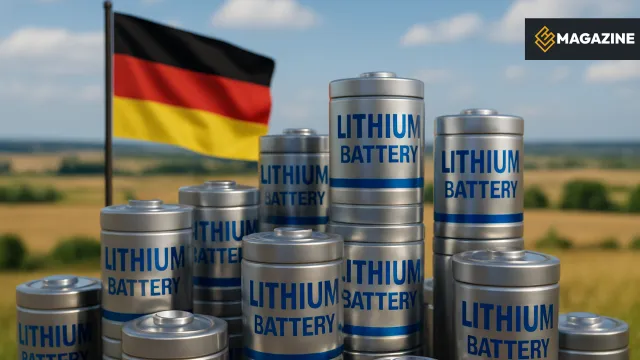
The number that matters most is not the Gen4 target, but the cell that already exists. ProLogium's Gen 3.5 went into mass production at its Taiwan facility earlier this month. A third-party TÜV report measured a 185.4 Ah large-format cell at 381 Wh/kg and 903 Wh/L. So Gen4's promised 400 Wh/kg is roughly a 5% step over a cell that is already being built — respectable, but not a leap.
The stopwatch claim deserves our usual treatment. Delivering 75% of the pack in 6.4 minutes (0.1067 h) equals ~7C average. On a 100 kWh pack that is about 703 kW sustained. At 800 V that means roughly 875 A, above what today's liquid-cooled passenger-car connectors handle. We ran the same maths on Geely's 2,250 kW claim — which reads 8C, not 12C. Cell-level charging figures always come from a cell held at its ideal temperature; the pack, the cooling plate, the cable and the charger each take their cut.
Arguably the more interesting line in ProLogium's material is cold-weather performance — a non-flammable inorganic electrolyte and a ceramic separator. If that holds up at pack level, a car that charges quickly at -5 °C matters far more to a Central European family than a megawatt at 30 °C.
What 400 Wh/kg buys in a real car
Today's best production NMC cells sit around 250–280 Wh/kg. Our maths: move from 270 to 400 Wh/kg and the same cell mass holds about 48% more energy. A 100 kWh pack becomes roughly 148 kWh — or you keep 100 kWh in a pack some 120 kg lighter, which pays off in efficiency, tyres and chassis cost. At 17 kWh/100 km, 148 kWh is around 870 km on a charge.
Mercedes has already shown the shape of that: a modified EQS with 106 Factorial solid-state cells drove 1,200 km on one charge in September 2025. The unresolved items are not energy density — they are cycle life, calendar ageing, cold behaviour at pack level, manufacturing yield and cost per kWh. None of those appear in a press release.
Europe is the plant, China is the clock
ProLogium's European gigafactory is in Dunkirk, France: 4 GWh in phase one, "progressively achieved" by 2030, up to 44 GWh fully built out. Do the division: 4 GWh ÷ 80 kWh ≈ 50,000 packs a year. Mercedes sells well over a million cars a year. Even in 2030, solid-state is a flagship option, not the chemistry of a volume C-Class.
For scale, CATL's €7.34bn Debrecen plant is designed for 100 GWh and is still in test production with no date for series output. BYD, meanwhile, says its first solid-state EV arrives in 2027 — three years ahead of Mercedes. And from February 2027 the EU's digital battery passport requires a documented data trail, so any new chemistry has to arrive with its paperwork in order.
What should a buyer do with this?
Nothing yet — and that is the useful conclusion. If you buy a family EV in 2026 or 2027, you are buying liquid-electrolyte cells, and those are still improving quickly. Waiting for solid-state means paying today's prices for today's cars while the range you actually need probably already exists. Run your commute through our real-world range calculator, built on Bjørn Nyland's measurements, before deciding that a WLTP figure is not enough.
Also note what 6.4 minutes implies: ~700 kW. In Europe, 350–400 kW is the practical ceiling. Our supercharger database maps 483 locations across Europe, and the cheapest ones affect your wallet more than the fastest. At an example €0.60/kWh, 75 kWh costs €45 — roughly 440 km at 17 kWh/100 km, or about €10 per 100 km. That is diesel money. Home charging at a third of that is where the saving lives; our charging cost calculator and EV savings calculator will do the arithmetic with your own tariff.
What to watch: whether this test agreement becomes a supply contract with volumes and a price per kWh, and whether Dunkirk's first 4 GWh stays on schedule. Until then, 400 Wh/kg is a target, 381 Wh/kg is a certified cell — and a solid-state car you can actually order does not exist.
Source: https://electrek.co/2026/09/24/mercedes-priority-prologiums-gen4-solid-state-ev-battery/