What Slovenia actually decided
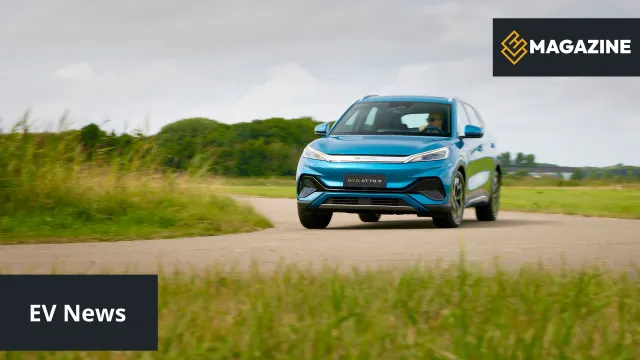
Money for electric-car purchases ran out abruptly in mid-August, as electrive.com reported. The Ministry of Energy and Infrastructure first said no new funds would be allocated, and this month the minister, Jernej Vrtovec, confirmed that the state "will definitely discontinue subsidies for the purchase of electric vehicles". The decision belongs to the government that took office in May, when Janez Janša replaced Robert Golob as prime minister.
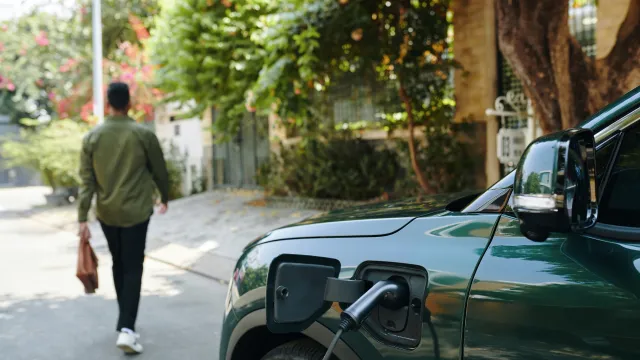
The replacement spending comes from Urška Kalan, deputy director of Borzen — the state electricity market operator that administers the subsidies. Around €2.5 million is available now for slower charging stations, and roughly €25 million will go next year into charging stations inside and outside the TEN-T network.
One detail explains a lot. Much of the old support came from Brussels: under Slovenia's Recovery and Resilience Plan, €43.9 million was reserved for promoting electric vehicles over 2024–2026, and that source expired in May. Anything the state does now has to come from its own budget.
Our maths: what €25 million buys
€43.9 million spread over three years is about €14.6 million a year. Next year's charging budget is €25 million. This is not money being shuffled between columns — in the charging column, the state is spending more per year than it spent on cars.
How far does it stretch? Industry cost estimates for a fully installed DC fast-charging point — hardware, civil works, grid connection — sit at roughly €100,000 to €150,000. If public money covered all of it, €25 million buys about 170 to 250 fast points; since grants normally co-fund only part of a project, the real figure could be 300 to 500. These are order-of-magnitude estimates, not Slovenian tender prices, but across Slovenia's 20,271 km² that is one new fast point every 50 to 115 square kilometres. On the corridors toward Austria, Italy and Croatia that is a genuine difference — just not one you will see this autumn.
The hardware is also improving. EnBW's new 12-point park in Karlsruhe runs 480 kW XCharge C7 equipment; on the manufacturing side, our maths on Sunwoda's 10,000 planned MCS stations came out at 573 kW average rather than the headline 15C claim, and Geely's 2.2 MW four-minute charging claim deserves the same scepticism. Peak figures are marketing; average power over a real session is what a family feels.
Why governments are moving from cars to plugs
Slovenia is not an outlier. Germany pulled its purchase bonus at the end of 2023 and new BEV registrations fell about 27% in 2024 — the clearest recent evidence that grants move buyers. But the argument in many ministries now is that the bottleneck has shifted to the plug. EU rules under AFIR required fast-charging pools every 60 km on the TEN-T core network, with at least 400 kW total and one point of at least 150 kW, by the end of 2025, with further obligations on other routes. That is exactly why the €25 million is earmarked for stations inside and outside TEN-T.
Meanwhile, EU CO₂ fleet targets — a 15% cut for 2025–2029, 55% by 2030 against a 2021 baseline — force manufacturers to sell more electric cars whether or not national grants exist. In practice, that means discounts. The price you negotiate at the dealer may matter more than the subsidy that disappeared.
What this means for a family budget
If a Slovenian grant was part of your plan, the blunt answer is that the grant is gone and the wallbox is not. But the running-cost maths has not changed: the savings come from charging at home. Our EV savings calculator and charging cost calculator will show your own numbers before you sign anything.
Three things worth checking before you give up on the idea:
- Business use. If you run an s.p. or a d.o.o., the tax treatment of an electric company car can be worth more over three years than a one-off purchase grant ever was.
- Still-open support. The state purchase scheme has ended, but the €2.5 million for slower chargers is aimed at infrastructure and may cover part of a home or workplace installation. Check what is open in your municipality before assuming there is nothing.
- Cross-border driving. Slovenian families regularly drive to Croatia, Italy and Austria. Our cheapest Superchargers list and the full database of 483 locations make it easy to compare prices before a holiday — public fast charging is where family budgets quietly blow up.
What remains open
Whether the €25 million arrives on schedule. Whether a charging-only policy holds if BEV registrations stall in a market of just over two million people. And what happens when other EU countries hit the same cliff: the Recovery and Resilience Facility's spending window runs out this year, and every government that used EU money to sell electric cars will have to decide whether it is prepared to pay from its own budget. Slovenia has made that choice first. The next two years of charger construction — and the sales figures that follow — will show whether it was the right one.
Source: https://www.electrive.com/2026/09/23/slovenia-discontinues-ev-purchase-subsidies/