Listen to this article:
When Tesla revealed the 46-millimetre cylindrical cell with its tabless electrode design, the company claimed it would hold five times the energy and deliver six times the power of the existing 2170 format. The headline promise was a 16% range improvement at the pack level, halved costs, and eventually a $25,000 electric car. The centrepiece was a dry battery electrode process acquired from Maxwell Technologies, which Musk admitted at the 2025 shareholder meeting had turned out to be "way harder" than expected.
Now, independent test data and teardowns reveal that Tesla's in-house cells are not merely failing to meet those ambitious targets — they are actually trailing the competition.
The Numbers Tell a Disappointing Story
According to detailed performance data analysed by Electrek, the 4680 cells produced at Tesla's Giga Austin facility achieve a nominal energy density of 244 Wh/kg. The Panasonic 2170 cells they were designed to supersede sit at 269 Wh/kg — meaning Tesla's flagship cell is roughly 13% worse, not better.
The consequences are most visible in the European Model Y Premium Long Range RWD, where Tesla has quietly begun replacing the previous LG-supplied 5M battery pack with its own 4680-based "8L" pack. The change is anything but an upgrade:
- Battery capacity: The new 8L pack carries approximately 79 kWh gross (74 kWh usable). The LG 5M pack it replaces offered 82–84 kWh — a loss of 3–5 kWh in the same vehicle.
- WLTP range: Dropped from 661 km to 609 km — a reduction of 52 kilometres, or 8%, on an identical trim with the same motors and aerodynamics.
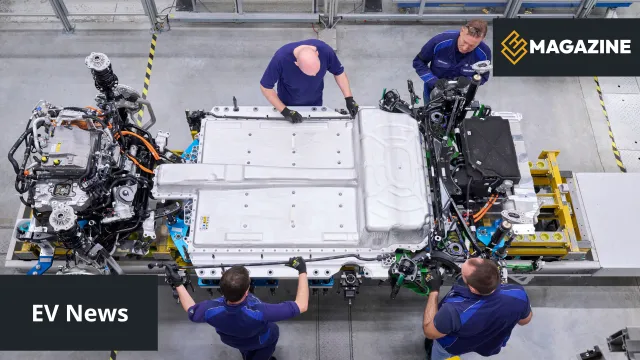
- Weight savings: The structural pack was supposed to slash mass. Engineering firm Munro & Associates found the difference between a 4680 Model Y and a 2170 Model Y was just 20 pounds (around 9 kg). European certification data lists the 8L pack at 447 kg.
For European drivers who routinely face high-speed motorway runs and cold winter conditions — where real-world range can fall 20–40% below WLTP figures — losing 52 kilometres of certified range is a material downgrade.
Charging Speed: The Most Damaging Weakness
If energy density is disappointing, the DC fast-charging curve is arguably worse. At Battery Day, Tesla claimed the tabless architecture would allow the 4680 to charge "almost as fast" as smaller cells. Real-world data shows the opposite.
Owners and reviewers of the first-generation 4680 Model Y (2023) reported that heat buildup caused charging power to plummet below 100 kW after just 35% state of charge. The 10–80% charging window stretched beyond 40 minutes — far slower than the 2170-equipped Model Y Long Range, which typically completes the same cycle in roughly 27–30 minutes.
In a controlled 15-minute charging test starting from 10% SOC, the outlet Out of Spec found the 4680 Model Y added only 39% charge. In the same timeframe, Tesla's cheaper LFP pack — with just 62 kWh of total capacity — actually added more raw energy (29 kWh versus 27 kWh). The budget chemistry outcharged Tesla's flagship cell.
With the 8L pack now rolling out in European Model Y vehicles, early data is not encouraging. Out of Spec Roaming recently published an analysis showing that at 31% SOC, charging power was already falling from 155 kW. The channel described the curve as "so bad" and ranked the 4680 pack as the worst battery option currently available in the European Model Y lineup — behind even the LG 5M pack, which itself is considered below average by independent testers.
Supply Chain Signals Paint a Bleak Picture
While owner frustration grows, Tesla's suppliers are sending unmistakable signals about the health of the 4680 programme. South Korean battery material firm L&F disclosed that its $2.9 billion cathode materials contract with Tesla — specifically earmarked for 4680 production — has been written down to just $7,386, a 99.9% reduction. L&F cited a "change in supply quantity."
The demand collapse is easy to trace. The Cybertruck, the primary vehicle using 4680 cells, is selling at an annual run rate of roughly 20,000–25,000 units against a factory capacity of 250,000. Tesla's original 4680 production targets called for 100 GWh by 2023 and 3,000 GWh by 2030. In 2026, the cells are appearing in a single European Model Y trim, select US configurations, and the commercially struggling Cybertruck.
That is not the mass-market revolution Musk promised.
European Buyers Push Back
The backlash in Europe is intensifying. Tesla replaced the LG 5M battery with the 4680 8L pack in the Model Y Premium Long Range RWD without clearly communicating the change to customers who had already placed orders. In France and Norway, EV communities are reporting order cancellations as buyers discover their expected 661 km WLTP rating has shrunk to 609 km.
Compounding the frustration is Tesla's refusal to disclose which battery a customer will receive. The company's online configurator does not list cell chemistry or supplier, and vehicle specifications omit battery type. Buyers cannot determine what they are purchasing before delivery — a transparency gap that is increasingly at odds with European consumer protection expectations.
For a market where buyers carefully compare WLTP figures, charging curves, and winter efficiency, the battery swap feels less like a product evolution and more like a bait-and-switch.
What This Means for Tesla's European Position
Tesla's decision to push its own cells into European vehicles at this stage raises uncomfortable questions about the company's broader strategy. The original logic for vertical integration — cutting costs, securing supply, and leapfrogging competitors — made sense when the 4680 was presented as a generational advance. If the cells cannot match Panasonic's energy density or LG's charging performance, the rationale weakens considerably.
In Europe, where competition is accelerating, the timing is particularly poor. Brands such as Hyundai, Kia, and BMW are delivering EVs with competitive range, improving charging curves, and transparent specifications. Chinese manufacturers like BYD are entering the market with aggressive pricing and established battery supply chains. Tesla's brand remains powerful, but technical credibility is a currency that erodes quickly when the product does not match the marketing.
Musk himself has acknowledged that the dry electrode process was a mistake. A flagship supplier contract has effectively evaporated. And now, European customers are receiving a product that is measurably worse than the one it replaced. The question is no longer whether Tesla can build the world's best battery cells. It is whether it can build cells that are competitive at all — and whether European buyers will continue to trust a brand that quietly swaps out their battery for an inferior one.
Which Tesla models in Europe currently use 4680 battery cells?
As of May 2026, Tesla has started fitting the 4680-based "8L" pack into the European Model Y Premium Long Range RWD. The company does not publicly disclose which trims or batches receive these cells, meaning buyers may not know which battery their vehicle contains until delivery.
How much range do European Model Y buyers lose with the 4680 battery?
Independent data shows the WLTP-certified range drops from 661 km with the previous LG 5M pack to 609 km with the new Tesla 4680 8L pack — a reduction of 52 kilometres, or approximately 8%.
Is Tesla planning to improve the 4680 cell in the near future?
Tesla has claimed that the latest version of the 4680 cell offers higher energy density, but independent tests have not yet verified these improvements. Musk admitted in 2025 that the dry electrode manufacturing process — originally pitched as the cell's key innovation — was far more difficult than anticipated.
Source: https://electrek.co/2026/05/07/tesla-4680-battery-cell-performance-data-shows-cant-build-own-cells/