Listen to this article:
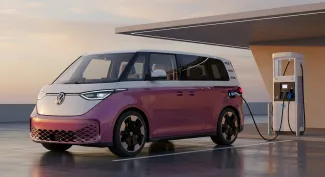
For years, the ID. Buzz has occupied a somewhat paradoxical space in the automotive market. It is a vehicle that everyone recognizes and loves, yet its pricing has often relegated it to a premium niche. While the design captures the hearts of enthusiasts, the cost of entry—often exceeding $60,000 for many configurations—has prevented it from achieving the mass-market volume that its predecessor, the classic Type 2, enjoyed.
The Pricing Pivot: From Premium to Practical
Current market data shows a significant gap between the ID. Buzz's popularity and its accessibility. In the United States, for instance, the 2025 models have been seen starting around $61,545, with top-tier 1st Edition AWD variants climbing even higher. For commercial operators, the ID. Buzz Cargo has been even more expensive, with prices reaching near $80,000 when fully equipped.
The news that Volkswagen might aim for a price point under $49,000 represents a massive strategic shift. If realized, this would place the ID. Buzz in direct competition with mainstream electric SUVs and family vehicles, rather than just premium lifestyle vans. This move is essential if Volkswagen intends to compete with the likes of the Hyundai IONIQ 5 or even more affordable electric offerings from Chinese manufacturers that are increasingly eyeing the European and American markets.
Technical Specifications: US vs. European Markets
It is important for readers to understand that the ID. Buzz is not a "one size fits all" vehicle. There are notable differences between the versions sold in North America and those in Europe. The US-spec model is actually 10 inches longer than the original European version, designed to accommodate larger families and more cargo space.
Key technical details for the current high-spec models include:
- Battery Capacity: A substantial 91 kWh battery pack.
- Range: An EPA-estimated range of up to 234 miles (approximately 376 km).
- Charging Speed: Capability to charge from 10% to 80% in just 26 minutes at a DC fast charger.
- Powertrain: A smooth, high-power electric motor setup that provides the torque necessary for a heavy, multi-passenger vehicle.
For European consumers, the availability and pricing often differ due to local subsidies and different trim levels, but the core mission remains the same: providing a versatile, electric platform that can serve both as a family cruiser and a commercial workhorse.
The Commercial Opportunity
The ID. Buzz isn't just for families. The commercial variant, the ID. Buzz Cargo, offers a massive advantage for businesses looking to transition to zero-emission fleets. While the current high price of nearly $80,000 for a fully loaded cargo version might seem steep, a more aggressive pricing strategy could make it a formidable competitor in the light commercial vehicle (LCV) segment, challenging traditional diesel vans that are facing increasing urban restrictions.
However, challenges remain. Critics have noted that the firm suspension and limited range on longer hauls can be drawbacks for heavy-duty commercial use. To truly succeed, Volkswagen must balance the "retro-cool" factor with the rugged, cost-effective utility that businesses demand.
Conclusion: A Make-or-Break Moment
The ID. Buzz is a vehicle with immense soul. It manages to honor the past without feeling like a dated relic. But in the rapidly evolving EV market, nostalgia alone cannot pay the bills. If Volkswagen can successfully execute a pricing strategy that brings the ID. Buzz closer to the $49,000 mark, they may finally transform this iconic silhouette from a "nice-to-have" luxury into a "must-have" staple of the electric era.
How does the US version of the ID. Buzz differ from the European version?
The US-spec ID. Buzz is approximately 10 inches longer than the European version, featuring a larger 91 kWh battery pack to better suit American driving habits and larger family requirements.
How fast can the ID. Buzz charge?
When using a compatible DC fast charger, the ID. Buzz can charge from 10% to 80% in approximately 26 minutes.
Is the ID. Buzz suitable for long-distance commercial work?
While it is highly capable, some users have noted that the range and firm suspension might be limiting factors for very long hauls or heavy commercial loads compared to traditional diesel vans.