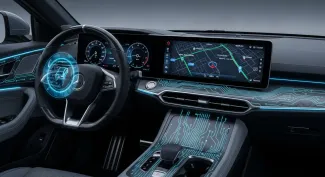
In a move that has sent ripples through the global automotive industry, Volkswagen has transitioned from a mere observer to the primary stakeholder in Rivian. By acquiring a 15.9% interest, the Wolfsburg-based manufacturer is not just investing capital; it is investing in a specific vision of the future: the Software-Defined Vehicle (SDV).
A Shift in Ownership: Volkswagen vs. Amazon
For several years, Amazon held a prominent position in Rivian's shareholder structure, driven by its massive electric delivery fleet. However, as Rivian continues to scale its consumer-facing R1S and R1T models, the strategic value of the company has shifted from logistics to pure technological innovation. According to recent reports, Volkswagen's recent acquisition has placed it at the forefront of Rivian's ownership, signaling that the German automaker views Rivian's software stack as a critical component for its own survival in the digital age.
This shift is significant for investors. While Amazon's interest was primarily functional—ensuring a steady supply of electric vans for its logistics network—Volkswagen's interest is structural. VW is looking to solve its most pressing challenge: the development of a cohesive, high-performance software architecture that can compete with the likes of Tesla.
The Software Imperative: Why Rivian?
To understand why a legacy giant like Volkswagen would move so aggressively into a US-based startup, one must look at the technical architecture of modern EVs. Traditional automakers have historically relied on hundreds of individual Electronic Control Units (ECUs) from various suppliers, often leading to "fragmented" software that is difficult to update and prone to bugs. This was a central issue in the rollout of Volkswagen's own ID. series in Europe.
Rivian, conversely, utilizes a zonal architecture. This means the vehicle is controlled by a few powerful central computers rather than hundreds of small, disconnected ones. This approach allows for:
- Over-the-air (OTA) updates: Improving vehicle performance, range, and features remotely.
- Seamless User Experience: A unified infotainment system that feels like a modern smartphone.
- Reduced Complexity: Less wiring and fewer physical components, which reduces weight and manufacturing costs.
By securing a major stake in Rivian, Volkswagen gains a "front-row seat" to these technologies. It provides a pathway for VW to integrate Rivian's advanced software-driven approach into its own platforms, potentially bypassing the growing pains experienced by its internal software division, Cariad.
Impact on the European Market
While Rivian is primarily a North American player, the implications for the European market are profound. European consumers are increasingly demanding highly connected, tech-forward vehicles. As Chinese manufacturers like BYD and Nio expand their presence in Europe with highly integrated software ecosystems, Volkswagen cannot afford to lag behind.
If Volkswagen successfully leverages Rivian's technology, we could see a significant upgrade in the digital capabilities of the next generation of VW ID models and Audi e-tron vehicles. This could mean better integration of smart home features, more intuitive driver assistance systems, and more efficient energy management, which is crucial for maximizing the range of EVs in varying European climates.
Furthermore, this partnership could lead to more competitive pricing. If the software-driven approach reduces the complexity of vehicle production, the cost savings could eventually be passed down to the consumer, making high-end EV technology more accessible in the EU market.
The Competitive Landscape: Tesla and the New Order
This move places Volkswagen in a direct technological arms race with Tesla. Tesla has long held the advantage in vertical integration, controlling both the hardware and the software that drives the vehicle. By partnering with Rivian, Volkswagen is attempting to replicate this level of integration through a strategic alliance rather than building everything from scratch.
However, the challenge remains: integration. Merging the culture and technical standards of a massive German corporation with a fast-moving American startup is a monumental task. The success of this stake will depend on whether the two companies can truly collaborate on a unified architecture or if they remain separate entities with only financial ties.
Does this mean Rivian vehicles will be sold in Europe?
Not necessarily. While Rivian has expressed interest in global expansion, this investment is primarily about technology and software sharing. Any future Rivian sales in Europe would depend on separate logistical and regulatory decisions.
Will Volkswagen models use Rivian's operating system?
It is more likely that Volkswagen will use the partnership to learn from Rivian's architecture and potentially co-develop new software modules, rather than simply installing Rivian's current software into a VW ID.4 or ID.7.
How does this affect the stock price of Rivian?
Large investments from major players like Volkswagen typically provide a "vote of confidence" that can stabilize or increase a company's valuation, especially for a company like Rivian that is still scaling its production capacity.