
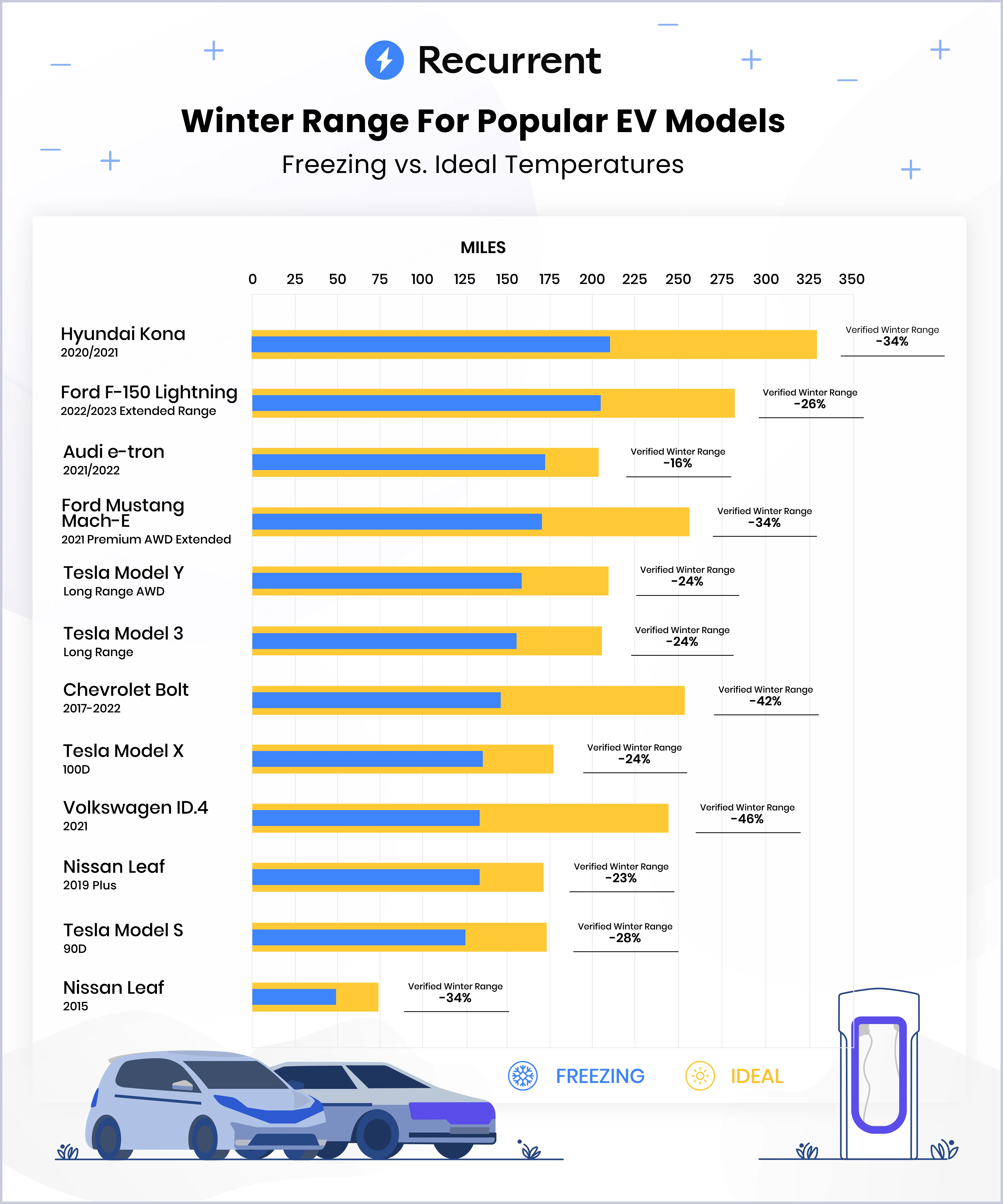
Winter conditions can significantly reduce the range of electric vehicles (EVs), a reality influenced by several factors such as chemical and mechanical reactions within the battery and the need to heat the cabin. According to a study by Recurrent, the range of EVs in winter typically drops to about 70.3% of their range in ideal temperatures. However, different models react differently:
- Volkswagen ID.4: can lose up to 46% of its range.
- Hyundai Kona Electric: loses 34% of its range.
- Audi e-tron: loses only 16% of its range.
- Ford F-150 Lightning: loses 26% of its range.
- Ford Mustang Mach-E: loses 34% of its range.
- Tesla Model Y: loses 24% of its range.
- Tesla Model 3: loses 24% of its range.
- Chevrolet Bolt: loses 42% of its range.
- Tesla Model X: loses 24% of its range.
- Nissan Leaf 2019 Plus: loses 23% of its range.
- Tesla Model S 90D: loses 28% of its range.
- Nissan Leaf 2015: loses 34% of its range.
Image
Why Does This Happen?
Chemical Reactions in the Battery: Cold temperatures inhibit chemical reactions, reducing the battery's available power.
Cabin Heating: EVs use energy from the battery to heat the cabin, which decreases the overall range.
How to Minimize Range Loss:
- Precondition Your Vehicle: Warm up the vehicle while it’s still connected to the charger.
- Use Heat Pumps: A more efficient way to heat the cabin.
- Seat and Steering Wheel Heating: Consumes less energy than heating the entire cabin.
Source: Recurrent Auto
Tags