Data

Denmark’s 97% EV Private Buyer Share in July: The Cost Per km Calculation Behind the Surge
Generic photo
Generic photo
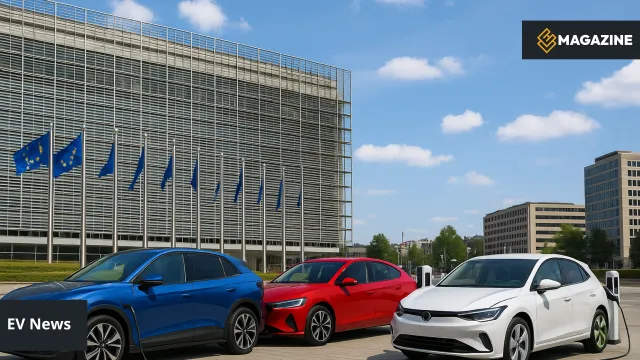
Battery-electric vehicles claimed 97% of private new-car registrations in Denmark in July. The headline figure is staggering, but the subtext is simpler: the registration tax reduction has turned electric cars into the cheapest new-car option for households — and the running costs widen the gap even further.

The numbers behind the milestone

According to industry association Mobility Denmark, 11,672 of the 14,562 new passenger cars registered in July were fully electric — an overall market share of 80.2%. Among private buyers, the figure jumped to 97%. Mads Rørvig, CEO of Mobility Denmark, called it a sign that “the electric car has become the natural choice for nearly all Danes when buying a new car.” The scale of the shift is even clearer when you look at the year-to-date numbers. Through July, battery-electric cars accounted for 73% of all new registrations, and the trend is accelerating. Not a fluke month — a structural change.

The arithmetic of why it makes sense

Talk to a Danish family, and the explanation is unromantic: it’s the cost. Denmark’s reduced registration tax for zero-emission vehicles — a deliberate policy choice — slashes the up-front price of an EV by tens of thousands of kroner compared to a petrol equivalent. But the real clincher is the running cost. Using our Bjørn Nyland real-world range calculator, which aggregates hundreds of consumption measurements, a typical family EV like the Tesla Model Y Long Range consumes about 18.0 kWh/100 km in mixed driving conditions. With the average Danish household electricity price hovering around 0.31 EUR/kWh this year (Eurostat), that translates to 5.58 EUR per 100 km. A comparable petrol family car at 8.0 L/100 km and a Danish pump price of 1.80 EUR/litre costs 14.40 EUR/100 km — more than 2.5 times as much. Even if you rely entirely on public fast charging, our supercharger database of 483 European locations shows the cheapest DC charger in Denmark currently at 0.29 EUR/kWh, bringing the cost to just 5.22 EUR/100 km — still less than half the petrol bill. You don’t need to be an environmentalist to do the math. This isn’t green goodwill; it’s household economics. Our EV savings calculator lets you plug in your own figures, and for Danish drivers the result is almost always the same: the EV wins, hands down.

The tax cloud on the horizon

Mobility Denmark warns that the gradual restoration of registration tax on electric cars — set to begin in 2027 — will erase part of that advantage. The tax is expected to rise in steps, adding somewhere between 3,000 and 5,000 EUR to the price of the most popular EV models stretched over several years. The association projects that this will slow the market’s momentum, though it still expects the total EV fleet in Denmark to reach one million by 2027, at which point roughly every third passenger car on Danish roads will be battery-electric. That’s not a revolution — it’s a policy-driven re-pricing that could be tweaked further. The contrast with other markets is sharp. In the US, for example, Hyundai/Kia saw EV registrations drop 47% while hybrids boomed earlier this year, partly because the total cost equation didn’t tilt as decisively toward electric. Denmark’s situation shows what happens when it does.

What happens next

Even with a tax rise, the running-cost gap is so wide that the EV share is unlikely to collapse. The bigger question is whether the infrastructure — on-street chargers for the 40% of Danes without private parking, grid reinforcement — can keep pace with a million-strong EV fleet. Mobility Denmark’s timeline is ambitious; our charging station map already lists dozens of fast-charging locations across the country, but a tripling of the fleet in two years will test every cable and transformer. For now, though, the data is unambiguous. When you make electric cars the cheapest to buy and the cheapest to run, people don’t need to be persuaded — they just buy them.

Source: https://www.electrive.com/2026/08/04/denmark-evs-account-for-almost-all-new-car-registrations-in-july/