What the August numbers actually say
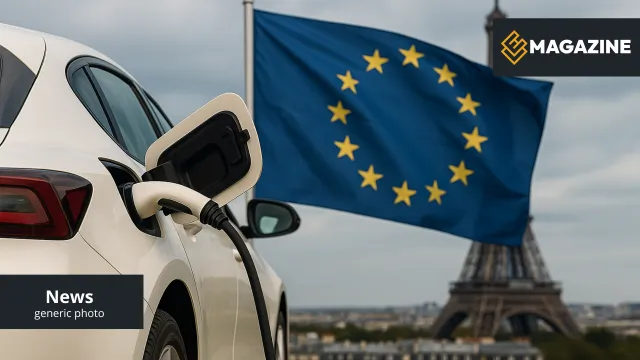
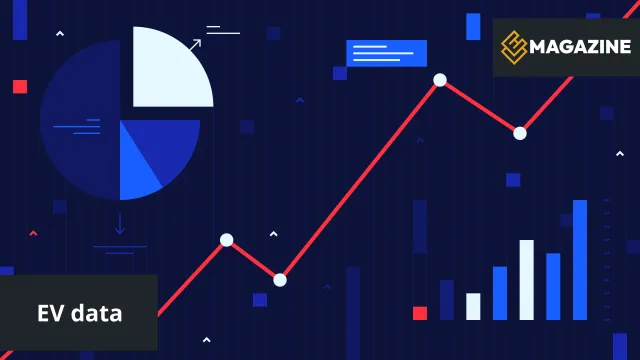
According to ACEA, the European carmakers' association, 29.2% of new cars registered in August across the EU, UK and EFTA were battery-electric, up from 20.2% a year earlier. In share terms, that is roughly 44% more than twelve months ago.
The ICCT reads the same month at 29%. Both organisations put the January–August average at about 23% (ACEA 23.2%, ICCT 23% — small differences between registration data sets are normal, the direction is identical).
The combustion side tells the other half of the story. Petrol took 18.5% of August registrations, diesel just 5.8% — 24.3% combined, below battery-electric cars for the month.
Our own maths on the year-to-date gap: a year ago at the end of August, petrol and diesel held 35.8% and EVs 17.7%, a spread of 18.1 percentage points. Now it is 27.9% against 23.2% — a spread of 4.7 points. The gap narrowed by roughly 13 points in one year. We are not extrapolating that into a date, though. August is a seasonal peak, and one more number is easy to forget: hybrids are still number one, with 32.8% in August and 36.3% year to date, up from 34.7% a year ago.
Among manufacturers, the ICCT credits BMW Group with the highest electric share — 30% of its sales from January to August, ten percentage points more than last year. And Volkswagen has reached an odd milestone in Germany: more EV orders than combustion orders, driven largely by the small ID. Polo.
Who is actually buying — and who is still waiting
Monthly market share is a fleet number as much as a family number. Registrations include company cars, leasing and salary-sacrifice deals, which is why the headline can rise faster than the number of households with a charger in their garage. For a family with one car and a fixed monthly budget, the deciding questions are different: can we charge at home, what does the car cost per month, and will it manage the summer holiday.
Here is our arithmetic, with typical European figures. Home charging at €0.25/kWh and 18 kWh/100 km gives €4.50 per 100 km. A petrol car at 6.5 l/100 km and €1.60 per litre costs €10.40. That is €5.90 saved per 100 km, or about €885 a year at 15,000 km. Try your own tariff in our charging cost calculator.
That advantage shrinks fast on the motorway. Fast charging at €0.70/kWh with a realistic 20 kWh/100 km (winter, roof box, motorway speed) comes to €14 per 100 km — more than the petrol car. Public charging prices swing enormously between networks and countries, which is why we keep a database of 483 locations and a list of the cheapest Superchargers in our charging map.
Policy: the money is moving from the showroom to the plug
The 29% figure did not appear by itself. It sits on top of EU CO2 targets for new cars and the 2035 phase-out of new combustion sales, plus national purchase incentives that are now being wound down in several countries.
Slovenia is the clearest example of where this is heading: it ended EV purchase subsidies and moved €25 million into charging stations. Expect more of that logic. Once roughly one in four new cars is electric, paying people to buy the car makes less sense than paying for the infrastructure everyone will use.
Two supply-side stories decide whether that share keeps climbing. CATL's €7.34 billion, 100 GWh plant in Debrecen has started test production but still has no date for series output — Europe's EV share depends on cells being built here, not only imported. And on the technology side, Mercedes has first call on ProLogium's Gen4 solid-state cells at 400 Wh/kg, 5–80% in 6.4 minutes — promising numbers that are not yet in a car you can order.
If you are shopping this autumn
- Check home charging first. Without a driveway or a garage socket, the running-cost maths above collapses.
- Use real-world range, not WLTP. Our range calculator is built on measured data, not brochure figures.
- Price your own routes. Look up fast chargers on the roads you actually drive before you sign.
- Think about the used market. A 23% share today means a much deeper supply of three- and four-year-old EVs later — worth checking in our EV catalog before buying new.
What to watch in the coming months: whether August was a seasonal peak or the new normal, whether the EU's subsidy debate keeps shifting from purchase grants to charging, and how quickly hybrids — still the market leader — start losing ground to cars with a plug.
Source: https://insideevs.com/news/809592/ev-sales-europe-august-market-share/