
Hyundai IONIQ 9
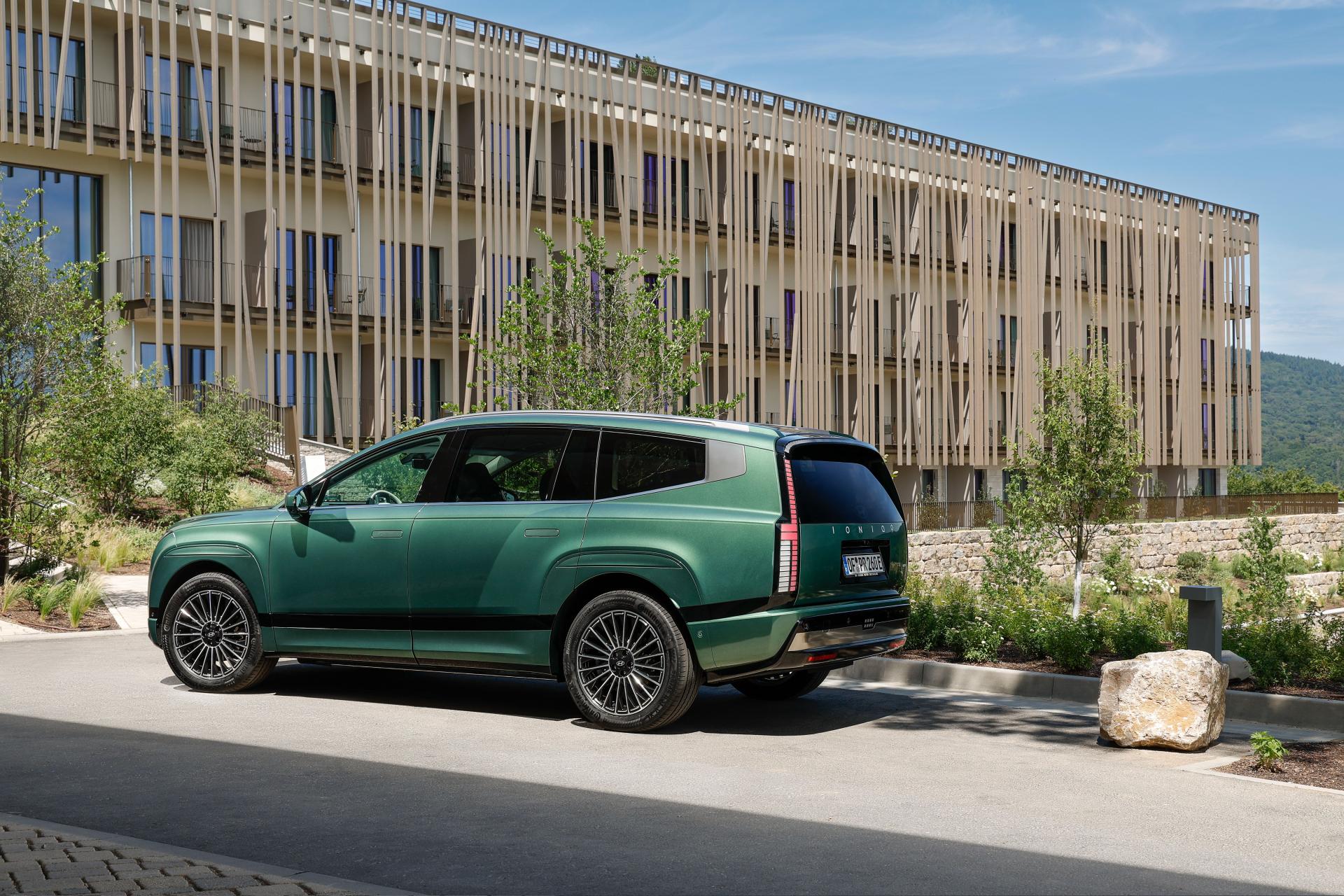
Hyundai IONIQ 9 from the rear three-quarter angle. Photo: Hyundai Newsroom, hyundai.news/de/bilder-videos/bilder.
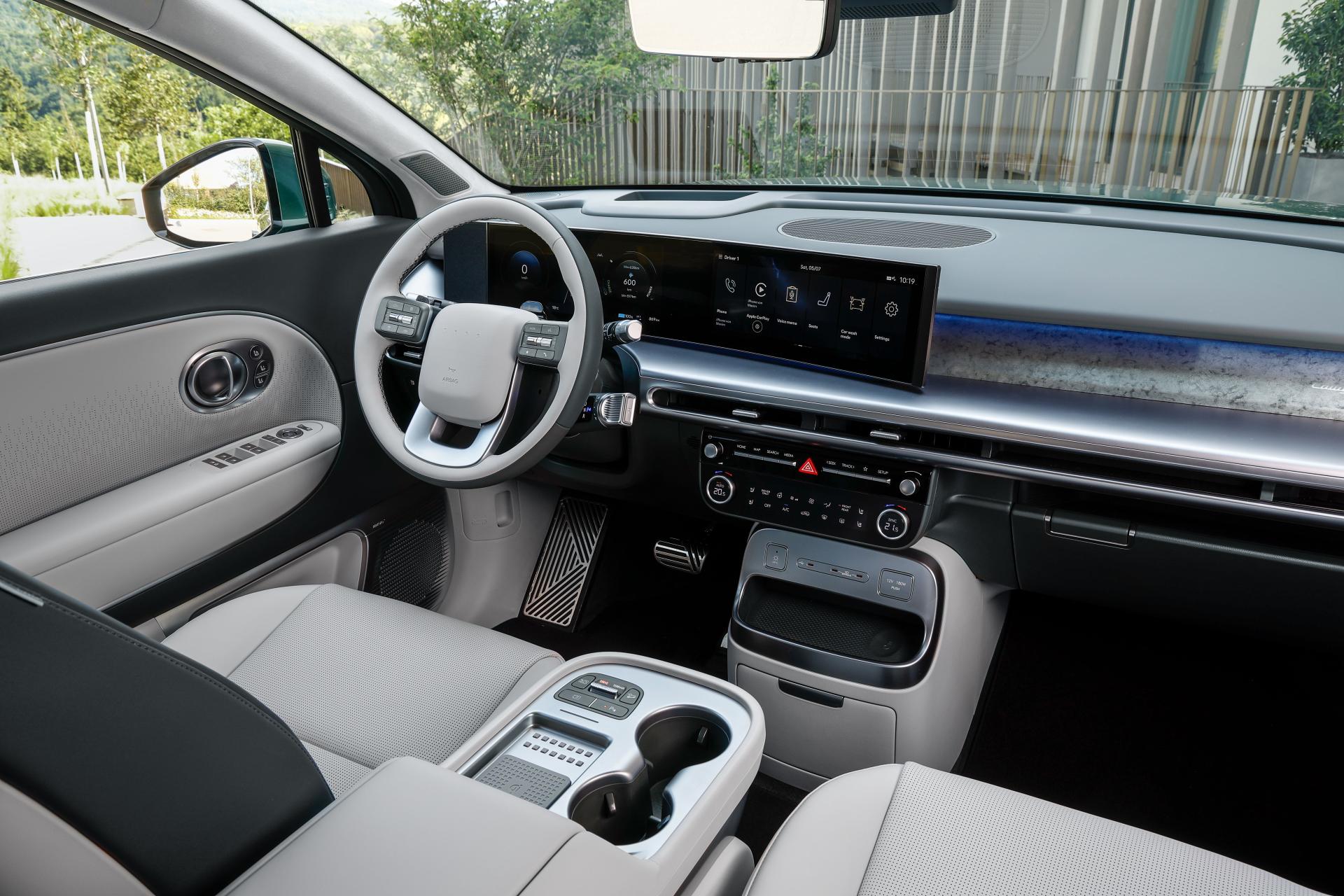
Hyundai IONIQ 9 cabin, showing the dashboard and centre display. Photo: Hyundai Newsroom, hyundai.news/de/bilder-videos/bilder.
Hyundai's seven-seat electric SUV is 5,060 mm long with 338 litres of luggage space behind the third row. The rear-drive version uses a 110 kWh battery and a 160 kW motor for 620 km of WLTP range; DC charging peaks at 233 kW and AC charging at 11 kW.
Acceleration from 0 to 100 km/h takes 9.4 seconds and top speed is 190 km/h.
Brand: Hyundai
Transmission: Single-speed automatic
Seating Capacity: 7
Drive: RWD
Engine: Permanent magnet synchronous motor
Year of Manufacture: 2025
Battery Capacity (kWh): 110.3
Approximate Price: 70 850 €
Maximum Engine Power (kW): 160
Maximum Engine Power (HP): 218
Maximum Torque (Nm): 350
Battery Type: Lithium-ion polymer (LiPol)
Voltage (V): 610V
Weight (kg):
Number of Battery Cells:
Onboard Charger Power (kW): 11
Maximum DC Charging Power (kW): 233
Charging Time Mod3 (hours): 7.83
Charging Time Mod4 (minutes): 24
Top Speed (km/h): 190
0-100 km/h Acceleration (s): 9.4
Combined WLTP Consumption (kWh/100 km): 19.9
WLTP Range Combined (km): 620
WLTP Range City (km): 846
User Range City (km):
User Range Combined (km):
Emissions (g/km):
Length (mm): 5060
Width (mm): 1980
Height (mm): 1790
Front Wheelbase (mm):
Rear Wheelbase (mm):
Ground Clearance (mm): 174
Curb Weight (kg): 2575
Maximum Allowable Weight (kg): 3180
Maximum Vertical Load (kg): 80
Maximum Trailer Weight with Brake (kg): 1600
Maximum Trailer Weight without Brake (kg): 750
Trunk Capacity (l): 338
Maximum Trunk Capacity (l): 2419
Regenerative Braking: ano
One-Pedal Driving:
Heat pump: Yes