Four Plants, 40,000 Workers, 750,000 Cars Per Year
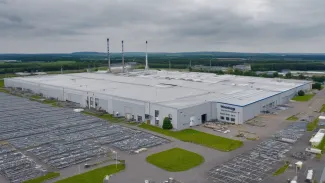
The scale of what is being proposed is staggering. The four German facilities reportedly identified for closure are:
- Hannover — home to VW Commercial Vehicles, where the iconic ID. Buzz is assembled alongside battery modules
- Zwickau — VW's flagship all-electric plant, producing the ID.3, ID.4, ID.5, Cupra Born, and Audi Q4 e-tron
- Emden — another BEV-dedicated factory building the ID.4 and ID.7
- Neckarsulm — the historic Audi facility producing combustion and hybrid models, including the A6, A7, and A8
Together, these four plants employ around 40,000 workers and produce approximately 750,000 vehicles per year. Their closure would represent the most dramatic contraction in Volkswagen Group's history. The planned timeline gives some room — production at all affected sites is expected to continue past 2030 — but the writing is now on the wall.
The Numbers Behind the Decision
Volkswagen has been under severe financial pressure since 2024. The group set a target of cutting 11 billion euros in overhead costs by 2030, focused primarily on administration and development spending. Earlier restructuring talks had centred on eliminating around 50,000 German jobs, but the current plan reportedly envisions up to 100,000 job cuts globally from a workforce of 657,000.
CEO Oliver Blume is expected to present the full restructuring programme to the supervisory board on July 9, 2026. The April 2026 board meeting had already identified these four plants as closure candidates, but the formal decision — and its political fallout — is still ahead.
The Electric Paradox at the Heart of the Plan
Perhaps the most striking aspect of the proposed closures is that two of the four plants — Zwickau and Emden — are entirely dedicated to battery electric vehicle production. Zwickau, in particular, was held up as a model of the EV transition when it was converted from combustion to BEV manufacturing in 2020. VW invested billions to transform it.
Both plants have already been through painful consolidation: assembly lines were reduced from two to one as EV demand in Europe disappointed expectations. Now, even the surviving line may not be enough to justify keeping the factories open.
This is not simply a story about industrial overcapacity. It reflects a deeper crisis of confidence — in European EV demand, in VW's pricing strategy, and in whether German manufacturing costs can ever compete with the speed and scale being deployed by BYD, SAIC, and other Chinese rivals who are already on European roads.
IG Metall Draws the Line
Germany's powerful metalworkers union, IG Metall, has made its position clear. In a sharply worded statement, union leadership condemned what it called "attacks on the Volkswagen Act, co-determination and our sites" as "irresponsible threats." The union wants management to focus on building competitive products and securing employment rather than pursuing what it described as "blind activism."
The Volkswagen Act — a piece of German law that gives the state of Lower Saxony a blocking minority in major VW decisions — has long protected workers and production sites from purely market-driven closures. Whether it can continue to do so under the weight of the current financial pressure is one of the central legal and political questions of the coming months.
Worker representatives hold half the seats on VW's supervisory board. Any closure plan will require their agreement — or a bruising legal and industrial battle to push it through without it.
Spinning Off the VW Brand: A New Corporate Architecture
Beyond the plant closures, the board is reportedly weighing a structural transformation that goes even further: spinning off the core Volkswagen passenger car brand and its Components division into separate, independently listed entities. Such a move would separate the VW brand from Audi, Porsche, SEAT/Cupra, Škoda, and the group's other marques — allowing each unit to raise capital independently and be valued by the market on its own terms.
This kind of disaggregation is typically a sign that a conglomerate believes the sum of its parts is being undervalued. It can also be a precursor to partial asset sales. For workers and communities tied to the VW brand specifically, it adds another layer of uncertainty on top of the closure threats.
What It Means for Europe's Industrial Policy
The potential closure of Zwickau and Emden — two plants that were purpose-built or converted for the EV era — sends a deeply uncomfortable signal about the state of European EV manufacturing. These are not legacy factories struggling to adapt. They were the adaptation. If even they cannot be made economically viable, the EU's ambition to maintain a domestic EV manufacturing base faces serious structural questions.
European policymakers have been pushing carmakers to electrify, tightening CO2 targets and introducing tariffs on Chinese-made EVs to protect domestic production. But tariffs alone cannot close the cost gap if European factories are running at half capacity while Chinese rivals operate at scale with lower labour and energy costs.
VW's July 9 board meeting may not produce final decisions — restructuring of this magnitude is typically negotiated over months, not announced in a single session. But what emerges from that meeting will set the tone for the most consequential industrial transformation in Germany since reunification.
Which Volkswagen plants are reportedly planned for closure?
Four German sites have been identified: the Hannover plant (VW Commercial Vehicles, ID. Buzz), Zwickau (ID.3, ID.4, ID.5, Cupra Born, Audi Q4 e-tron), Emden (ID.4, ID.7), and Neckarsulm (Audi combustion and hybrid models including the A6, A7, and A8). Together they employ around 40,000 workers and produce roughly 750,000 vehicles per year.
When will Volkswagen decide on the plant closures?
CEO Oliver Blume is expected to present the full restructuring plan to the supervisory board on July 9, 2026. While the four plants were identified as closure candidates in April 2026, production at affected sites is expected to continue past 2030. A formal agreement — which requires worker representative consent — could take months to finalise.
Why is Volkswagen closing EV-dedicated plants like Zwickau and Emden?
Both Zwickau and Emden were converted or built specifically for battery electric vehicle production. However, weaker-than-expected EV demand in Europe forced both plants to reduce from two to one assembly line. With high German labour and energy costs and intensifying competition from lower-cost Chinese manufacturers, even the remaining line is reportedly insufficient to make the factories financially viable.
Source: https://www.electrive.com/2026/06/26/vw-board-reportedly-plans-to-close-four-german-plants/