GB 38031 compliance and the end of thermal runaway fear
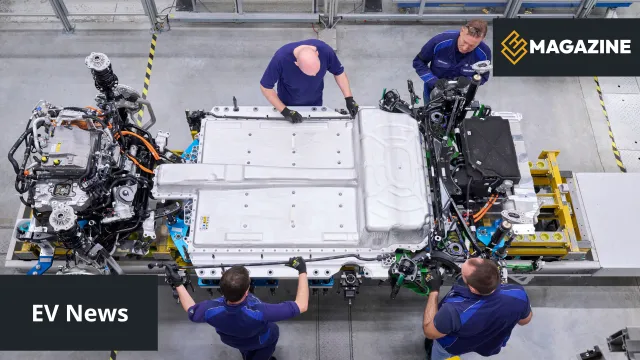
Blue Solutions, the French solid-state specialist, paired its latest lithium‑metal anode cells with AVL’s simulation and testing infrastructure. The joint work focused on three things: how the cell behaves under rising internal pressure, how the mechanical package holds up under extreme load, and — most critically — whether a thermal event in one cell can be stopped before it propagates through the whole pack.
The answer, according to the partners, is yes. By engineering the cell architecture for controlled pressure release and by running thousands of failure simulations, they were able to demonstrate that propagation can be contained. That result allowed the system to comply with China’s GB 38031-2020 battery safety standard, one of the toughest mandatory regulations for traction batteries. GB 38031 covers cell, module and full‑pack abuse tests, including overcharge, nail penetration and fire exposure.
As we noted in our earlier report on the programme, passing this standard is a practical passport — any manufacturer that wants to sell EVs in China needs to meet it. Blue Solutions now has a cell that satisfies both the safety regulators and the engineers who worry about chain reactions inside a 70+ kWh pack.
The density promise: 25 % more energy in the same box
The safety story is only half the picture. The real headline for drivers is energy density. Blue Solutions and AVL aim for a 25 % increase in volumetric energy density at the pack level compared with current NMC lithium‑ion cells, plus a 13 % gain in gravimetric density. In plain terms: you can either pack the same kilowatt‑hours into a smaller, lighter battery case, or keep the case the same size and pour in more energy.
That’s a meaningful step. Many production EVs still struggle with the trade‑off between cabin space and battery capacity. A 25 % volumetric jump means an SUV that today carries 80 kWh could carry 100 kWh without growing an inch — or the same 80 kWh could fit into a lower‑slung saloon without stealing headroom. The 13 % gravimetric improvement also helps efficiency, especially in stop‑start city driving where mass matters.
From spec sheet to real‑world: what 25 % density means for a family EV
To ground these numbers, let’s pick a familiar car: the Hyundai Ioniq 5 with its 77.4 kWh NMC pack. In our comparison of the Ioniq 5 N and 6 N we’ve seen how the same platform responds to different battery software, so the hardware baseline is well understood. Now, using the consumption coefficients from Bjørn Nyland’s real‑world tests — the backbone of our Bjørn range calculator — we can simulate what happens if the Ioniq 5’s pack gets that 25 % density uplift.
A standard Ioniq 5 RWD returning roughly 400 km in summer mixed driving and 320 km in winter would, with a solid‑state pack of the same physical size but 97 kWh, push those figures to about 500 km summer and 400 km winter. For a family heading on a ski trip, the extra 80 km of cold‑weather range can mean one fewer charging stop — tangible, not theoretical.
Because gravimetric density also improves, the pack could be a few kilograms lighter per kWh, nudging consumption down further. Neither Blue Solutions nor AVL disclosed actual cell‑to‑pack mass figures yet, so we treat the range boost as a conservative baseline. Still, a solid half‑century kilometre gain in winter is enough to change a buying decision.
What’s still missing: calendar life, cost and charging speed
Safety and density are two legs of the stool; the third is longevity and price. Solid‑state cells have historically struggled with fast charging and with calendar degradation — the battery slowly losing capacity even when parked. Blue Solutions says it is now preparing the fourth generation of its technology, targeting passenger‑car commercialisation by the end of the decade. That timeline means the cells will face thousands of real‑world cycles before they land in a car you can buy.
Cost remains the elephant in the room. While the programme didn’t address manufacturing cost, a pack that packs 25 % more energy into the same space is, in principle, more material‑efficient per kWh. Whether that efficiency offsets the expensive lithium‑metal anode and specialised production processes is the question that will determine whether this battery stays in low‑volume premium cars or trickles down to the mainstream. For European drivers, access to reliable high‑power charging also matters — even a long‑range solid‑state car needs a network behind it. Our supercharger database tracks 483 locations across Europe, a figure that will need to grow in step with battery capacity.
The takeaway
Blue Solutions and AVL have delivered a solid‑state cell that handles the safety test everyone was waiting for and adds a serious density advantage. We’re still several years away from seeing it in a production car, and questions around cost and fast‑charging remain open. But when the numbers are concrete enough to feed into a real‑world range calculator and show 400 km of winter driving without a bulkier pack, the direction is clear: solid‑state is moving from a lab fantasy to a development milestone, and every percentage point of density brings it closer to your driveway.
Source: https://www.electrive.com/2026/08/03/blue-solutions-and-avl-test-solid-state-battery-safety/