Where LMFP sits between LFP and NMC
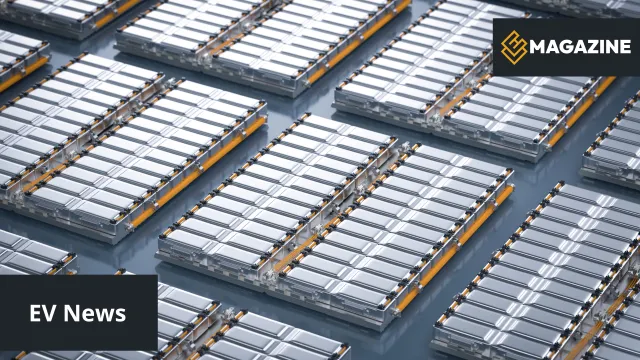
LMFP is not a new chemistry family so much as a tuned one. In an LFP cathode, part of the iron is replaced by manganese, which lifts the cell voltage from around 3.2 V to roughly 4 V. That translates into noticeably higher energy density at cell level — without cobalt or nickel, and without leaving the phosphate chemistry's thermal stability behind.
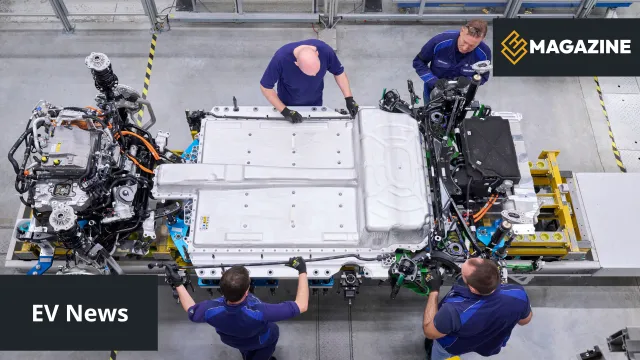
For heavy commercial vehicles that combination is unusually attractive. LFP is cheap, safe and long-lived, but it is heavy and gets sluggish in the cold. NMC is energy-dense and strong across a wide temperature range, but costs more. BMZ Poland and EVE Energy are positioning the Versora LMFP in the gap. The platform uses two module formats that can go into the vehicle floor, body or roof, and — importantly for OEMs — the LMFP and NMC versions share dimensions, weight, electrical interfaces and voltage classes. A manufacturer can swap chemistry without redesigning the truck.
The numbers, and what they actually mean
| Parameter | LMFP (BMZ/EVE claim) | LFP (BMZ reference) |
|---|---|---|
| System weight | up to 10% lighter | baseline |
| Peak charging | up to 1 MW, 2.2C | not stated |
| 10–80% charge | under 25 min | around 35 min |
| Cycle life to 80% SoH | >4,500 (next gen >5,500) | not stated |
| Capacity at −20 °C | 85% | around 75% |
Now the arithmetic those figures imply. 2.2C at 1 MW points to a pack in the region of 455 kWh, so the reference system is a 450–600 kWh long-haul pack. If the 25 minutes is an average rather than just a peak, 70% of a 600 kWh pack is 420 kWh — an average of about 1.01 MW. Squeeze the same 420 kWh into the LFP variant's 35 minutes and you average roughly 720 kW.
At a typical long-haul consumption of about 1.1 kWh/km, 420 kWh is roughly 380 km of range. That is 15 km per charging minute for LMFP against 11 km for the LFP pack — a little over a third more distance for every minute plugged in. On a 600 kWh pack, the 10% weight saving is roughly 460 kg assuming a pack-level energy density near 130 Wh/kg, which is real payload, even if the EU already grants zero-emission trucks extra weight allowance.
The cycle claim is the one worth running through a calculator. One full cycle on a 600 kWh pack at 1.1 kWh/km equals about 545 km, so 4,500 cycles works out to roughly 2.4 million km before the pack drops to 80% SoH — more than most long-haul tractors accumulate in fifteen years at 150,000 km a year. Treat it as a lab figure, but a serious one.
Cold weather is the quieter headline
Ten percentage points more usable capacity at −20 °C sounds modest until you scale it: on a 600 kWh pack that is 60 kWh, or roughly 55 km of range a Nordic or Baltic fleet gets back on the worst days of the year. Our own data shows how winter splits the field — try the real-world range calculator built on Bjørn Nyland's test data, where winter results frequently land well below WLTP.
What it competes against
The obvious benchmark in Europe is the Mercedes-Benz eActros 600: 621 kWh of installed LFP capacity, up to 1 MW charging via MCS, and a 500 km range claim. That is precisely the LFP package LMFP is designed to beat on weight and charge time, and it makes the chemistry swap on the same platform architecture genuinely interesting for fleet buyers. Note also that BMZ Poland is not a newcomer to Daimler — the Gliwice plant assembles the NMC4 battery generation for the Mercedes-Benz eCitaro, in all bus variants from 2026.
The data backdrop
LFP's dominance is the reason LMFP has to argue its case. In China's August 2026 battery market, LFP hit a record 85.6% share, with CATL at 41.45% and BYD at 20.98%. LMFP is a sliver of that pie — which is why the commercial-vehicle niche, where weight and cold performance hurt most, is the sensible place to start.
The demand side is still small. As we reported when BGL and Depotcharge opened German truck depots to other fleets, only 600 electric trucks were registered. And cost still decides more than chemistry: at 110 kWh/100 km, depot power at €0.20/kWh gives €22 per 100 km, public MCS at €0.60/kWh gives €66 per 100 km, while a diesel tractor at roughly 38 l/100 km and €1.50/l sits near €57. Run your own figures in the charging cost calculator.
Worth adding: our supercharger database tracks 483 European locations, but that is a car network. A 40-tonne truck needs MCS parks with megawatt cabinets — a different build-out entirely.
Timeline, ownership and open questions
The Versora NMC version is ahead: selected customers already have samples, series production in 2027. LMFP samples follow in 2027, series deliveries mid-2028. Ownership is settled — BMZ Poland was unaffected by the insolvency of BMZ Germany and BMZ Holding at the end of 2025 and now sits under SKion, the investment company founded by Susanne Klatten.
What is still open: every performance figure here is a supplier claim presented at a trade fair, with no independent cycle-life verification at 2.2C. The regulatory driver, by contrast, is fixed — EU heavy-duty CO2 targets of −45% from 2030, −65% from 2035 and −90% from 2040 leave little room for diesel in long-haul fleets.
What a fleet should do with this
Nothing yet — 2028 is two model years away, and no truck carries this pack today. But if you are specifying long-haul electric tractors now, ask your OEM two questions: does your battery platform accept a different chemistry without changing the vehicle architecture, and does your depot have the grid connection for the charging power the next generation of packs will demand. Both answers will outlive the current chemistry debate.