A Strategic Shift for PowerCo's European Ambitions
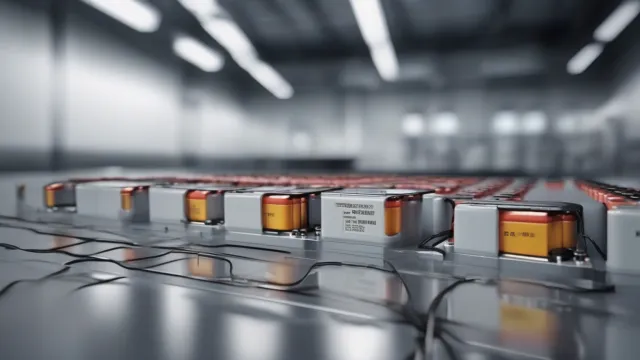
The Volkswagen Group has long positioned PowerCo as its in-house battery arm, with gigafactories planned across Europe. The Sagunto plant, located near Valencia, was meant to supply Volkswagen's Spanish and Portuguese vehicle plants with the Unified Cell — a standardised battery format already in production at PowerCo's Salzgitter facility in Germany.
But according to the report, VW's Board Member for Technology, Thomas Schmall, is leading negotiations to establish a joint venture where Gotion would take operational control while PowerCo remains a minority shareholder. This is not an entirely new relationship — Volkswagen is already Gotion's largest shareholder, holding roughly a quarter of the company, and Gotion has been a technology partner for Unified Cell development and helped build the Salzgitter plant with hundreds of Chinese specialists.
For European readers, the key question is: does this strengthen or weaken Europe's battery independence? On one hand, Gotion is a top-five global battery manufacturer with proven mass-production capability — it began series production of the Unified Cell at its Hefei plant in November 2025. On the other hand, handing majority control of a strategically important EU gigafactory to a Chinese company raises regulatory eyebrows, especially as the EU's Critical Raw Materials Act and Battery Regulation push for greater domestic control over supply chains.
Delays and Recruitment Challenges
The Sagunto project is not running to schedule. According to sources cited by La Tribuna de Automoción, pre-series production has been pushed back to December 2026, with series production not expected before summer 2027. Staffing is also behind — only 50 of the 500 employees needed for pre-series production have been hired so far.
This is a familiar story in Europe's battery factory build-out. We've seen similar delays at Tesla's 4680 cell production and at Northvolt's facilities in Sweden. The gap between announced capacity and actual output remains wide. For buyers of the Volkswagen ID. Polo and Cupra Raval — both built in Spain and reliant on these cells — this means continued dependence on cells shipped from Gotion's Hefei plant in China.
PowerCo España declined to comment on the speculation but stated its "unwavering commitment to the site." A PowerCo spokesperson told Automobilwoche: "We regularly review strategic opportunities, including potential collaborations with partners. However, we have no plans to relinquish control of Gigafactory Valencia." This carefully worded statement does not rule out Gotion's involvement but suggests PowerCo would retain a majority stake — contradicting the Spanish report's claim of a Gotion takeover.
What Gotion Brings to the Table
Gotion is not a minor player. The Chinese company ranks among the global top five battery cell manufacturers and already supplies cells for Spanish-built VW Group models from its Hefei factory. If Gotion takes control in Sagunto, it could expand the customer base beyond Volkswagen. Industry sources suggest Gotion aims to supply other automakers in Spain, with Ford's Almussafes plant mentioned as a potential customer — especially relevant as Geely is reportedly planning to take a stake in that facility.
For European consumers, a Gotion-run factory could mean lower battery costs through Chinese manufacturing expertise and economies of scale. Our EV savings calculator shows that battery pack cost is the single biggest factor determining EV purchase price. If Gotion can produce cells in Spain at costs closer to Chinese levels (currently around €70–80/kWh vs. €100–120/kWh for European producers), we could see more affordable EVs like the ID. Polo base version at €24,995 become the norm rather than the exception.
However, there is a parallel development: Gotion is also advancing its own factory in Valladolid, Spain, for cathodes and battery recycling, following funding approvals under the Perte-VEC programme. This suggests Gotion is building a multi-site Spanish footprint regardless of the Sagunto outcome.
European Angle: Regulation and Strategic Autonomy
The EU's European Battery Alliance aims to create a self-sufficient battery supply chain by 2030. A Chinese-controlled gigafactory in Spain would test the boundaries of that ambition. While the EU has not blocked Chinese investment outright — witness CATL's factory in Hungary and BYD's in Hungary — the political climate is shifting. The EU's anti-subsidy investigation into Chinese EVs and the new Carbon Border Adjustment Mechanism (CBAM) both signal a desire to protect European industry.
For Czech and Central European readers, this matters because battery cell supply directly affects EV prices and availability in our market. If Spanish production ramps up — whether under PowerCo or Gotion — it reduces dependence on Asian imports and should lower logistics costs. But if delays continue, we may see Volkswagen Group models with longer waiting times or higher prices in the Czech Republic.
Our supercharger price database already shows that charging costs vary significantly across Europe. Battery production costs will be the next major variable affecting total cost of ownership. We'll be tracking the Sagunto situation closely and updating our EV catalog as new models with Spanish-built cells arrive.
Practical Takeaway for Buyers
For now, the ID. Polo and Cupra Raval are being supplied from China. If you're considering one of these models, the battery origin shouldn't affect your decision in the short term — Gotion's cells have proven reliable in Bjørn Nyland's real-world tests (you can check our range calculator for comparable models). But in the medium term, a Gotion-run Sagunto factory could mean lower prices and better availability for Spanish-built EVs across Europe.
We'll continue to monitor the negotiations and update this story as concrete agreements emerge. For now, the situation remains fluid — and the gap between corporate statements and on-the-ground reality is wide enough to drive a truckload of battery cells through.
Will Gotion taking over the Sagunto factory affect EU battery regulations?
Potentially yes. The EU's Battery Regulation requires traceability and carbon footprint declarations for all cells sold in Europe. A Chinese-controlled factory would still need to comply with these rules, but it could face additional scrutiny under foreign direct investment screening mechanisms. The Spanish government would likely approve the deal only if it guarantees local jobs and technology transfer.
How does this compare to other Chinese battery investments in Europe?
CATL's factory in Debrecen, Hungary (under construction) and BYD's planned facility in Szeged, Hungary are similar in scale. However, Gotion's potential majority stake in an existing VW project is unique — it represents a Chinese company taking operational control of a European automaker's dedicated battery plant, rather than building from scratch. This could set a precedent for future partnerships.
What does this mean for the price of the Volkswagen ID. Polo in the Czech Republic?
In the short term, minimal impact — current ID. Polo units use cells from China. If Sagunto ramps up under Gotion and achieves Chinese-level production costs (€70–80/kWh), we could see the ID. Polo's starting price drop below €24,000 within 2–3 years. However, import duties and EU carbon costs could offset some savings. Use our EV savings calculator to model different battery cost scenarios.
Source: https://www.electrive.com/2026/07/28/gotion-eyes-stake-in-powercos-spanish-battery-cell-factory/