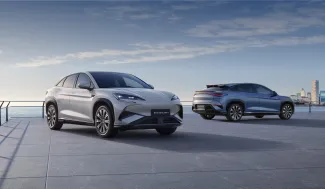
What exactly is being recalled
SAMR's notice, published on Friday 18 September 2026, states that abnormal variation in the manufacturing process may allow physical interference between the steering column torque sensor's wiring harness and its rotor on some Firefly vehicles. The torque sensor is what tells the electronic power steering system how much assistance to apply and in which direction. If its signal becomes erratic, the car flags a fault and can drop power assistance.
That distinction matters. This is not a steering wheel locking up or a column coming loose — the mechanical link between wheel and road stays intact. But losing assistance in a small city car means a heavily weighted steering wheel, most noticeable at parking speeds and in tight manoeuvres. Nio's remedy is straightforward: inspect the affected cars for harness-to-rotor interference and replace the harness where interference is found. Some vehicles in the batch have already been inspected and repaired and will not need a second visit.
686 cars — how big is that in Firefly terms?
Firefly delivered 5,852 cars in August 2026, up 34.65% year on year and 1.40% on July, and 40,795 in the first eight months of the year. Against that, the 686 recalled cars are 1.7% of Firefly's 2026 volume to date — a batch problem rather than a fleet-wide one.
The production window tells its own story. 686 cars built between 20 March and 2 April works out at roughly 49 vehicles a day, whereas August deliveries averaged about 189 a day. Those two figures do not reconcile on their own: either the affected window covers only part of that fortnight's output, or "affected" is a narrower category than "produced". SAMR's notice does not say which, and that is the detail worth watching.
The cost of the fix — my rough arithmetic
Nio has not put a figure on the campaign. A torque sensor wiring harness is a cheap part; the expense sits in labour and dealer logistics. Assume an hour of workshop time per car at a Chinese dealer labour rate of roughly €40–60, multiply by 686 cars, and you land somewhere in the region of €30,000–50,000 in labour alone, plus parts. Measured against a carmaker's quarterly spending, this is a rounding error — which is precisely why recalls of this size usually get filed, fixed and forgotten inside a fortnight.
For scale: €50,000 is also exactly what each individual charge point in EZO's €150 million plan for 3,000 UK and Ireland locations works out at, as we reported earlier. One small steering recall, or one charging post. That is the arithmetic of a maturing industry.
Firefly's bigger year — and the scrutiny that comes with it
Firefly began deliveries on 29 April 2025 as Nio's smallest and cheapest brand, still with just one production model. On 7 August 2026 it gained access to Nio's battery swap network when the first fifth-generation swap stations went live, letting the Nio, Onvo and Firefly brands share the same sites. For a car in this class — Firefly starts at 119,800 yuan in China — swapping is a real differentiator against BYD's Seagull and Geely's Xingyuan, which rely on conventional charging.
Growth brings scrutiny, and Chinese regulators publish recalls routinely. 686 units is a small number by any measure. The relevant test for owners is not the size of the recall but the speed of the remedy: whether cars are notified and repaired inside the two-week window the batch size implies.
What owners should actually do
Nio says it will contact affected owners through its app, by text message and by phone to arrange the service, at no cost. If you drive a Firefly built in that window and have not been contacted, check your VIN against the recall notice in the app rather than wait. And if the electronic power steering warning light appears before your appointment, treat it as a reason to stop driving and call for assistance — not as something to monitor over the next few days.
Does this affect cars outside China?
The SAMR notice covers vehicles built and sold in China. In the EU, safety defects must be reported and remedied under Regulation (EU) 2018/858, and any European-market vehicles inside the affected production window would be handled through a separate recall notified to national authorities. So a China-only filing is neither evidence that European cars are unaffected nor evidence that they are — it simply reflects where the volume is. Firefly's sales remain overwhelmingly Chinese, which makes a China-first filing the expected pattern rather than a red flag.
For readers weighing a small Chinese EV on price, running costs or resale, our EV catalog carries specifications for 67 models, and the charging cost calculator converts kWh into euros per 100 km. Firefly is not in the catalog yet.
Source: https://cnevpost.com/2026/09/18/nio-recalls-686-firefly-evs-steering-safety-risk/