From NEDC to WLTP: the first reality trim
The 553 km NEDC figure comes from a single‑motor front‑drive configuration (160 kW / 275 Nm) fed by a 65.05 kWh lithium‑iron‑phosphate pack. NEDC is famously generous with electric cars. Real‑world measurements collected in Bjørn Nyland’s test database consistently show that the more recent WLTP standard delivers roughly 15–18 % lower range than the older NEDC cycle.
If we apply a conservative conversion factor of 0.82, the O4 EV’s likely WLTP range lands around 453 km. That is still a respectable number for a compact SUV, but it’s already a full 100 km below the marketing claim. The real question, though, is what a European family could expect at a steady 120 km/h on a German Autobahn — or on a freezing morning in the Czech Republic.
Real‑world motorway range: what the Bjørn Nyland patterns suggest
Nobody has strapped measuring equipment to an O4 EV yet, but we can lean on the patterns documented in hundreds of Bjørn Nyland real‑world range tests. Across a wide range of EVs, motorway consumption eats into WLTP range dramatically: at 120 km/h you typically see about 65 % of the WLTP value, while at 90 km/h it sits closer to 75 %. Winter subtracts another 15–20 % on top.
Plugging the estimated 453 km WLTP into those ratios gives:
- Summer, 90 km/h: ~340 km
- Summer, 120 km/h: ~290 km
- Winter, 120 km/h: ~240 km
These are calculation‑based estimates, not laboratory numbers. Yet they mirror what we reported when dissecting the over‑optimistic CLTC range of the Xiaomi Skynomad N70 — an important reminder that seeing “550+ km” on a spec sheet doesn’t mean you can drive from Prague to Hamburg without a charging stop.
Charging speed and what European electrons would cost
Omoda says the 65 kWh pack accepts up to 119 kW DC and can go from 20 to 80 % in 22 minutes. That holds up mathematically: a 60 % top‑up (roughly 39 kWh) at an average power of ~106 kW fits the 22‑minute window. On a long trip, a 10‑minute splash at peak power would add roughly 140 km of real‑world summer motorway range — perfectly usable for European travel.
What would that energy cost? Our supercharger price database tracks 483 locations across Europe. Without a subscription you can pay anywhere from €0.35/kWh (e.g., EnBW in Germany) to €0.79/kWh (Ionity). A 10–80 % charge — about 45 kWh net — therefore costs between €15.75 and €35.55. Converted to a per‑100‑km figure using a realistic summer‑motorway consumption of 18 kWh/100 km, the O4 EV would run at:
- €6.30 / 100 km on the cheapest fast chargers
- €14.22 / 100 km if you pay top rates
By comparison, a 6‑l/100 km diesel at €1.50/litre costs €9.00 / 100 km — so charging at home or on a well‑chosen tariff keeps the O4 firmly in the savings column. You can model your own scenario with the EV charging cost calculator.
What the O4 EV means for Europe — and when
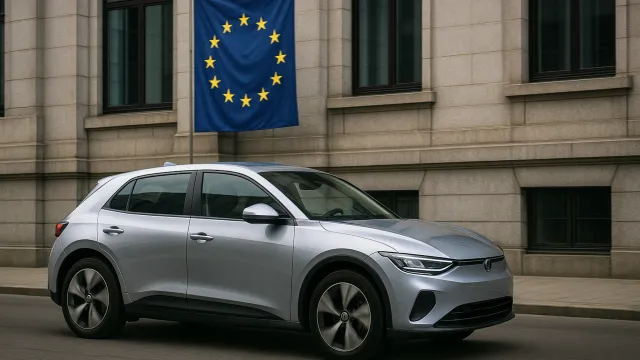
Omoda confirmed the O4 will reach European markets, starting with a hybrid version in the UK later this year followed by the pure‑electric variant. No dates or prices for mainland Europe have been announced yet. The car will likely carry WLTP figures instead of NEDC, so the official claim will be lower — and, as our calculations show, more honest.
Chery Group, Omoda’s parent, is no stranger to putting electric vehicles on European roads. Just last year we covered the start of local assembly of Chinese electric trucks in Austria, and the brand’s choice of an LFP battery for the O4 aligns with the sustainable materials push explored in the PaNaBat lithium‑recycling project. Avoiding cobalt makes the supply chain simpler and arguably more ethical — a quiet plus for a car that will need to compete on price and trust.
For now, the Indonesian launch gives us a first data point. The numbers look plausible after a reality check, but the true test will come when somebody drives an O4 EV over a mountain pass in January and plugs it into a European fast charger. We’ll be watching.
Source: https://www.electrive.com/2026/07/31/omoda-announces-o4-ev-launch-in-indonesia/