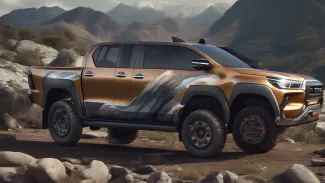
The Hilux Name Carries Weight
Few vehicles carry as much global mythology as the Toyota Hilux. Sold in over 180 countries for more than half a century, it has been the go-to tool for farmers, militaries, humanitarian organisations, and adventurers alike. The ninth generation now takes a calculated step into electrification — not with a new model name, but with the trusted badge that generations of buyers have come to rely on.
This is not a concept or a prototype. The Hilux BEV is a production vehicle heading to market, with confirmed pricing for the UK, France, Australia and New Zealand. The United States is not on the launch list — Toyota's electric pickup strategy for North America remains a separate story.
What You Get Under the Hood
The Hilux BEV is powered by a dual-motor, permanent all-wheel-drive system producing 278 hp (208 kW) and 473 Nm of torque. A 59.2 kWh lithium-ion battery pack — arranged in five 16-cell modules — sits beneath the floor and provides a WLTP range of approximately 160 miles (257 km), rising to around 236 miles (380 km) on the city cycle.
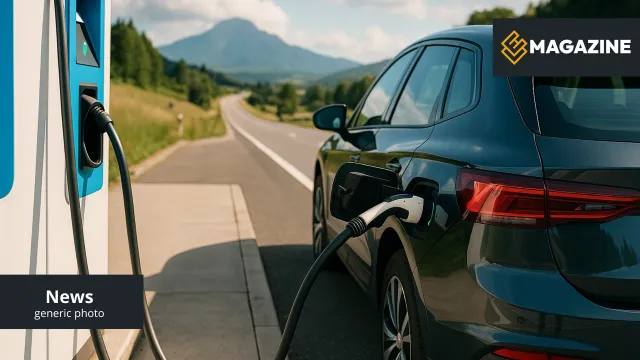
For working truck buyers, the range will raise questions. Toyota's answer is fast charging: the Hilux BEV supports 125 kW DC charging, enabling a 10–80% top-up in approximately 30 minutes. That's a pragmatic figure — quick enough for a lunch break recharge on a job site, assuming infrastructure is available.
Towing capacity stands at over 1,700 kg — sufficient for a trailer loaded with landscaping equipment, a small boat, or agricultural machinery, though well below the diesel Hilux's maximum of around 3,500 kg. Payload figures have not yet been published.
Off-Road Credentials: Built In, Not Bolted On
Toyota hasn't forgotten what made the Hilux famous. The BEV retains Multi-Terrain Select (MTS) with five drive modes, and its wading depth of 700 mm (27 inches) keeps it genuinely capable in water crossings. Ground clearance sits at 212 mm — slightly reduced compared to the diesel version due to the underfloor battery — but still competitive with most SUVs.
The double cab body style carries over from the existing range. Inside, buyers get a 12.3-inch infotainment display paired with a 12.3-inch digital driver display, along with Toyota's third-generation T-Mate active safety and driver assistance suite including lane keeping assist and pre-collision systems.
A European Launch, Not a Global One
The Hilux BEV's initial markets — the UK, France, Australia and New Zealand — are telling. Europe has some of the most stringent commercial vehicle emissions rules in the world, and the arrival of an electrified Hilux gives fleet managers and SMEs a path toward zero-emission compliance without abandoning a nameplate they trust.
For UK buyers, the £42,170 ex-VAT starting price positions it firmly in the premium pickup segment. With VAT included, that pushes past £50,000 — a significant spend, but one comparable to a high-spec diesel Hilux or a Ford Ranger Raptor. French buyers face €57,438 ex-VAT, which with taxes will push the out-the-door figure significantly higher. Toyota has not yet announced a wider European rollout timeline.
The Challenge Ahead
The Hilux BEV enters a pickup market that has been slow to electrify outside of North America. In Europe, electric pickups remain a niche — there are no mainstream direct competitors yet, though the Rivian R2 and various Chinese entrants are edging closer to the continent. The Hilux BEV is therefore more pioneer than competitor — a test of whether the trusted brand can carry buyers into unfamiliar territory.
The 160-mile WLTP range will be a sticking point for buyers who use their trucks for long daily runs or remote site work without reliable charging. Toyota will need to pair the launch with credible fleet charging solutions to make the business case compelling. But for urban and suburban contractors, delivery companies, and buyers who want capable off-road performance without diesel emissions, the Hilux BEV makes a coherent argument.
Toyota has also confirmed that its bZ4X platform learnings have fed into the Hilux BEV's thermal management and charging architecture. The company has been measured in its EV rollout — sometimes frustratingly so — but the decision to electrify the Hilux, rather than create a separate EV pickup, signals that Toyota is serious about bringing its core customers along for the transition.
What is the range of the Toyota Hilux BEV?
The Toyota Hilux BEV has a WLTP range of approximately 160 miles (257 km) on a single charge, rising to around 236 miles (380 km) on the city drive cycle. DC fast charging at 125 kW allows a 10–80% top-up in approximately 30 minutes.
Is the Toyota Hilux BEV available in the US?
No. At launch, the Toyota Hilux BEV is available in the UK, France, Australia and New Zealand. Toyota has not announced plans to bring it to the US market, where its electric pickup strategy centres on different models.
How much can the Toyota Hilux BEV tow?
The Toyota Hilux BEV can tow over 1,700 kg. This is lower than the diesel Hilux's maximum towing capacity of around 3,500 kg, which is a trade-off buyers should consider depending on their work requirements.
Source: https://electrek.co/2026/06/15/toyota-reveals-prices-for-first-electric-pickup/