
Listen to this article:
A Crisis Hidden in Plain Sight
The scale of the problem became impossible to ignore in mid-July 2026. Within just two weeks, 182 formal complaints landed on Chinese consumer protection registers — a flood rate that translated to a fault detection rate of 4.7% across the roughly 213,000 affected Aion S vehicles. Owners described the same alarming symptoms: battery packs visibly swelling, electrolyte leaking, cells rupturing, and in the most dangerous cases, power cutting out entirely while the car was moving.
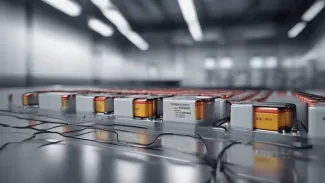
The culprit was identified as the 177Ah lithium iron phosphate (LFP) cell supplied by CALB (Contemporary Amperex Technology's competitor, China Aviation Lithium Battery Co.). The failures were not random — they clustered sharply in vehicles that had covered between 150,000 and 300,000 kilometres, precisely the mileage range where manufacturers promise their LFP packs to be at their most reliable.
What Went Wrong Inside the Battery
LFP chemistry has earned a strong reputation for longevity and thermal stability. It does not suffer from the cobalt-related degradation that plagues nickel-rich cells, and fire risk is significantly lower. So what explains widespread swelling and ruptures in a fleet that had not yet reached exceptional mileage by modern standards?
Industry experts analysing the failures pointed to three overlapping causes. First, an improper electrolyte system design — the liquid medium that carries lithium ions between electrodes was formulated in a way that accelerated degradation under real-world cycling conditions. Second, substandard assembly precision during cell manufacturing allowed microscopic inconsistencies in electrode alignment that compound over hundreds of charge cycles. Third — and perhaps most damaging as a systemic indictment — a lack of rigorous ageing test verification: the cells were not adequately stress-tested to simulate 150,000-plus kilometres of real use before being approved for series production.
The combination creates a time-bomb dynamic. A cell that passes factory quality checks and performs acceptably in the first 100,000 km can begin exhibiting severe degradation as internal stresses accumulate. By the time most owners would notice anything wrong, the damage is already advanced.
Both Companies Issue Apologies — and Warranties
On 18 July 2026, both GAC Aion and CALB publicly acknowledged the crisis and announced remediation plans. The response package includes:
- Battery warranty extended to 8 years or 300,000 km — a significant upgrade from the original terms
- Free battery inspections and replacements for affected vehicles
- Repair subsidies for owners whose cars require more than five days in service
- CALB's direct commitment to free inspection and maintenance services
The apologies were swift, but they mask a more complicated financial picture. Replacing or repairing battery packs across a fleet of 213,000 vehicles is an exercise in nine-figure spending. A comparable battery dispute — between Geely's VREMT battery unit and cell supplier Sunwoda — resulted in a settlement of 2.314 billion yuan (approximately €290 million). The current incident is larger in scale and occurs against worse financial backdrops: CALB's entire 2025 annual profit was 2.095 billion yuan, meaning a settlement of similar proportions would effectively wipe out more than a full year of earnings. GAC, meanwhile, is already projecting a first-half 2026 net loss of 4 to 4.5 billion yuan.
Why This Matters Beyond China
CALB is not a regional player. With a 6.3% global market share by battery installation volume, it ranks fourth worldwide — behind CATL and BYD but ahead of many established names. The company has been actively expanding into European supply chains, positioning its cells as credible alternatives to CATL's dominant products.
The GAC Aion S crisis therefore carries implications that extend well beyond Chinese motorways. If systemic cell-level manufacturing defects — rooted in electrolyte formulation and assembly precision — can affect a 213,000-unit fleet without being caught by standard quality protocols, it raises legitimate questions about what verification standards apply to cells entering European vehicle programmes.
European regulators and OEMs have increasingly relied on Chinese suppliers to meet aggressive electrification timelines and cost targets. The assumption, often unstated, is that China's EV supply chain has matured to a level where quality is reliably predictable. The Aion S crisis provides uncomfortable evidence that this assumption deserves scrutiny.
The LFP Trust Question
The timing is particularly awkward for LFP chemistry's global reputation. Over the past three years, LFP has gone from being viewed as a budget compromise to the preferred technology for mainstream and even premium segments. Tesla uses it in its Model 3 Standard Range; BYD's Blade Battery is built on a variant of the same electrochemistry. The argument for LFP — long cycle life, low fire risk, no cobalt dependency — has been validated by millions of vehicles worldwide.
But that reputation rests on the assumption that the cells are manufactured correctly. LFP's advantages are inherent to the chemistry; its longevity is not automatic, and as the Aion S case demonstrates, poor electrolyte design and assembly tolerances can undermine even the most forgiving cell architecture. The question for European buyers and fleet operators considering LFP-based vehicles from any supplier is not whether LFP works — it clearly does — but whether the specific cells in their vehicle have been built and tested to the standard that makes those advantages real.
A Supply Chain Under Pressure
The crisis also reflects broader pressures on Chinese battery manufacturers. CALB, like its peers, has been operating under intense margin pressure as EV prices have fallen and competition has intensified. Cutting corners on electrolyte formulation or ageing tests does not necessarily mean deliberate negligence — it can reflect the accumulated effect of cost targets, compressed development timelines, and inadequate long-term validation cycles. The EV industry globally, not just in China, has a structural tension between the speed demanded by the market and the patience required by genuine durability testing.
What makes the Aion S case notable is the concentration of failures in a defined mileage band. This is not random early-life failure; it is a systematic degradation pattern that should have been visible in accelerated ageing tests — and was apparently not caught, or not acted upon. That gap between what testing should reveal and what reached the market is the most concerning aspect of the crisis for any engineer working in battery quality assurance.
Are CALB batteries used in European electric vehicles?
CALB has been expanding its European supply footprint, but the majority of its current production serves Chinese domestic OEMs. As of mid-2026, no large-scale European model programme has been publicly confirmed as using CALB cells in significant volumes, though the company has actively sought European partnerships. Buyers should check with their manufacturer which cell supplier is used in their specific battery pack.
Is lithium iron phosphate (LFP) technology inherently unsafe?
No. LFP is widely regarded as one of the safest and most durable battery chemistries available. The issues in the GAC Aion S fleet stem from manufacturing defects specific to CALB's production of the 177Ah cell — not from LFP chemistry itself. Properly manufactured LFP cells, such as BYD's Blade Battery, have demonstrated excellent long-term reliability in very large fleets.
What should GAC Aion S owners do if they notice battery issues?
GAC Aion and CALB have announced free battery inspections and replacements for affected vehicles. Owners experiencing symptoms such as reduced range, battery swelling, unusual heat, or warning lights should contact their nearest authorised GAC Aion service centre immediately. The extended warranty covers 8 years or 300,000 km and applies retrospectively to affected vehicles.