The grant and the cancellation
Boston won the money in 2022 through RAISE, the Rebuilding American Infrastructure with Sustainability and Equity programme created by the 2021 Infrastructure Investment and Jobs Act. The total project value was close to $34 million, so the federal share covered roughly 59 per cent of it. The city and other sources were to provide the rest.
RAISE funds transport projects that improve safety, accessibility and environmental sustainability. Boston argues the Roxbury scheme does all three. The area has some of the highest concentrations of traffic injuries and fatalities in the city.
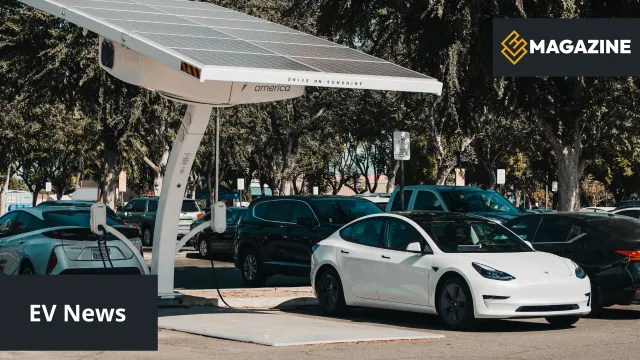
The scope included road repairs, pavement widening and better bus services. EV charging was one element among several. According to the lawsuit, charging stations made up less than one per cent of the budget. On a $34 million project, that works out to under $340,000.
Why the chargers mattered so much
The Department of Transportation cancelled the grant in September 2025, stating that the project did not match the administration's priorities because it funded charging infrastructure. Boston says it offered to strip the chargers out of the scheme. The department still declined to restore the funding.
Scale the hardware against that number. A charging slice below $340,000 is a handful of DC stalls, not a corridor network. The political weight attached to it is far larger than its share of the budget.
Boston filed in the US District Court for the District of Massachusetts. The city argues the department had no authority to rescind an already awarded grant on this basis, and alleges violations of the Administrative Procedure Act and of constitutional separation-of-powers principles. Mayor Michelle Wu said the city earned the grant competitively and called the cancellation unlawful.
Not the first case, and not the first ruling
Albuquerque filed a similar suit after the department withdrew an $11.5 million RAISE grant for an urban trail, on the grounds that the project conflicted with a preference for infrastructure serving vehicular travel. That case is still pending.
One court has already ruled on the wider question. In January 2026, a US court permanently prohibited the Department of Transportation from withholding NEVI programme funds or revoking previously approved state implementation plans.
In August 2025 the administration released $5 billion in previously frozen NEVI money, with revised requirements attached to how states could spend it. We looked at the practical side of fast charging in our analysis of EVgo's 750 kW chargers and what ten minutes actually delivers. The bottleneck there was the car, not the post.
Chinese hardware and North American market access
Charging equipment is a global supply chain, and US federal programmes have carried domestic-content conditions since the 2021 infrastructure law. That determines who can supply publicly funded projects. Boston's dispute is about whether the money flows at all, not about where the equipment comes from, but both questions sit in the same funding stack.
For Chinese car brands, the North American route currently runs through Canada rather than the United States. Canada opened a 49,000-car EV quota, with Omoda and Jaecoo arriving late in 2026 with mostly plug-in hybrids, as we reported in our article on the Canadian quota.
Policy money and the cost of a kilometre
Federal transport funding in the US has become conditional in a way it was not before 2025, as the 34.9 mpg fleet rule for 2031 shows in our own calculation of the new fleet target. Grant disputes add a second layer of uncertainty for anyone planning infrastructure.
For drivers, the running-cost question is separate from the political one. Our charging cost calculator converts a kWh price into €/100 km, and the supercharger database lists prices at 483 European locations.
What is still open
Boston's case now sits with the District of Massachusetts. Albuquerque's is pending. Neither has a ruling date in the public record. The January 2026 NEVI decision covers that programme's funds, not RAISE grants, so it does not settle the question the two cities are raising.