
The system and the contract
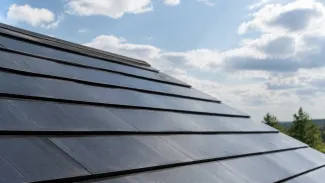
Ambrose Conroy, who lives in Rancho Santa Fe, California, signed up for a Tesla Solar Roof in March 2020. The original contract was $82,210 for a 13.1 kW system. By February 2021, after two amendments, it had grown to roughly $110,000 for an 18.2 kW roof and six Powerwalls.
The case is Conroy v. Tesla, filed in 2022 in San Diego Superior Court's North County division, case No. 37-2022-00043670. Electrek reviewed the court orders, the complaint and the joint trial readiness report; the details below come from those documents, as reported on 7 November.
Tesla admitted three of five claims
In the joint report filed last month, Tesla stipulated to liability on breach of contract, breach of warranty and negligence. Those three claims are no longer contested. Fraud and negligent misrepresentation are the two that went badly.
Two sanctions, then liability deemed on fraud
The September ruling was an issue sanction for discovery abuse, not a default: Judge Cynthia Freeland had already sanctioned Tesla twice over discovery — $15,467.50 in February 2026 and another $13,500 in June — for failing to produce a proper privilege log and responsive documents, both times warning that issue sanctions could follow.
Tesla missed the next deadline anyway. On 11 September the court deemed Tesla liable for fraud and negligent misrepresentation, limiting the trial on those claims to compensatory and punitive damages. The judge found "ample evidence to support that Defendants have acted willfully." Among the missing records were Microsoft Teams messages that a Tesla corporate witness said are kept "for infinity", OSHA logs, emails with San Diego County inspectors and more than 20 internal quality, install and safety reports from Tesla's Bolt system.
Tesla asked her to reconsider. She refused on 27 October, writing that the late documents could support Conroy's theory that Tesla "knowingly used Plaintiff's home as an experiment while knowing they lacked the experience to perform as promised."
"Experimenting" in internal messages
Exhibit 224 on the joint exhibit list is described as text messages from 13 January 2021 between Tesla's director of model engineering Bobby Yang and other employees. That description comes from Conroy's side; the texts themselves have not been published.
Internal emails quoted in the complaint point the same way. On 9 February 2021 Yang wrote that the house was in the "99.5 percentile in terms of complexity" and that "if we can do this job well, we should be able to do any job well." RJ Johnson, then head of Tesla's energy business, replied that the project would "skew numbers" but that Tesla needed "to make it right", then added a line about calling it out individually with Elon. Musk is on Conroy's witness list. Johnson was fired in April 2021.
What the contract works out to per kW
The arithmetic is worth doing. The original deal came to $6,275 per kW of panels. The amended February 2021 deal, including six Powerwalls, came to about $6,044 per kW of roof. The amendments added $27,790 for 5.1 kW more capacity plus 81 kWh of storage (six units at 13.5 kWh each), which is the size of a large electric car's battery.
At the amended ~$110,000 contract price, our own rough estimate is that if each Powerwall is counted at roughly $10,000 — an illustrative assumption, not a Tesla invoice line — the six units account for about $60,000, or roughly $741 per kWh of storage, leaving about $50,000, or roughly $2,750 per kW, for the 18.2 kW roof. Installation, labour and complexity — not cell cost — set that price.
The installation record
These are Conroy's allegations, but Tesla has conceded breach and negligence. A tear-off scheduled for two days took two weeks. Crews left in November 2020 with bare roof decking exposed and worked overtime on 27 December to get underlayment down before a storm. Tiles arrived scratched and went on the roof anyway. Glass shattered in the driveway and on the lawn.
The project went through at least seven project managers. In November 2021 Tesla told Conroy that the people behind its repair plan had left the company and nobody in the area could do the work. In April 2022 it offered $5,000 to settle everything, about 0.2% of the damage Conroy now claims. In February 2025 Tesla failed another county inspection after arriving without plans for the venting system. This summer an expert opened part of the roof and found wiring and conduit routed under the tiles in a way that created a short-circuit and fire risk in heavy rain. The roof is coming off.
Tesla wants the Court of Appeal to step in
In a filing dated 29 October, Tesla asked the court to freeze the case while it petitions the California Court of Appeal. It argues the sanction is "unduly punitive", violates due process and amounts to a directed verdict on fraud before trial. It also says the discovery fight had no connection to the fraud claims and that everything relevant has now been produced. The judge has already rejected that argument once.
The 20 November trial date is off. A trial readiness conference is set for 4 December, and Conroy's lawyers want to go to trial in December.
Tesla stopped making Solar Roof
Tesla installed only about 3,000 of these roofs before discontinuing the product in 2026, according to Electrek. A 2025 action by the California Contractors State License Board sought to revoke Tesla's contractor licences over abandoned Solar Roof jobs. The same complaint attaches a 2020 report about a buyer left with tarps over his house after Tesla tried an untested underlayment.
What the ruling does and does not say
The fraud liability comes from a discovery sanction, not from a jury verdict on the merits. Tesla never presented a defence on that claim, and it is now trying to have the sanction reviewed by a higher court. Damages have not been set.
For European buyers the legal route is different anyway. Under the EU sale-of-goods directive 2019/771, a consumer has a minimum two-year legal guarantee against a seller, plus national rules that often go further. A European buyer of a botched home-energy installation cannot enforce the Conroy order, but can pursue the seller or installer under that guarantee — typically for repair or replacement, a price reduction or termination of the contract, plus damages where national law allows. Product-liability claims have a ten-year long-stop from the date the product was put on the market, so the practical route is a local claim, not a US court. A US court's sanction order has no direct effect here.
A trial readiness conference is scheduled for 4 December. Damages on the fraud claim would go to a jury if the case reaches trial in December.
Source: https://electrek.co/2026/11/07/tesla-solar-roof-fraud-liable-experiment-lawsuit/