
Listen to this article:
Expanding on a Proven Foundation
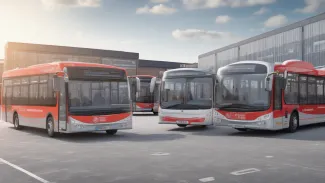
The decision to expand is not born of experiment — it is born of confidence. Leicester already runs 24 Yutong battery-electric buses on its streets, and by all accounts they have delivered. This latest purchase of ten additional vehicles, backed by approximately £4 million in government support and imported through UK distributor Pelican Bus and Coach, brings the council's electric bus portfolio to 34.
Yutong, headquartered in Zhengzhou, China, is the world's largest bus manufacturer by volume and has built a particularly strong foothold in the UK electric market. Its coaches and city buses have accumulated millions of kilometres across British towns and cities, and the brand has become a familiar presence in zero-emission public transport tenders. In Leicester, the buses will operate across routes 20, 24, 81, 83 and 162, connecting residential neighbourhoods with the city centre on services run by Centrebus under council support contracts.
Part of a Much Bigger Picture
This order sits within the city's Enhanced Partnership Scheme — a strategic framework binding the council and local bus operators to shared ambitions for service quality, frequency, and above all, fleet decarbonisation. The target is ambitious: near-complete electrification of the local bus network by the end of 2026, with roughly 200 battery-electric buses projected to be in service across all operator members once the transition is complete.
That places Leicester among a small group of English cities where political will, operator buy-in, and access to central government funding have combined to produce real, measurable change rather than aspirational road maps. The comparison with cities still running near-entirely diesel fleets is stark.
Councillor Geoff Whittle, Assistant City Mayor for Environment and Transport, made the council's position clear: "This latest investment is another significant step towards delivering one of the cleanest and most modern bus networks in the country. Every new electric bus improves air quality, reduces carbon emissions and provides a quieter, more comfortable journey for passengers."
Why Electric Buses Matter More Than Cars
The focus on buses is no accident. A single double-decker or standard-length city bus can replace dozens of private car journeys per route per day. When that bus is electric, the emissions benefit multiplies across every passenger on board. In urban environments like Leicester — where air quality has historically struggled to meet EU and UK legal limits, particularly around busy arterial roads — switching diesel buses to battery-electric operation delivers measurable improvements in nitrogen dioxide and particulate levels within months.
Battery-electric buses also generate significantly less noise than their diesel equivalents, a benefit residents along routes 20, 24, 81, 83 and 162 will begin noticing from early 2027. At idling stops, the silence is near-total. On acceleration, the difference in the residential context is substantial.
Yutong's UK Momentum
For Yutong and Pelican Bus and Coach, the Leicester repeat order is another signal that the UK market is maturing. Operators who take the leap on electric buses tend to come back — not because they are locked in, but because the operational experience justifies it. Maintenance complexity for battery-electric buses is lower than diesel (no exhaust systems, fewer moving parts in the drivetrain), and drivers consistently report that they are easier and more pleasant to operate.
With delivery scheduled for Q1 2027, Leicester's electric fleet will reach 34 council-owned vehicles before the next set of operator procurements likely brings the wider network closer to that 200-bus target. For a city that not long ago ran a predominantly diesel bus network, that trajectory is striking.
How many electric buses will Leicester have after this order?
With the ten new Yutong vehicles arriving in Q1 2027, Leicester City Council will own 34 battery-electric buses. Across the wider Enhanced Partnership Scheme — which includes all major bus operators serving the city — approximately 200 battery-electric buses are expected to be in operation by the end of 2026.
Who will operate the new electric buses in Leicester?
The ten new Yutong buses will be operated by Centrebus on council-supported services, running on routes 20, 24, 81, 83 and 162. The vehicles are funded with approximately £4 million in government support and procured through UK distributor Pelican Bus and Coach.
Why is Leicester using Yutong buses rather than a European manufacturer?
Yutong, based in China, is the world's largest bus manufacturer and has established a strong track record in the UK electric bus market. Leicester already operates 24 Yutong electric buses with positive results, and the combination of competitive pricing, proven reliability, and the availability of government funding made continuing with the same manufacturer a practical choice for the council.
Source: https://www.electrive.com/2026/07/18/leicester-orders-10-more-electric-buses-from-yutong/