
Listen to this article:
The headline figure — more than 70,000 orders across Volkswagen Group's new Electric Urban Car Family — is striking not because it is enormous in absolute terms, but because of what it signals. These are not luxury products. They are not performance cars. They are affordable, practical electric vehicles aimed at the widest possible slice of European car buyers, and the market is responding.
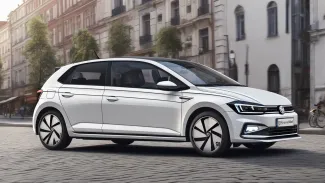
Of those 70,000-plus reservations, 25,000 belong to the VW ID. Polo alone — the electric successor to one of Europe's most familiar names in motoring. The remaining orders are split between the Skoda Epiq and the CUPRA Raval, with the slightly larger VW ID. Cross set to enter the picture later in 2026.
Four Cars, One Platform, One Shared Goal
All four models ride on Volkswagen Group's MEB+ platform — an evolution of the architecture already underpinning the ID.3 and ID.4 — and share a significant portion of their components. That shared engineering is not just a cost exercise. It allows Volkswagen Group to spread development investment across four distinct brands and market segments while targeting a €600 million reduction in structural costs.
The approach mirrors what made the original Polo, Golf and Passat family so successful across decades: platform commonality dressed in distinct identities for different buyers. Whether that buyer wants the rational sensibility of a VW, the sporty edge of a CUPRA, the value proposition of a Skoda, or the rugged look of a mini-crossover, there is now an affordable electric option within the group's portfolio.
VW ID. Polo: The Numbers That Matter
The ID. Polo is the most directly symbolic of the four. The Polo nameplate has sold tens of millions of units in Europe since 1975 — attaching it to an electric car sends a clear signal that VW is serious about mainstream electrification, not just premium positioning.
Pricing starts at €24,995 in Germany for the entry-level Trend trim. Two battery options are available:
- 37 kWh LFP battery (net): up to 329 km WLTP range; DC fast charging at up to 90 kW; 85 kW (116 PS) or 99 kW (135 PS) power output
- 52 kWh NMC battery (net): up to 454 km WLTP range; DC fast charging at up to 105 kW; 155 kW (211 PS) power output
The car is 4,053 mm long, seats five, and offers a practical 441-litre boot — sensible dimensions for urban and suburban use. A GTI variant with 166 kW (226 PS) is confirmed for 2027. Pre-sales opened in late April 2026; production at the Martorell plant in Spain was underway by June, with customer deliveries scheduled for summer and autumn 2026.
CUPRA Raval: The Emotional Choice
Where the ID. Polo opts for pragmatic credibility, the CUPRA Raval leans into personality. Priced from €26,000, the Raval offers similar range — around 450 km — but wraps it in a more expressive package, including 3D-knitted sports bucket seats and dynamic light projections in the door panels. CUPRA describes it as "the most radical version of the urban EV" produced so far.
Three trim levels are available. The Raval is also built at Martorell alongside the ID. Polo, which keeps supply chains and logistics tightly integrated.
VW ID. Cross: The Crossover Option
Rounding out the family at a starting price of around €28,000, the ID. Cross functions as an electric T-Cross — a raised, crossover-styled body appealing to buyers who want practicality and higher seating position without moving up to the ID.4's size or price point. Deliveries are expected later in 2026.
70,000 Orders: Context and Competition
The figure is meaningful when placed against the competitive landscape. The Renault 5 E-Tech Electric was considered a runaway hit when it launched in 2024 — and it has consistently been one of Europe's top-selling EVs since. VW Group's four-model family entering the market with 70,000 advance orders suggests that buyers were waiting for a credible German-branded alternative at this price point.
It also underlines how the entry-level EV market in Europe is becoming genuinely competitive. Chinese manufacturers have been expanding in this segment aggressively, and the pressure on European brands to deliver genuine value — not just heritage — is real. The fact that these numbers are described as "significantly exceeding expectations" within VW Group suggests the internal forecast was more conservative than what the market delivered.
For Volkswagen, the stakes could not be higher. The company has closed factories, cut jobs, and restructured aggressively over the past 18 months. A genuine hit in the affordable EV space would vindicate that painful reorganisation and demonstrate that European auto manufacturing can compete on value as well as brand.
What Comes Next
The near-term roadmap is clear: deliver the 70,000+ units on order without quality or supply hiccups, launch the ID. Cross before year-end, and begin taking orders for the ID. Polo GTI ahead of its 2027 debut. Beyond that, the MEB+ platform leaves room for further derivatives — a longer-range ID. Polo, a potential van or estate variant, or additional body styles for the Skoda Epiq family.
The more significant question is whether these cars can establish a sustained sales position — not just a launch surge driven by pent-up demand — against a Renault 5, an updated Peugeot e-208, and the growing number of Chinese models entering Europe at similar or lower price points. Seventy thousand orders is a strong start. Building and delivering those cars on time, at the promised quality, is what turns a promising launch into a lasting success.
How does the VW ID. Polo compare to the Renault 5 E-Tech Electric?
The ID. Polo starts at €24,995 in Germany and offers up to 454 km WLTP range on the larger 52 kWh battery. The Renault 5 starts at a similar price point and offers comparable range on its larger pack. The key differences are platform (MEB+ vs CMF-BEV), brand positioning, and the fact that VW offers a wider power range from 85 kW to 155 kW, with a GTI variant confirmed for 2027.
Where is the VW ID. Polo manufactured?
The ID. Polo and CUPRA Raval are both built at the Seat/CUPRA factory in Martorell, Spain. Production began in June 2026, with customer deliveries scheduled from summer 2026 onward.
Can I charge the VW ID. Polo on a rapid charger?
Yes. The 37 kWh LFP variant supports DC fast charging at up to 90 kW, taking the battery from 10% to 80% in approximately 27 minutes. The 52 kWh NMC battery supports up to 105 kW DC charging, achieving a similar 10-80% charge in around 24 minutes.
Source: https://insideevs.com/news/802637/vw-id-polo-id-cross-skoda-epiq-cupra-raval-sales/