
What the T&E report found
The figures come from Transport & Environment, a Brussels-based campaign group that pushes for stricter car CO2 rules. Its January–August tally puts EU electric sales at 1.64 million units, a 45% rise year on year, and a market share of roughly 22%. The number of electric models on sale grew by half compared with a year earlier.
The price data is the part worth reading twice. Five of the twenty best-selling electric models in Europe start below €30,000, measured by their German list price before any purchase incentive. T&E expects sales of models starting under €25,000 to reach seven times their 2024 level this year, and counts 16 such models on the market by the end of 2026, twice as many as last year.
One caveat: T&E is an advocacy group and its report argues for the policies it campaigns for. The sales numbers line up with registration data published by other trackers. The forecasts are the organisation's own.
The models doing the work
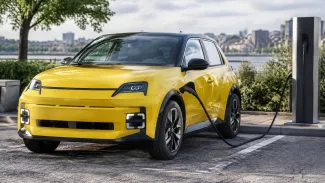
Renault is the clearest case. The 5 E-Tech was the EU's third best-selling electric car in 2025 and the best-selling electric subcompact. Renault's electric sales then rose 63.2% in the first half of 2026, after a 72.2% jump in 2025.
Newer names are arriving quickly. In August, the Kia EV2 recorded 4,429 registrations, the Cupra Raval 3,608, and the new Volkswagen ID. Polo 1,876 in its first month on the market.
Expensive electric cars still sell
Cheaper models are not the whole story. JATO's August figures show the Tesla Model Y, Škoda Elroq, BMW iX1, BMW iX3 and Volkswagen ID.4 each above 6,000 registrations. Buyers with €50,000 to spend were never the problem. The gap that cheaper cars close is at the bottom of the range.
What a smaller electric car costs to run
List price decides whether you can buy the car. Running costs decide whether you keep it. Take a family driving 15,000 km a year. A compact electric car using 17 kWh/100 km needs 2,550 kWh; at €0.27/kWh from a home wallbox that is about €690 a year. A petrol compact at 6.5 l/100 km burns 975 litres, which at €1.65/l comes to roughly €1,610. The gap is around €900 a year, before servicing.
Push half the charging onto public fast chargers at €0.60/kWh and the electric bill rises to about €1,110, still some €500 below petrol. You can run your own annual distance through our charging cost calculator. The same arithmetic applies to commercial fleets, where we checked a claim that a $300 million FedEx electric truck order would save $800 million in diesel.
Charging costs more on the road
Home electricity in most EU countries runs between €0.20 and €0.35 per kWh. Public DC charging commonly costs €0.50 to €0.80 per kWh, depending on the network, the country and whether you pay a monthly subscription. A family that cannot charge at home will spend close to petrol money on energy. That is the biggest practical question when buying any cheap EV, and it has nothing to do with the car's price.
Our database of 483 fast-charging locations lists prices per site, and the cheapest chargers page is updated as tariffs change.
Who builds the new models
European manufacturers account for nearly 60% of the electric models available in the EU and added 16 new ones in the first half of 2026. Chinese brands hold 21% of the market and added 11. Tariff policy is part of that picture: the EU has duties of up to 35% in place on Chinese-built electric cars, while the UK has been weighing its own tariff level and trying to keep access to the EU market, a discussion we followed when the UK proposals were reported.
What to check at the dealer
Most of the cheap electric cars arriving now are B-segment hatchbacks. Two child seats on the rear bench, a folded stroller in the boot and a 500 km holiday drive are the tests that matter more than the list price. Check the boot with the parcel shelf in place, check that the rear doors open wide enough to lift a seat in, and check the winter range rather than the WLTP figure. Our range calculator and the EV catalog let you compare models before you visit a showroom.
Ask about the purchase incentive in your own country. The €30,000 threshold in the T&E report is a German list price before incentives. Schemes differ from country to country, and several change at the start of the year.
T&E's forecast stops at the end of 2026. It counts 16 models below €25,000 due on the market by then, twice as many as a year earlier. Its sales projection covers this year only.
Source: https://insideevs.com/news/810822/europe-ev-sales-january-august/