
The US rollout: 500 stalls anchored by grocery stores
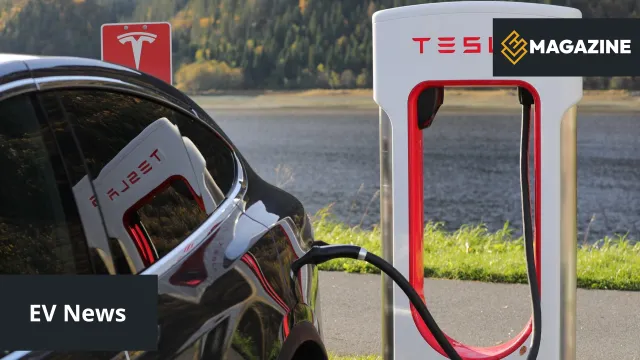
The expanded partnership, announced today, will place up to 12 high‑power DC fast chargers at each site across Florida, Illinois, Minnesota, New Jersey, Pennsylvania and Texas. The first location under the new agreement is Barn Plaza in suburban Philadelphia. Deployment starts later this year.
EVgo is explicitly targeting shopping centres anchored by grocery stores – places where drivers already spend 20–40 minutes. Scott Levitan, EVgo’s EVP of Growth, calls the strategy “charging into existing routines.” The real‑estate economics are clear: landlords get increased dwell time and footfall, while EVgo secures prime spots near daily errands. With an average of 5.6 stalls per location, the planned hubs are slightly larger than the typical US fast‑charging site.
EVgo and Brixmor have worked together since 2016, when the first charger went in at a Pleasanton, California centre. The new commitment will cover more than a quarter of Brixmor’s portfolio, signalling that retail‑anchored charging is no longer a pilot – it’s a pillar of network growth.
Europe’s supercharger network in numbers
To see how the US build‑out compares, we turn to our own data. The evmagazine.eu supercharger database tracks 483 locations across Europe, covering everything from 50 kW units to 350 kW ultra‑rapid stalls. The geographic spread is different – dense clusters in the Netherlands, Germany and Scandinavia, thinner coverage in the south and east – but the business logic is similar: roughly half of our listed locations sit in or next to shopping centres, retail parks and motorway service areas.
The average stall count per site in our database mirrors the EVgo‑Brixmor plan. While we don’t publish per‑location stall numbers for every entry, the typical European supercharger station offers 4–8 bays, with larger hubs (10–16 stalls) concentrated on major motorway corridors. In that sense, 500 additional stalls across 90 US sites is neither revolutionary nor underwhelming – it’s consistent with the pace of build‑out we’ve seen on both sides of the Atlantic over the past two years.
Explore our supercharger map and compare with the cheapest locations on the cheapest Superchargers page.
Cost at the plug: what US and European drivers actually pay
Infrastructure counts, but price per kilowatt‑hour is the number that hits wallets. EVgo pricing varies by state and membership plan; typical rates in 2026 fall between $0.30 and $0.40 per kWh. In our European database, the cheapest Supercharger locations hover around €0.33/kWh, with premium sites reaching €0.45/kWh or more.
Let’s translate that into cost per 100 km. A typical family EV – say, a Tesla Model Y or Hyundai Ioniq 5 – consumes roughly 18 kWh/100 km in real‑world mixed driving (Bjørn Nyland’s tests repeatedly land in that ballpark, though we aren’t citing a specific measurement today). At €0.33/kWh, that’s €5.94 per 100 km. At a US rate of $0.35/kWh, it’s $6.30 per 100 km. Differences are marginal, and both figures still undercut a petrol equivalent burning 7 L/100 km at €1.80/L (€12.60/100 km) by roughly half.
Run your own comparison with our charging cost calculator – plug in your tariff, consumption and distance to see exactly where you stand.
The takeaway: more stalls, same mission
EVgo and Brixmor are following a playbook that European networks know well: put fast chargers where people already park, especially at grocery‑anchored retail. The numbers – 500 stalls, 90 sites – are solid but not game‑changing. What matters for drivers on either continent is whether those stalls offer reliable power, transparent pricing and enough capacity to avoid queues on a Saturday afternoon.
At evmagazine.eu, we’ll keep updating our database as European networks expand. The comparison won’t be perfect – different market structures, subsidy regimes and grid costs – but the direction is the same. More fast charging in everyday places means one less excuse for holding back an EV purchase.
For a deeper dive into what a large‑scale public charger rollout can mean – even for families without driveways – revisit our coverage of the Devon and Torbay 3,000‑charger project. And if you’re curious how network choices affect real‑world costs, check our analysis of Hyundai/Kia numbers in Hyundai/Kia US Records: EVs Down 47 %, where we did the euro‑per‑100‑km maths.