
What the new rates are
The list below is the model-specific one, published by the Next Generation Vehicle Promotion Center. That is the number a buyer actually receives, not the ceiling in the press release.
| Model | Until 31 Dec 2026 | From 1 Jan 2027 |
|---|---|---|
| Toyota bZ4X | ¥1,300,000 (≈€7,300) | ¥780,000 (≈€4,400) |
| Nissan Leaf | ¥1,290,000 (≈€7,300) | ¥774,000 (≈€4,400) |
| Tesla Model Y | ¥1,270,000 (≈€7,200) | ¥762,000 (≈€4,300) |
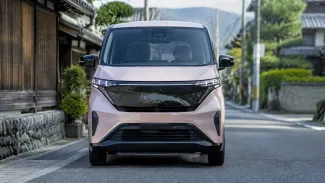
| Nissan Sakura (kei EV) | ¥580,000 (≈€3,300) | ¥458,000 (≈€2,600) |
| BYD Atto 3 / Dolphin | ¥150,000 (≈€800) | ¥90,000 (≈€500) |
The ceilings behind those figures move the same way. Battery-electric passenger cars drop from ¥1,250,000 (about €7,000) to ¥750,000 (about €4,200), plug-in hybrids from ¥800,000 to ¥480,000, fuel cell cars from ¥1,450,000 to ¥870,000. Electric kei cars, the short, narrow category built for Japanese streets, fall from ¥550,000 to ¥440,000. That is a 20 per cent cut where the others lose 40 per cent. Manufacturer bonuses for measures such as lower-CO2 steel shrink from ¥50,000 to ¥30,000 for cars and from ¥30,000 to ¥18,000 for kei models.
Demand outran the budget
The programme sits on Japan's supplementary budget for fiscal 2025, with roughly ¥110 billion allocated, about €624 million. Take-up rose sharply after January 2026, when the ceiling for a conventional electric car, bonuses included, went from ¥900,000 to as much as ¥1,300,000. Registrations followed. In September 2026 Japan registered 16,074 battery-electric cars, 88.6 per cent more than in the same month a year earlier, according to Biggo Finance.
METI's stated aim with the cut is to make the remaining money last as long as possible. Under the old rates the fund would have been exhausted before the application period ended.
What ¥110 billion buys
Some arithmetic helps here, with the caveat that it is ours and not a government forecast. If every buyer received the maximum, ¥110 billion would cover about 84,600 cars at the old top rate of ¥1,250,000 plus a ¥50,000 bonus. At the new top rate of ¥750,000 plus ¥30,000, the same money reaches about 141,000 cars. Real payouts are lower, because most models sit below the ceiling.
Sales are running at a different scale. At the September pace of 16,074 cars a month, the old maximum rates would have used the whole ¥110 billion in a little over five months. The new rates stretch that to roughly nine months, still at maximum payouts for every single car.
The spread between models
The model list shows how uneven the payouts are. A Toyota bZ4X keeps ¥780,000. The BYD Atto 3 and Dolphin, listed together, get ¥90,000, about €500. That is roughly one ninth of the Toyota amount, for cars sold in the same market to the same buyers.
Scores are built on range, efficiency and equipment, and manufacturers decide what to fit with those scores in mind. Battery size is one lever: in Europe, Ford now makes its 88-kWh pack standard on the Mach-E Select and Premium trims. Charging is another: Denza's five-minute charging claim for the N8 works out at an average of 937 kW over that window. The Japanese list is where such specifications turn into money.
Beyond 2027
It has not been decided whether the programme continues after 2027, or at what level. METI's revised rates assume the current programme is extended past that point. The registration date decides which set of rules applies: a car registered on 31 December 2026 is paid under the old amounts, one registered on 1 January 2027 under the new ones.
What to check before ordering
The headline ceiling is a maximum, not a promise. Two buyers of the same model can end up with different amounts depending on registration date and specification, and on the current list the range runs from ¥90,000 for a BYD Dolphin to ¥780,000 for a Toyota bZ4X. Buyers outside Japan are not affected by METI's decision, but purchase support and running costs are separate questions. Our EV savings calculator takes your electricity tariff and annual distance and returns a yearly figure you can compare with a petrol car.
The exact amount for a given model appears only on the Japanese list itself, and it changes with the registration date.
Source: https://www.electrive.com/2026/10/26/japan-cuts-ev-subsidy-rates/