
What the modules actually do
The hardware is not exotic. The modules plug into the car's CAN bus and bypass the regional software lock that keeps FSD switched off in markets where the feature has no approval. Police said the suspects either imported the units from Europe and China or built their own. One plugged a European-made device into his Tesla. Another, an IT worker, assembled one from information he found on GitHub.
The owners also traded advice online on how to hide the activation from the car's own logs. That detail matters more than the hardware: it turns a warranty argument into a question about evidence. Police are still working with the Ministry of Land, Infrastructure and Transport and the Korea Transportation Safety Authority on the technical side.
Two very different counts of eligible cars
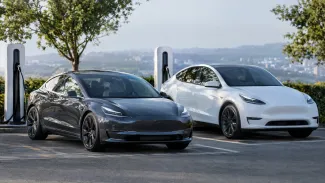
Korean registration data puts 229,311 Teslas on the road as of August. Citing Carisyou Data Lab, Korea JoongAng Daily reports that 47,458 of them, or 20.7%, can legally run FSD. Those are US-built cars: Model S, Model X and Cybertruck, which fall under the Korea-US free trade agreement exemption. The Model 3 and Model Y sold in Korea come from Giga Shanghai and have not cleared Korean safety certification for the feature.
An earlier government count was far lower. In May, data from lawmaker Park Yong-gap showed 4,292 eligible cars out of 180,684 registered Teslas, or 2.4%: 2,708 Model X, 1,193 Model S and 391 Cybertruck. The two datasets disagree by a factor of eleven and neither side has explained the gap publicly.
Run the subtraction on the August figures and 181,853 cars cannot legally use what their owners may have paid for. The 80 people booked represent about 0.04% of that group.
The money on both sides of the line
A 20 million won fine works out to about $15,000, or roughly €12,800 at recent rates. Owners paid more than $6,000 for FSD in the first place, so the maximum penalty is about two and a half times the price of the feature. If all 80 received the maximum, the total would reach 1.6 billion won, a little over $1 million.
Compare that with what the same money buys in electricity. $6,000 is around €5,100. At €0.45 per kWh that is 11,300 kWh, which at a realistic 18 kWh/100 km for a mid-size electric SUV covers about 63,000 km. Push consumption to 22 kWh/100 km in winter and it drops to roughly 51,000 km. You can run your own numbers in our charging cost calculator.
The comparison with hardware is just as blunt. This year Ford made the 88-kWh pack standard on the Mach-E Select and Premium instead of charging extra for it, as we reported in our article on the Mach-E pack change. One company sells range as standard equipment, the other sells a software switch that local regulators may never allow.
What Tesla has done about it
Tesla started fighting the devices itself in April. It began remotely detecting them, stripped FSD from affected cars, warned owners they would carry full liability in a crash and could lose warranty coverage, and permanently banned some Chinese owners from the feature.
Europe shows how the same problem gets handled without police. Tesla launched the feature in Europe under the Full Self-Driving name for years while approval kept slipping, and renamed it Tesla Assisted Driving in October after pushback from Germany. Korean owners have received no such rename and no refund offer that has been made public.
An approved system looks different
Mercedes-Benz sells DRIVE PILOT in Germany as a Level 3 system approved for motorway sections at up to 95 km/h, geofenced and with the manufacturer carrying liability while it is active. That is the shape of a legal driver-assistance product: approval per model, a defined operating domain and someone to sue. A CAN module delivering none of those three is not the same thing.
For anyone shopping, the practical check is boring and effective. Before paying for any driver-assistance package, confirm that your exact model and build origin are certified for it in your market, not just in the manufacturer's home market. Our EV catalog lists 67 models with their available assistance packages per region.
Police say the investigation continues, with the ministry and the Korea Transportation Safety Authority advising on technical questions. No court date has been set.
Source: https://electrek.co/2026/10/27/tesla-fsd-south-korea-police-80-illegal-unlock-devices/