
Where the Qin Max fits in BYD's lineup
The Qin family has been BYD's volume workhorse, and the "Max" variant stretches it further — literally. At 4,866 mm long, 1,880 mm wide, and 1,495 mm tall with a 2,790 mm wheelbase, it's roughly 146 mm longer than the Qin L and slots into the upper end of the B-segment. For perspective, a Tesla Model 3 is shorter at 4,720 mm but has a longer wheelbase at 2,875 mm. The Qin Max is a big car for its class, closer to a Model 3 in footprint than a compact sedan.
Lu Tian, general manager of BYD's Dynasty series, confirmed on Friday that the Qin Max has started arriving at Chinese dealerships ahead of a launch this month. It'll be offered in both pure-electric (EV) and plug-in-hybrid (PHEV) versions. The EV variants are what interest us most: two motor outputs of 120 kW (160 hp) or 240 kW (321 hp), paired with BYD's Blade Battery 2.0 in 52.9 kWh and 64.3 kWh capacities.
CLTC range vs. real-world: the gap that matters
BYD quotes CLTC ranges of 530 km (52.9 kWh) and 630 km (64.3 kWh). Those are CLTC numbers — China's domestic test cycle, which is notably more optimistic than WLTP and significantly more generous than real-world highway driving. We've covered this disconnect before: the Omoda O4 claimed 553 km NEDC from a 65 kWh battery, and the pattern repeats across Chinese EVs. CLTC tends to run 15–25% above what you'll see at a steady 120 km/h.
Using the efficiency patterns we've tracked from Bjørn Nyland's real-world testing of Chinese-market EVs — always attributed to his independent measurements — a CLTC-rated 630 km typically lands around 410–440 km in summer highway driving and 470–500 km in mixed use. In winter conditions, that can dip to 350–380 km. The smaller 52.9 kWh battery would realistically deliver 345–370 km on the highway in summer and closer to 290–320 km when temperatures drop. Those are still competitive figures for a B-segment sedan, but they're a long way from 630 on a billboard. If you want to run your own estimates, our real-world range calculator uses actual test data to convert official figures into something closer to what you'll experience.
Flash Charging: the numbers behind the claim
The second headline is Flash Charging. BYD claims the Qin Max can charge from 10% to 97% in nine minutes, with 10% to 70% taking just five. On the 64.3 kWh battery, that means roughly 55 kWh delivered in nine minutes — an average charging rate of about 367 kW. The peak will be substantially higher, likely in the 500+ kW range, which puts it in the same conversation as Dongfeng's 1.5 MW charger and the emerging generation of megawatt-class charging in China.
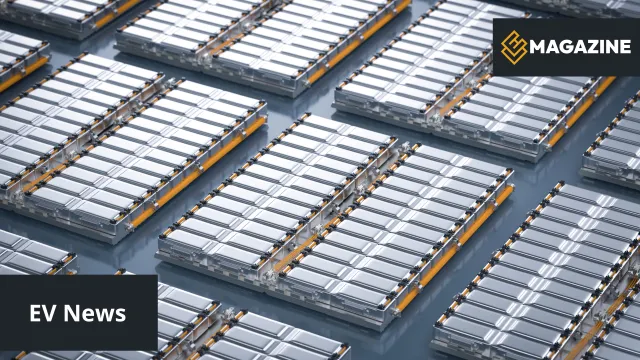
The catch: these speeds require BYD's proprietary Flash Charging infrastructure, which is rolling out in China but remains scarce elsewhere. On a standard 150 kW CCS charger — the kind you'll find across most of the 483 locations in our European supercharger database — the Qin Max would charge far more modestly. The Blade Battery 2.0 chemistry appears designed for extreme C-rates on compatible hardware, but the real-world charging experience depends entirely on what you plug it into.
What's inside: God's Eye B and the interior
The interior shots show a large central infotainment screen, a compact digital instrument cluster, a two-spoke steering wheel, and a wireless phone charger — the now-familiar BYD cabin formula. The Qin Max is expected to ship with BYD's God's Eye B intelligent driving and ADAS system, which includes camera-based driver assistance and automated parking. It's not the lidar-equipped God's Eye A that appears on BYD's premium models, but it brings ADAS features into a price bracket where they weren't standard a year ago.
The exterior retains the Qin family's closed-off grille, slim LED headlights, and a full-width rear light bar — a design language that's evolved steadily rather than reinvented. From the side profile, the silhouette reads as a clear Model 3 competitor, with a sloping roofline and flush door handles.
Pricing and the bigger picture
BYD hasn't announced Qin Max pricing yet, but the Qin L EV launched at 119,800 yuan (roughly €15,500 at current exchange rates) and sold over 10,000 units in its first week. Expect the Max to carry a premium — likely in the 140,000–170,000 yuan range (€18,000–22,000) — while still undercutting a Model 3 in China by a wide margin. For now, this is a China-market story. European availability hasn't been confirmed, though BYD's broader European push with the Seal, Dolphin, and Atto 3 suggests it's only a matter of time.
The Qin Max illustrates where BYD's competitive edge lies in 2026: not in outright range figures, but in combining fast-charging battery chemistry with aggressive pricing and volume. The CLTC numbers will generate headlines. The real-world numbers — once independent testers like Bjørn Nyland get their hands on one — will tell us whether the Max earns its name.
Meanwhile, BYD's battery and charging investments continue to intersect with broader industry trends, from Xiaomi's EREV cost play to research into sustainable lithium and recycling. The Chinese EV market isn't standing still — and the Qin Max is the latest evidence.
Source: https://electrek.co/2026/07/31/byd-reveals-images-new-qin-max-ev-launch/