
What GM is actually offering in Peru
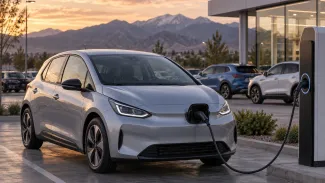
Chevrolet has started giving its electric vehicle customers free charging at dealerships in most of Peru's major cities, including the capital Lima, plus Arequipa, Cajamarca, Lambayeque and La Libertad. The offer covers buyers of models such as the Chevy Captiva and the Spark EUV, and the chargers are accessible during regular business hours, according to Electrek.
The timing is not random. In the first half of 2026, sales of electrified vehicles in Peru grew by more than 86%, with the total market reaching 8,285 electrified vehicles. “This progress must also be accompanied by more charging options,” said Melisa Black, Marketing Manager of GM Peru, explaining why the company has included dealership charging points in its launch plan from the outset.
The family angle: free, but not always available
As a family testing electric cars, my first question is always the same: can I actually plug in when I need to? Dealership chargers sound lovely until you remember they tend to live behind a gate, in a car park that is empty on Sunday evening, or are blocked by a new car waiting for delivery.
Free charging at dealers is not a new idea, but it rarely works as a substitute for a public network. In our own experience, the best charging stop is the one you can access without asking a salesperson for permission. That is why I always tell readers to treat dealer chargers as a bonus, not a plan. Our supercharger database tracks 483 locations across Europe with reliable, mostly 24/7 access — a very different proposition from “free but only until 6pm”.
For a family in Peru, the new Chevrolet chargers may remove some early anxiety, especially if you live near one of the participating dealerships and can top up during a weekday visit. But planning a weekend trip around a charger that closes at 5pm is a recipe for frustration. The same lesson applies anywhere: Prague’s streetlight charging project shows that public charging works best when it is available outside business hours and does not depend on a single brand.
What this means if you see a similar offer
The broader story here is that GM is investing heavily in Latin American EV sales, including the Chevy Spark EUV, a small crossover with an NEDC-rated range of 360 km (about 224 miles), and the larger Captiva EV. Free dealership charging is part of that push, but it is not the same as a national network.
If you are comparing an EV purchase and a dealer dangles free charging, ask three questions:
- What are the actual opening hours? Business hours only may not cover your commute or school run.
- Is the charger accessible without a service appointment? Some dealers prioritise their own workshop cars.
- What is the charging speed? A slow AC charger can be a nice top-up, but useless on a long trip.
Free fuel is always tempting. At current electricity prices, charging at home in Europe can cost around €0.25–0.45 per kWh, so a free dealership session can genuinely save money. But if you end up driving across town and waiting 40 minutes for a slow charger, the saving is an illusion. Our EV savings calculator can help you compare free top-ups against home charging and public fast charging honestly.
A different approach: battery swap and public networks
Other brands have tackled the charging gap differently. Nio’s battery swap network now exceeds 4,000 stations in China, offering drivers a full battery in minutes rather than a parking space near a dealership. In Peru, public fast charging is still developing, which is why GM’s dealer chargers matter for now — but they are a stopgap, not a network.
For European readers, the takeaway is not about Peru itself. It is about understanding what “free charging” actually means before you factor it into a family budget. Free access tied to a dealership’s opening hours is a perk. Reliable, public, 24/7 charging is infrastructure. Know the difference, and you will not be stranded with a dead battery in an empty car park.